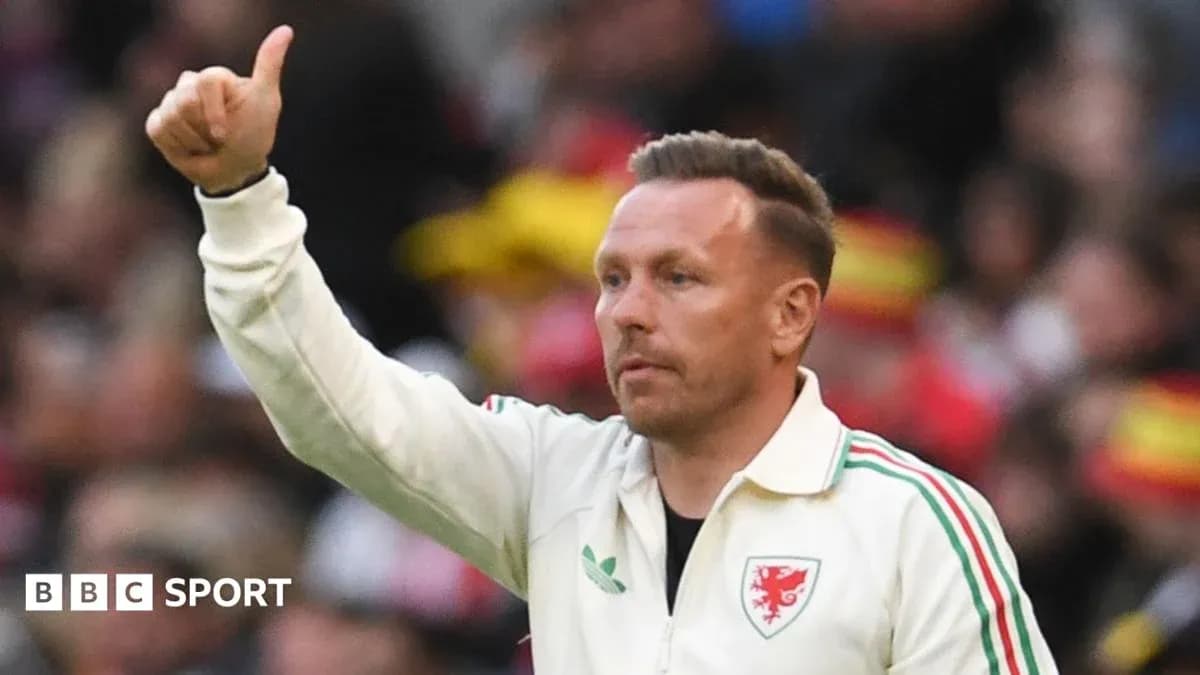
Craig Bellamy has drawn a firm line under his summer of speculation. Wales, he insists, is where he belongs.
The national team head coach confirmed he rejected an offer to take over at Burnley, turning down a return to club football just two years into his four-year deal with the Football Association of Wales.
Burnley, relegated from the Premier League and rebuilding in the Championship, triggered a compensation clause in June and received permission from the FAW to speak to Bellamy about succeeding Scott Parker. Talks followed. The interest was real. So was the temptation.
"It was flattering – we all like our ego being exercised and being wanted," Bellamy admitted, as he faced questions for the first time since the approach. For a time, he weighed up walking away from the project he has thrown himself into with Wales.
Then he shut the door.
"I had a decision to make and I made it," he said. "It didn't break down. I said no, it's not for me. That was it. There was no walk away from discussions. It wasn't for me.
"I made the decision to stay because this is the right place for me. We had a conversation but I was already in a role and this (Wales) was what I wanted."
The 47-year-old knows how it looked. Just weeks after publicly insisting he was "not going anywhere", he sat down with a former club and listened to their pitch. Some Wales supporters felt let down. Former players suggested he would now have to win people back.
Bellamy, typically, pushed that noise to one side.
"I know how it could be seen, but I've only one person I have anything to prove to, and that's me," he said. "I'm comfortable with the decision I've made. I've always been committed in everything I do and that hasn't changed.
"Now, winning people over? I don't know, that's the honest truth."
The backdrop to all this is a reign that started with a surge of optimism. Since replacing Rob Page in 2024, Bellamy has overseen an unbeaten campaign that earned Wales promotion to the top tier of the Nations League. Performances carried a new edge, results followed, and belief around the squad grew.
Then came the blow.
In March, Wales missed out on a place at the 2026 World Cup after a penalty shoot-out defeat by Bosnia-Herzegovina in the play-offs. The manner of that exit sharpened scrutiny. The early glow of his tenure met the hard reality of tournament football.
Bellamy did not hide from the criticism. He pointed to the brutal nature of his profession instead.
He spoke of the "volatility" of management and refused to offer any guarantees he would see out his contract, fully aware that results will dictate his fate as much as his own ambitions.
What he did make clear is his target: Euro 2028, on home soil, with Wales playing in Cardiff.
Asked if he still intends to be in charge when that tournament kicks off, his answer came quickly.
"Oh, I'd love to – but that's two years from now. Nothing's guaranteed. I'm no different, I'm not more special than anyone else (in management)."
For now, his focus is immediate and unforgiving. Bellamy named a 28-man squad for Nations League A fixtures against Portugal, Denmark and Norway, a run of games that will test both the depth and the direction of his team. These are the kind of nights that shape a manager’s standing, both inside the dressing room and among the fanbase.
His decision to even speak to Burnley came from a place of respect. Bellamy enjoyed a successful spell at Turf Moor as Vincent Kompany’s assistant and did not want to dismiss the club out of hand when they called. Those conversations, he suggested, were as much about acknowledging his past there as they were about any serious desire to leave Wales.
But the outcome was decisive. His partner and children, he said, see Wales as home. He does too.
"For me, my partner, my kids, this is the place and we didn't see anything else being able to move that."
The offer from Burnley tested his resolve. It did not break it. Now comes the real examination: can he turn that personal conviction into a team ready to walk out in Cardiff in 2028 as more than just hosts?