Cricket Australia’s bold play to invite private money into the Big Bash has met a blunt response from one of its most powerful stakeholders, with Cricket NSW warning the move could leave the sport “strategically and financially worse off”.
On Tuesday, CA confirmed it would seek private investment in its T20 franchise leagues, starting with a sale process for the Melbourne Renegades and exploring the offloading of up to 49 per cent stakes in BBL clubs. It was the moment months of speculation had been building towards.
Within 24 hours, the backlash was public.
Custodians vs shareholders
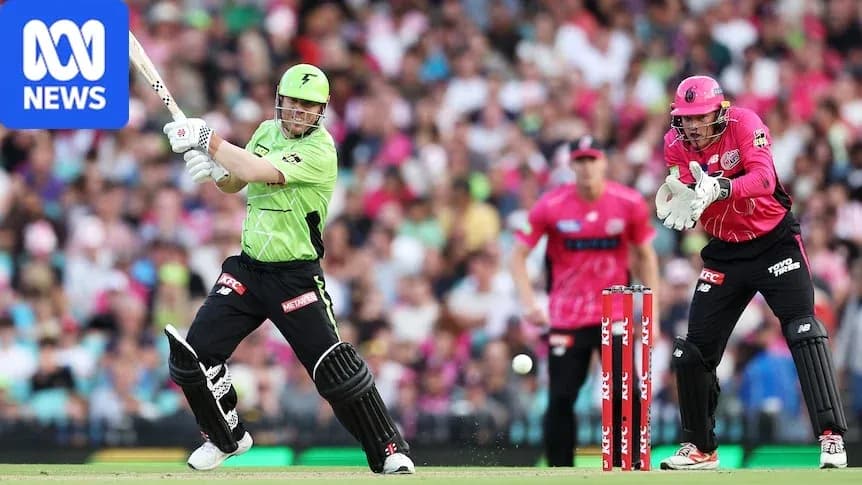
Cricket NSW, which owns the Sydney Sixers and Sydney Thunder, broke ranks on Wednesday with a pointed statement that laid bare the divide inside Australian cricket.
“Cricket NSW is disappointed by Cricket Australia's decision to proceed with introducing private investment into the Big Bash leagues without alignment across Australian cricket,” the statement read.
The message was clear: this is not just a commercial tweak; it is a shift in who controls the game’s future.
Cricket NSW framed its role, and that of the other states, as “custodians” of cricket, with a purpose to “inspire everyone to play and love cricket”. The pathway, in their view, runs from kids picking up a bat in suburban nets to the W/BBL, to NSW, to Australia.
Right now, the profits from the Sixers and Thunder flow back into that system. They help pay for junior programs, coaching, facilities – the unglamorous backbone of the sport.
“Yesterday’s announcement threatens this system,” Cricket NSW said. “The redistribution of profits to external investors reduces our ability to invest in community cricket, creating long-term impacts at all levels.”
That is the crux of the fight: who gets the money, and what they do with it.
A split over strategy
Tensions had been brewing well before CA went public. NSW and Queensland had already been reported as opposing the plan, wary of selling slices of BBL franchises to private investors.
On Wednesday, Cricket NSW went further, expressing frustration not only with the outcome but with how CA arrived there.
“The Cricket NSW board is also disappointed by the process leading to this decision,” it said. “We have raised concerns directly with Cricket Australia, proposed an alternative pathway to strengthen the Big Bash, and highlighted significant risks within the proposal, informed by high-quality external advice.”
In other words, they feel ignored.
For a governing body that runs two of the competition’s most successful clubs, that is no small statement. The Sixers and Thunder are not distressed assets. They are, in Cricket NSW’s words, “successful and healthy” clubs whose profits are already being recycled into the game.
The fear is that once external investors arrive, a slice of that profit leaves the cricket ecosystem entirely.
CA’s gamble
Cricket Australia sees it very differently.
Chair Mike Baird positioned the move as a necessary step to keep pace with a rapidly changing global T20 landscape, where private equity and franchise owners are reshaping the market.
“By opening the door to private investment in the Big Bash leagues, Cricket Australia is taking a deliberate step to strengthen and secure the long-term future of the game, accelerate growth and ensuring we can keep investing in community cricket and grassroots participation, domestic and international pathways and the elite level,” Baird said on Tuesday.
He stressed the decision followed “an enormous amount of analysis, discussion and collaboration over many months” and argued it was “the best way to secure cricket's future in this country, strengthen the Big Bash and protect our standing on the global stage.”
CA believes fresh capital and private expertise can revive and turbocharge the Big Bash, which has battled questions over scheduling, player availability and crowd numbers in recent seasons. The governing body is hopeful the Melbourne Renegades will be under new ownership by the 2027/28 season.
The promise from Jolimont is simple: sell part of the Big Bash now to safeguard all levels of the game later.
A battle for the base
Cricket NSW is not buying that logic. Not yet.
Its warning is stark: if profits are diverted to outside investors, the first thing to suffer will be grassroots cricket. Fewer dollars for junior programs. Less capacity to grow participation. A weaker base feeding into W/BBL clubs, state teams and national sides.
“This decision risks leaving cricket in NSW and Australia strategically and financially worse off, with direct consequences for our ability to invest in grassroots cricket,” the organisation said.
Strip away the boardroom language and the question is brutally simple: does selling off nearly half of a club to private money make the game stronger, or hollow it out over time?
The Big Bash was built as a domestic product, controlled by the game’s own administrators, designed to grow cricket’s reach. Now, as the league edges towards a part-privatised future, Australian cricket has to decide what kind of competition – and what kind of game – it wants to own in ten years’ time.