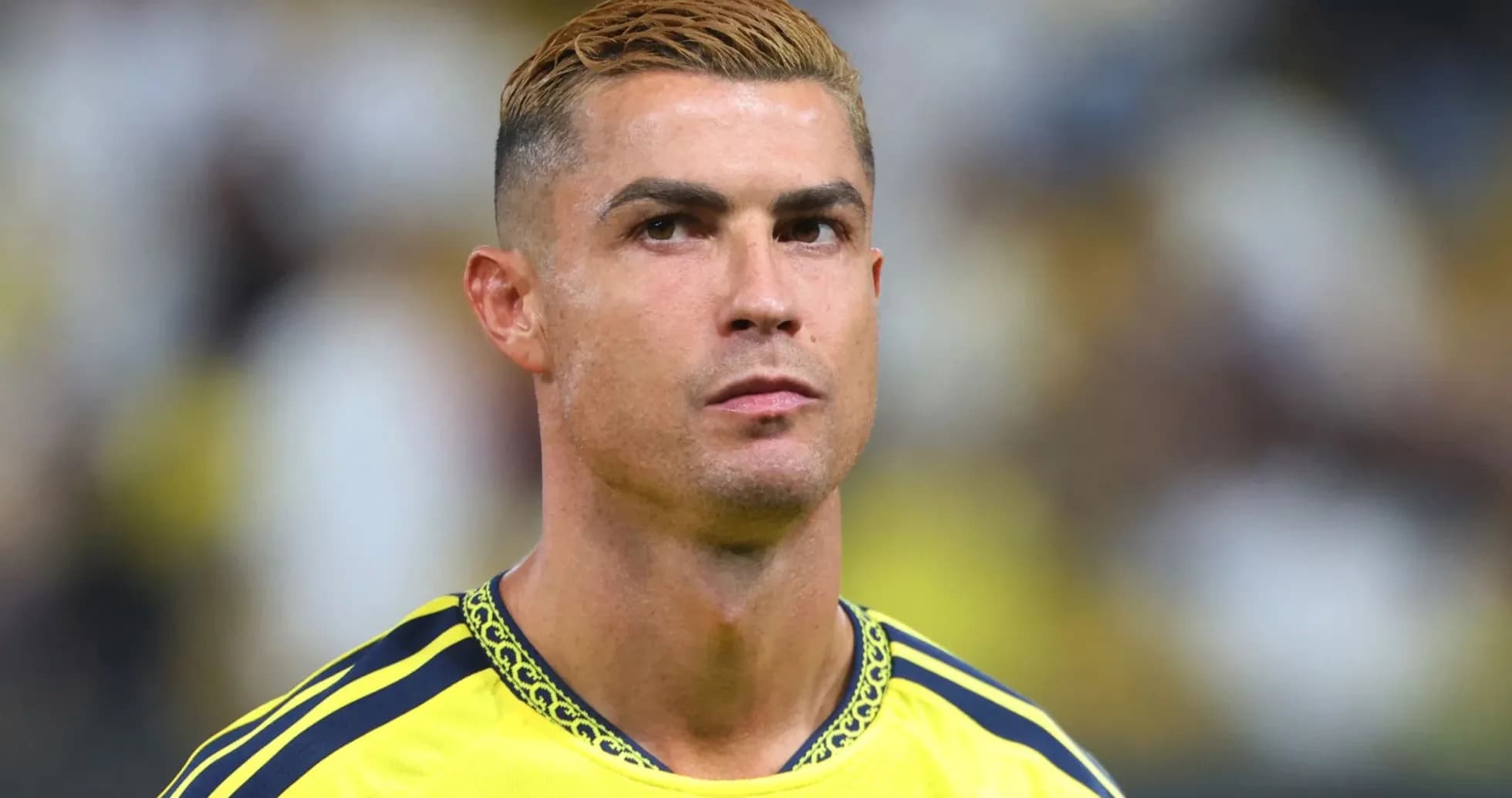
Cristiano Ronaldo has spent two decades ignoring the limits others set for him. Now, as the debate swirls over his international future with Portugal and his long-term stay in Saudi Arabia, one former Premier League star is convinced of one thing: he stops only when he decides.
At 233 caps, questions back home have grown louder. Should Ronaldo still be part of Roberto Martinez’s plans after a flat 2026 World Cup, where he was far from the only Portuguese player to fall short of expectations? On the biggest stage, the impact he craved never truly arrived.
A record seventh World Cup has already been written off. By 2030, when FIFA’s showpiece lands in Portugal, Spain and Morocco, Ronaldo will be deep into his 40s. That dream is gone. Euro 2028 lingers in the distance as a theoretical last dance, if the competitive fire still rages, but the spotlight is drifting back toward club football and his lucrative Saudi Arabian chapter.
Ronaldo is tied to Al-Nassr on the most expensive contract in world football, a deal that runs through to the summer of 2027. That alone suggests he is not planning a quiet exit. In Saudi, he is not a fading star; he is still the reference point.
Gus Poyet has seen that landscape up close. The former Chelsea and Tottenham midfielder spent a month in Saudi Arabia in 2024, watching games, visiting clubs, and studying the league from the inside. Speaking to GOAL in association with Gambling.com, he did not hesitate when asked how long Ronaldo could keep going there.
“Until he wants,” Poyet said.
From his vantage point, the Saudi Pro League is a split world. At the top sit four government-backed clubs with the financial muscle to sign “special players” who tilt the competition. Just behind them, Poyet points to another cluster of three or four ambitious private teams, including one led by Brendan Rodgers, investing heavily in infrastructure, facilities and new stadiums.
Then comes the drop.
Beneath that upper tier, six or seven clubs live in constant fear of relegation. For them, the foreign-player slots are a lifeline. Miss on even two of those signings, Poyet warns, and “you’re dead, you go down.” There is no margin for error, no room for passengers, and yet many of those sides lean on experience — which often means older legs in brutal heat, asked to run in a league that demands intensity.
That is the paradox of Saudi football right now: money at the top, jeopardy at the bottom, and a growing divide between those who can chase stars and those who simply try to survive.
Within that context, Ronaldo remains an outlier. Poyet talks about him with the kind of respect reserved for athletes who have bent time to their will. Physically, Ronaldo is no longer the blur who shredded defences in Manchester and Madrid. The sprint is shorter. The first step less explosive. He knows it, Poyet insists. The agility has dipped. The game has changed around him, and he has adapted in response.
“And that’s why he’s probably playing there,” Poyet added, framing Saudi Arabia not as an exile but as a stage that still suits a player of his profile and power.
The comparison with Lionel Messi is inevitable. Ronaldo’s great rival is now in MLS, a league Poyet places “in the top divisions in the world” in terms of profile and quality. Different continent, different tempo, same underlying truth: there is a moment in every great career when the spotlight moves, but the player can still command a stage worthy of his name.
For Ronaldo, Saudi Arabia is that arena. The goals continue to flow. The brand remains global. The competitive edge, by all accounts, has not dulled.
Poyet is convinced that edge will carry him to one more monumental landmark. “I think he’s staying,” he said. “I don’t think the time for retirement comes before 1,000 goals. No way. That would be insane.”
The international debate will rage on. Portugal will eventually have to plan for life after their greatest scorer. But in Saudi Arabia, where the league is still finding its balance between superstar glamour and structural fairness, Ronaldo’s presence feels less like a farewell tour and more like an ongoing project — one that, if Poyet is right, only ends when the man himself finally decides that even 1,000 goals are enough.