
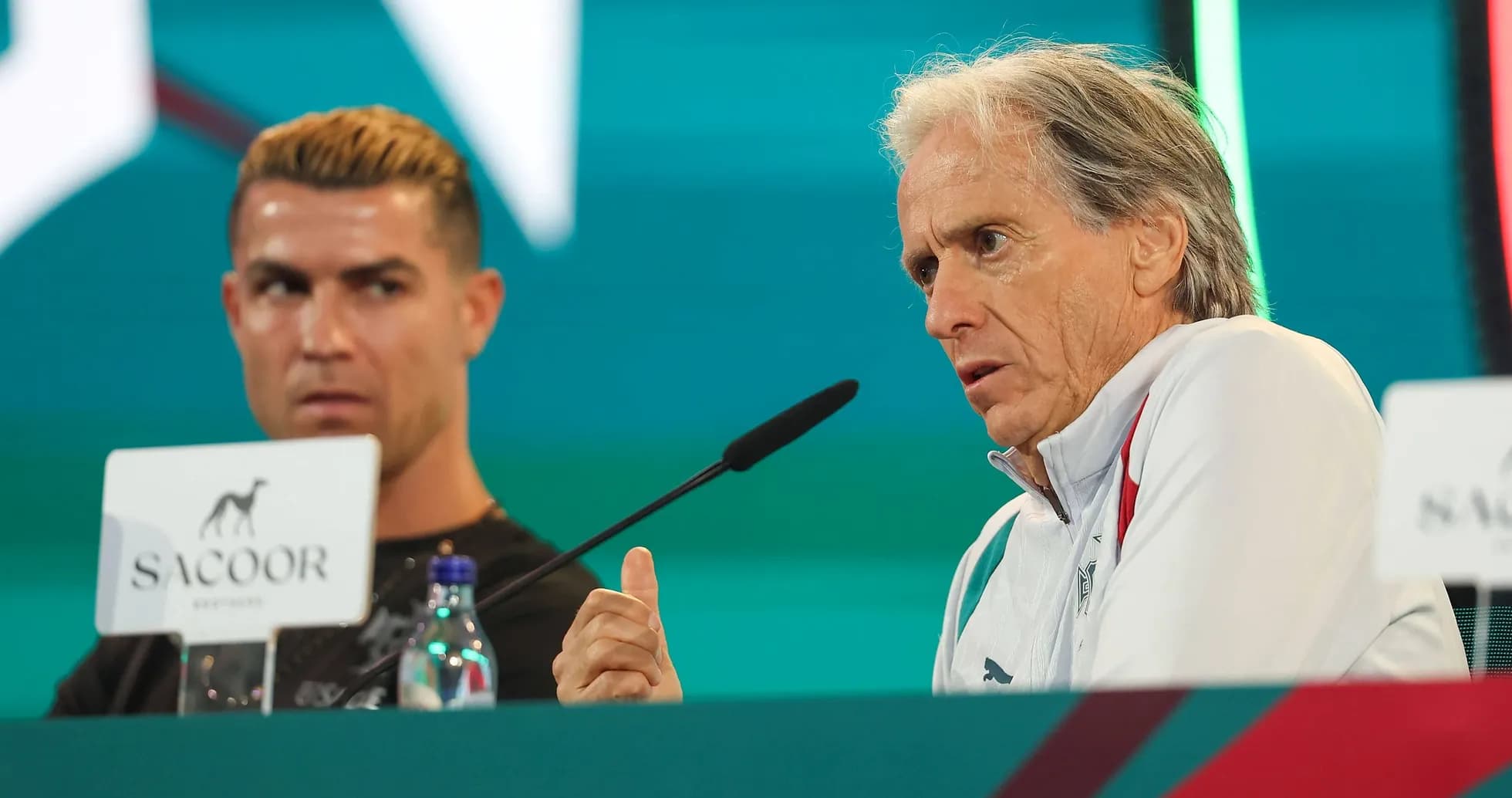
Cristiano Ronaldo has drawn the curtain on one of international football’s greatest careers, announcing his retirement from Portugal duty at the age of 41 in an emotional video message that mixed pride, hurt and finality.
The numbers alone feel almost unreal: 146 goals in 234 caps, a European Championship, a Nations League title, and nearly two decades spent carrying a nation’s expectations on his shoulders. Yet the final act has arrived not with a lap of honour, but in the shadow of a public rift with national team manager Jorge Jesus.
A giant bows out under a cloud
Ronaldo’s last appearance in a Portugal shirt now stands as September’s 1-0 Nations League win over Wales. At the time, it looked like another routine chapter in a story that seemed determined to stretch on as long as his body allowed.
Days later, it blew up.
In the next fixture, against Norway, Ronaldo remained on the bench, unused, a spectator in a stadium where he has so often dictated the script. What followed was a confrontation that Portugal’s camp had little hope of keeping behind closed doors.
Ronaldo believed Jesus had promised him at least 30 minutes and asked him to warm up with that in mind. When the call never came, the frustration turned into fury. The dispute deepened when, according to Ronaldo’s camp, a separate agreement was broken: Jesus had reportedly pledged to publicly explain the decision, only to stand firm instead on the principle that team selection was his responsibility alone.
For Ronaldo, that was a line crossed. The veteran refused to train and walked away from the squad ahead of the next Nations League clash with Denmark. A relationship that had survived a World Cup exit and months of speculation finally snapped.
The decision he had postponed in the summer could no longer wait.
Jesus salutes a legend he could not keep
If the break was bruising, Jesus chose not to twist the knife. On the contrary, the Portugal coach spoke like a man who knows he has just lost far more than a squad option.
“Cris is a global icon – for Portugal and the national team,” Jesus said, paying tribute to a player he once coached at Al Nassr and later tried to convince to extend his international life. He talked about Ronaldo as a role model for young Portuguese fans, about the giant image of him installed in the national team auditorium, about a figure embedded in the country’s footballing identity.
Jesus did not hide that he had attempted to change Ronaldo’s mind.
“We had already spoken about this before the first squad announcement. I asked him to stay on with me because I needed him by my side,” he revealed. It was a plea grounded in both football and symbolism: even as his minutes dwindled, Ronaldo’s presence still carried weight in the dressing room and on the touchline.
But the coach now has to live with the answer. “It is his decision,” he accepted, insisting there is no lingering animosity and stressing that Ronaldo “will always be in the hearts of the Portuguese people and part of the national team”.
The words sounded genuine. They also sounded like an admission that no one, not even the manager, truly controls how a legend chooses to leave.
Retirement long in the air, now brutally real
This ending did not come out of nowhere. Ever since Portugal’s World Cup exit in the summer, Ronaldo’s future with the Seleção had hovered over every squad announcement, every press conference, every substitution.
At that point, Jesus managed to pull him back from the brink, persuading him to delay retirement. Publicly, the coach backed Ronaldo’s right to choose his own moment. Just last month, he declared: “Cristiano should end his time in the national team the way he wants, he’s the one who will decide how he wants it.”
He also made a direct appeal: “In my first call-up, I said, ‘I need you, I need you to be close to me, playing or not playing, I need you’. And now I’m saying the same thing.”
The irony is brutal. Ronaldo has now ended it on his own terms, just not in the manner anyone envisaged. No farewell friendly in Lisbon. No standing ovation in front of a packed Estádio da Luz. No carefully choreographed send-off.
Instead, a video message, a broken pact and a departure framed by controversy.
Portugal face life after their captain
For Portugal, the adjustment starts immediately. The Nations League campaign continues this month, with games against Denmark and Wales that will feel very different without the man who has defined the national team for a generation.
He leaves as Portugal’s all-time top scorer by an almost absurd margin, the reference point in every major tournament, the player around whom game plans were built and opponents’ fears revolved. Now Jesus must craft a side that no longer has Ronaldo as its gravitational centre.
The talent is there. The question is whether the aura can be replaced, or whether Portugal simply become something else: less star-driven, more collective, but without the one player who always believed he could bend a night to his will.
Ronaldo, for his part, will now pour all his energy into his club career. Even that, though, has its complications. He missed Al Nassr’s AFC Champions League trip to Uzbekistan due to security concerns, a reminder that life at 41, even for a global superstar, is no longer straightforward.
What is clear is this: the international chapter is closed. No more late call-ups, no more “one last tournament”, no more lingering hope of a final encore.
Portugal’s greatest servant has walked away, not to the sound of applause, but in the cold reality of a disagreement that would not heal. The records will stand. The memories will endure. The manner of the goodbye will be debated for years.
And somewhere down the line, when Portugal line up for a major tournament without him, the question will hang in the air: how do you truly replace a player you never thought would stop?





