On a night built for farewells and legends, the undercard at Croke Park refused to play the role of polite warm‑up. It crackled. It bruised. At times, it overstepped the line.
All of it unfolded under the looming presence of Katie Taylor’s final walk, with 80,000 seats filling for one last look at the fighter who dragged women’s boxing into the mainstream. Before she appeared, Ireland’s next wave tried to claim a sliver of that stage for themselves.
Brennan’s bravery, Bevan’s brutality
The main card opened with a local story and a harsh lesson.
Emmet Brennan, the 6-0 super-middleweight from just around the corner in Dublin, marched to the ring to a hero’s welcome. An Olympian, unbeaten, and fighting at home, he carried the hope of a perfect Croke Park moment.
Taylor Bevan tore that script in half.
From the first two rounds, the Englishman’s work to the body told its own tale. Brennan’s ribs reddened early, the kind of mark that only deep, thudding shots leave. He had some joy with his own left hook upstairs, but Bevan controlled the geography of the ring and the tempo of the exchanges.
Then came the third.
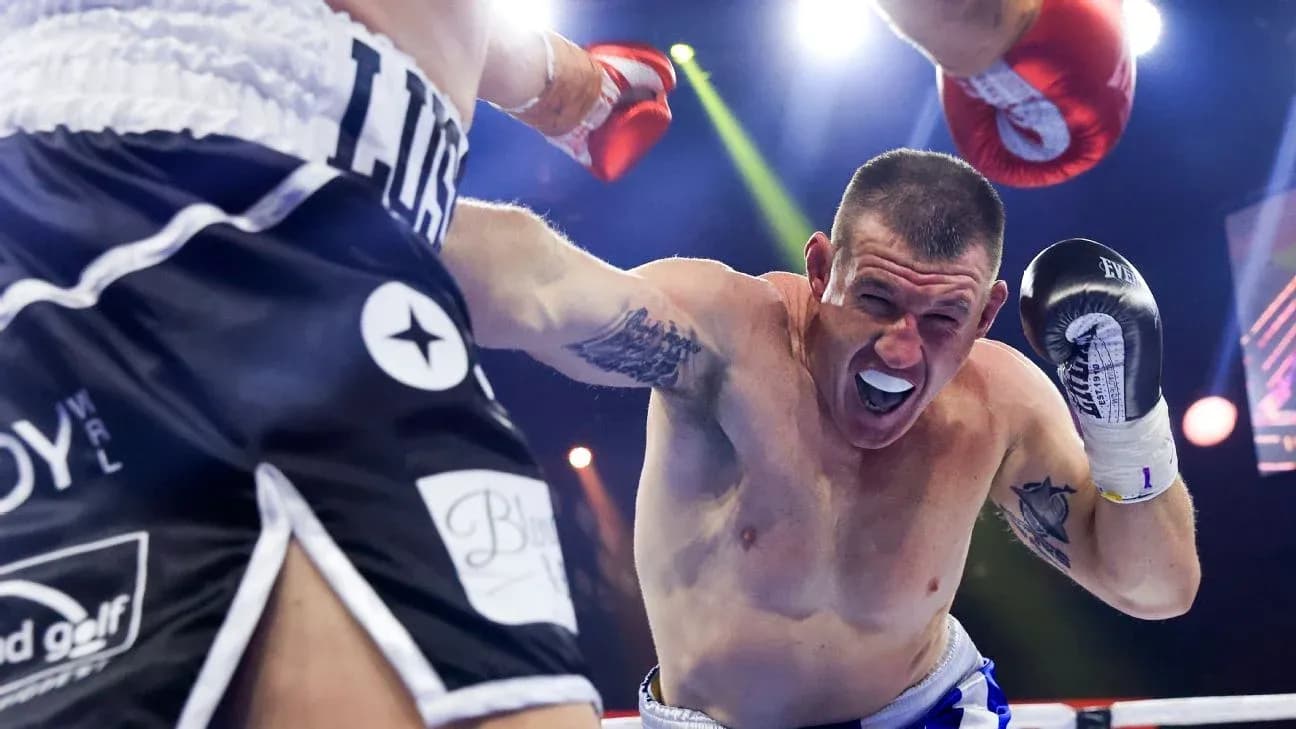
Brennan walked into a heavy left hook and went down hard. He tried to smother the follow-up, closing the distance to buy time, but Bevan found him again and dropped him for a second time. Only the bell spared Brennan from an early finish, and even then the fight felt as though it was hanging by a thread.
To his credit, Brennan refused to fold. He not only survived the fourth, he stole a few moments of his own, digging in and firing back when most would have looked for a way out. But the punishment was banking up, and by the end of the fifth he was on the canvas yet again, folded by a vicious left hook to the body. He beat the count, sat on the stool, and prepared for a sixth round that felt more like a test of will than a sporting contest.
The ringside doctors took a long look at him before that sixth began. It was long enough to raise questions, not long enough to save him. Once the action resumed, Bevan went straight back downstairs, dropping Brennan with another body shot. Somehow the referee allowed it to continue. Bevan didn’t hesitate. A big left hook crashed home and flattened the Dubliner.
The stoppage came in the sixth, officially recorded as a sixth-round win for Bevan, but the sense lingered that the fight should have been halted before that final, concussive blow. Brennan left the ring under his own steam, to warm applause and with the respect of the arena, but badly marked from a night that asked too much of him.
Bevan, now 10-0, kept his celebrations muted as the medics checked Brennan. It was the right touch after a ruthless performance.
Donovan dazzles, McKenna cut down
If Brennan-Bevan was brutal, Paddy Donovan’s display was clinical.
The Limerick southpaw, a former world title challenger, met Belfast’s Tyrone McKenna in a fight that felt like a crossroads. McKenna, a popular warrior and likely a few years removed from his peak, still brought the old grit. Donovan brought everything else.
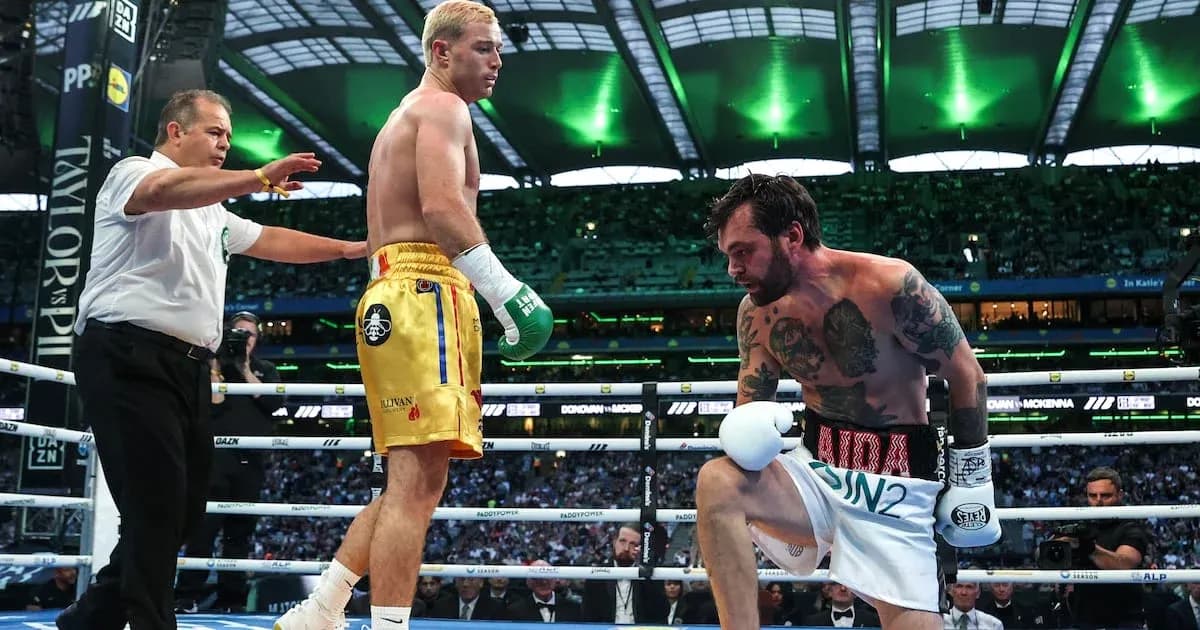
By the second round, McKenna had already been on the floor. Donovan’s timing and composure stood out, picking his moments rather than chasing the finish. He boxed like a man in control of every variable.
In the third, his trainer Andy Lee leaned into the corner and told him he looked “sensational”. It wasn’t hyperbole. Donovan’s head movement turned McKenna’s attacks into air. He slipped shot after shot, dictating distance and rhythm with his lead right hand alone. McKenna, usually the one dragging opponents into chaos, found himself chasing shadows.
The pressure finally told in the fourth.
A horrible cut opened around McKenna’s eye, blood spraying across the ringside tables. It was the kind of wound that ends nights, and the doctor didn’t hesitate. The fight was waved off, McKenna spared further damage, and Donovan handed the best performance of his professional career.
The result went down as a fifth-round stoppage, but the impression was made long before the official announcement. Patient. Controlled. Razor-sharp. Donovan didn’t just win; he looked like a man ready for far bigger nights.
Early statement wins and a family connection
The undercard had started with quieter names, but the pattern was clear: Irish prospects were not here to tiptoe.
Paul Ryan took a unanimous decision over Paddy Gallagher, a measured, disciplined performance that banked rounds rather than headlines. Bobbi Flood and Adam Olaniyan both impressed, Flood outboxing Jack Swallow to a unanimous decision, Olaniyan blasting through Matej Hudak with a first-round stoppage that barely gave the crowd time to settle.
Liverpool’s Joe McGrail broke down Coleraine’s Matthew Boreland, forcing a stoppage in the fifth. It was the kind of performance that marks a young fighter as more than just a tidy technician; McGrail showed spite when it mattered.
Then came a familiar surname.
Molly McCann, Katie Taylor’s cousin, stepped through the ropes for her fifth professional bout and boxed with the composure of someone who has grown up watching big nights from the other side of the ropes. She outworked Sylwia Doligala and took a unanimous decision, another steady step in a career quietly building in the shadow of a giant.
By the time the preliminaries wrapped, the Irish dressing rooms were buzzing. Ryan, Olaniyan, Flood, McGrail, McCann – all with wins in the bank. The stage was clearing for the names on the posters.
Heavyweight intrigue and a pop interlude
The carnival feel of a Croke Park fight night stretched beyond the ropes.
At one point, there was even the promise of Westlife taking the stage, a reminder that this was not just a boxing show but a full-blown Irish event, part nostalgia, part spectacle.
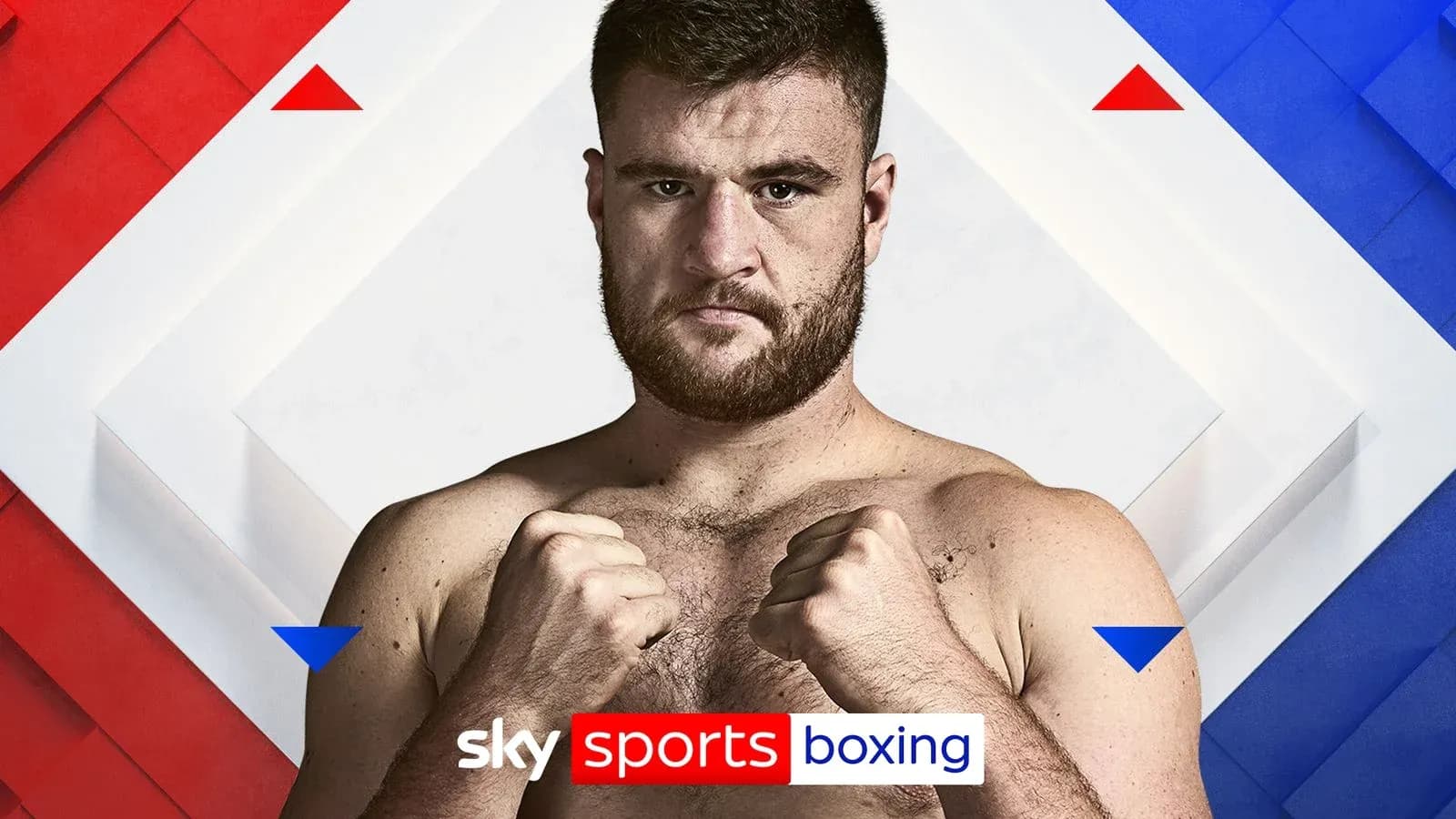
On the boxing front, attention swung to a heavyweight meeting between Phibsboro’s Thomas Carty and English cult favourite Dave Allen. Allen, who tipped the scales at close to 280lbs and openly admitted in the build-up that he has not always lived the life of a model professional, brought his usual mix of self-deprecation and danger. The pair had traded verbal jabs at the press conference, Allen playing to the crowd, Carty representing the local hopes.
Their clash carried a different kind of tension – not title implications, but the raw jeopardy that comes whenever big men with big punches share a ring.
The shadow of a farewell
Threaded through all of this was one inescapable presence.
Katie Taylor, preparing for the final fight of a career that once seemed impossible. She was set to face unbeaten French fighter Flora Pili for the undisputed light-welterweight championship, a last stand in front of more than 80,000 at Croke Park, broadcast live on RTÉ.
Around the stadium, her story was being told and retold. Reports charted her journey from obscure amateur to global figurehead, from the days when women’s boxing barely existed on the international stage to the night when it could fill one of the great arenas in sport. Another piece captured her legacy on the streets around the ground, where kids now say, without irony, “I want to be like Katie.”
That is the scale of what this night means.
The undercard fighters had their moments, some painful, some joyous, all of them real. They bled on the same canvas, chased their own futures, and tried to grab the crowd’s attention before the main act.
Now, with the early business done and the lights sharpening over the ring, one question hangs over Croke Park.
On the night Ireland says goodbye to its quiet pioneer, which of those who shared her stage will be ready to carry the weight she leaves behind?