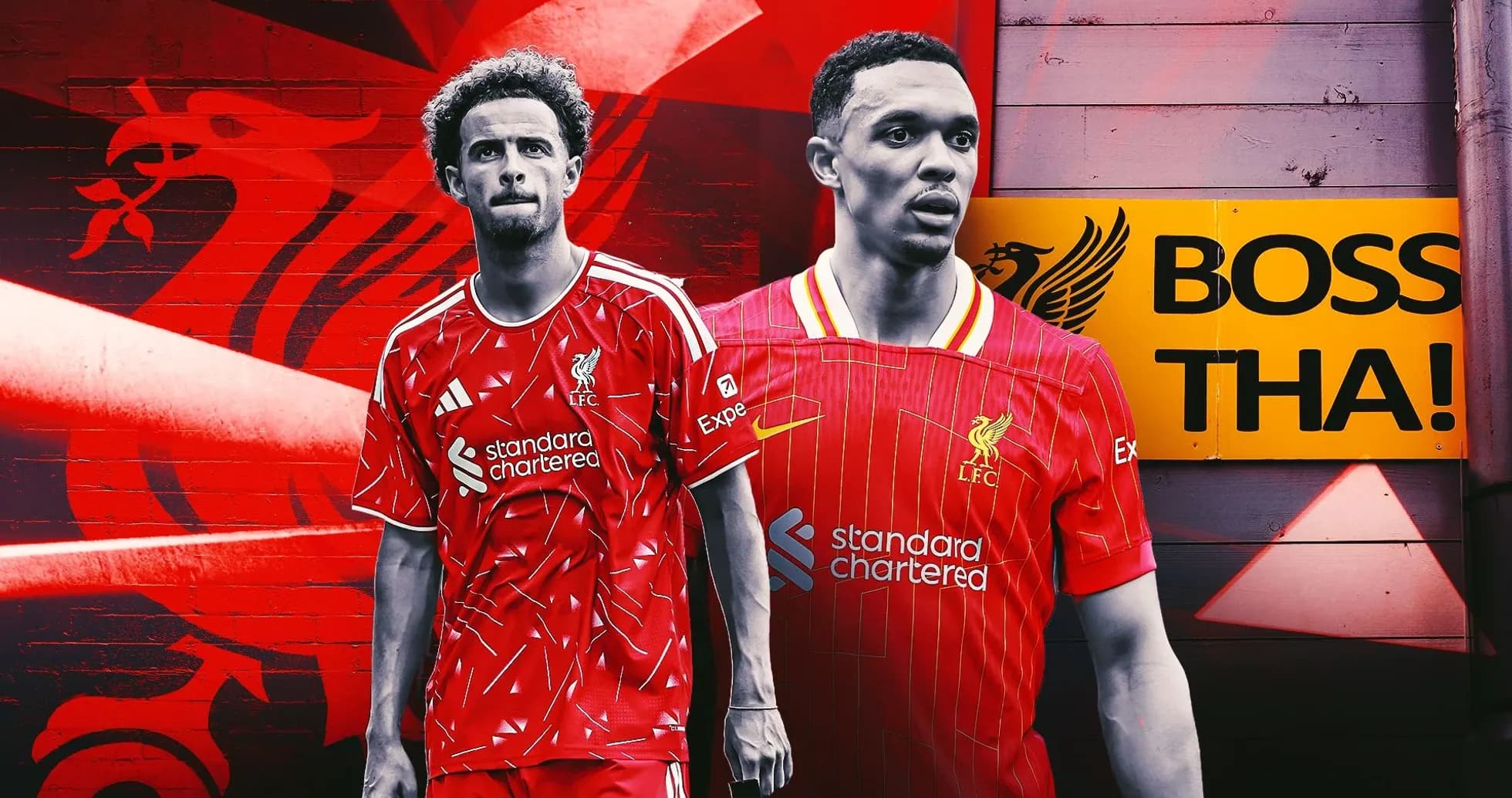
When Curtis Jones finally walked away from Anfield and into Inter blue on August 21, it felt less like a transfer and more like a reluctant surrender. Liverpool, boxed in by contract realities and a player who no longer saw his future at his boyhood club, cashed in. They had little choice. Jones was in the final year of his deal, had no intention of signing another, and was tired of being the utility man rather than the midfielder he believes himself to be.
He had finished last season shunted to right-back, a symbol of a campaign that never quite settled. Arne Slot paid with his job. Jones paid with his patience. Andoni Iraola’s arrival brought a fresh start for many, but not a clear promise for him. Minutes in midfield were not guaranteed. For a 25-year-old who had grown up dreaming of dictating games at Anfield, the conclusion was obvious. He had to go.
The fee only deepened the sense of unease. £25 million for an England international, in the same summer relegated West Ham shifted Mateus Fernandes to Spurs for more than three times that sum, felt like a bargain for Inter and a bruise for Liverpool. Supporters didn’t just mourn the price. They feared the gap. Would there be a replacement? Iraola had made no secret of his desire for more midfield options, not fewer. The numbers in the middle were already tight. Letting one go without a clear successor looked like a gamble.
Yet Iraola had fought to keep him. Publicly. Emphatically. He spoke of rating Jones “very highly” as a player, but that was only part of it. The new Liverpool coach understood the other layer, the one that never shows up on data dashboards.
"It's very important that he's Scouse, that he's from here," he said in July, and those words carried weight.
Iraola is Basque. He spent most of his career at Athletic Club, a team built on geography and identity as much as tactics and transfers. He knows what it means when the players on the pitch reflect the people in the stands. On the pre-season tour of the United States, he drew the line himself.
"I see a lot of similarities between Liverpool and Bilbao," he told reporters. The sense of belonging. The pride in being a little bit different. The bond with academy products who carry the club’s history in their accents as much as in their boots.
So what does it say that Jones’ departure leaves Liverpool without a single Scouser in their senior squad for the first time in the modern era?
The anxiety didn’t start with his exit. For many, it simply confirmed a creeping fear: that the club is drifting away from the city that built it.
Fenway Sports Group have, by almost any financial and sporting metric, done a remarkable job. They took a club on the brink of bankruptcy in 2010 and turned it into one of the most profitable and powerful operations in world football. Trophies have returned. So has global reach.
Yet at street level, the mood is more complicated. Supporters’ groups like Spirit of Shankly have pushed back against ticket hikes and the sense that local fans are being priced out of their own cathedral. “Matchday income represents a relatively small proportion of total revenue yet comes at the expense of affordability, loyalty and trust,” SOS wrote in an open letter to FSG earlier this year. The numbers add up for the owners. The equation feels different on the Kop.
Then came last month’s announcement: 1892 Holdings, a consortium backed by Amazon founder Jeff Bezos, had acquired a 38 percent stake in the club, with the option of a full takeover inside the next 12 months. The news landed like a flare on an already dry pitch.
Kieran Maguire of ‘The Price of Football Podcast’ captured the mood when he spoke to GOAL. Liverpool, he said, is a proud working-class city, and fears over the marginalisation of the traditional fanbase have only intensified. More corporate seats. More tourists. More “experiences” sold at extortionate prices. Less of what makes Anfield feel like Anfield.
For many, the spectre is clear: a slow “Disney-fication” of a club that has always seen itself as something more than a brand.
Strip away the Scouse voices on the pitch, and that fear only sharpens. Steven Gerrard, the ultimate local talisman, admitted earlier this summer that he was firmly against selling Jones for one simple reason: he was a Scouser.
"I just think that, naturally, being around Liverpool, growing up in the city, we understand the demands of the club, the style, what the fans want," Gerrard told BFM Radio. “It’s embedded in us because we know the city inside out.” For him, the academy is not just a production line. It’s a lifeline. Names like Michael Owen, Jamie Carragher, Robbie Fowler, Steve McManaman, Trent Alexander-Arnold, and even squad players like Jay Spearing and Stephen Warnock were part of a continuum. They arrived already fluent in the club’s values.
Carragher, though, now looks at Liverpool’s transfer policy and struggles to recognise the old model. Speaking to Football Ramble, he admitted he disliked last summer’s business. It felt, he said, like a Real Madrid window: big names, big fees, a superclub flex rather than the clever, under-the-radar recruitment that underpinned the team built under Jurgen Klopp. Back then, Liverpool unearthed value and turned doubters into believers. Now, the targets are Florian Wirtz, Alexander Isak, Hugo Ekitike. This summer, the obsession has been Bradley Barcola.
Carragher wants the club to rediscover the edge that came from smart scouting and shrewd bets, not just chequebook muscle. He’s not the only one. Yet the direction of travel is obvious.
The academy has not vanished. Rio Ngumoha, signed from Chelsea, technically counts as a former youth-team player. Trey Nyoni, an unused substitute in that emotional Carabao Cup win over Chelsea, is expected to feature more this season. Lewis Danns, once fit again, could also re-enter the frame, especially with Isak the only orthodox No.9 and Ekitike sidelined until 2027.
But the landscape around them has changed. The four most expensive signings in Liverpool’s history have all arrived in the last two summers. The bar for breaking into the first team has never been higher. Raw local talent now competes not just with the rest of the academy, but with £100m signings from across Europe.
Barcola’s arrival from Paris Saint-Germain on the eve of the window’s closure underlined that shift. When Liverpool walk out at Portman Road on Friday night to face Ipswich Town, Iraola will be able to field three players who cost more than £100m each. He will not have a single Scouser to call on.
Klopp once called that Carabao Cup triumph unique, a one-off. He was talking about the difficulty of winning trophies with kids. He might as well have been talking about something deeper: a night when Liverpool’s future still felt tightly woven to its past.
Now, as the money swirls and the squad evolves, the question hangs heavier over Anfield: in the rush to keep up with the game’s elite, has Liverpool forgotten that a Scouse soul is worth more than any fee on a balance sheet?