
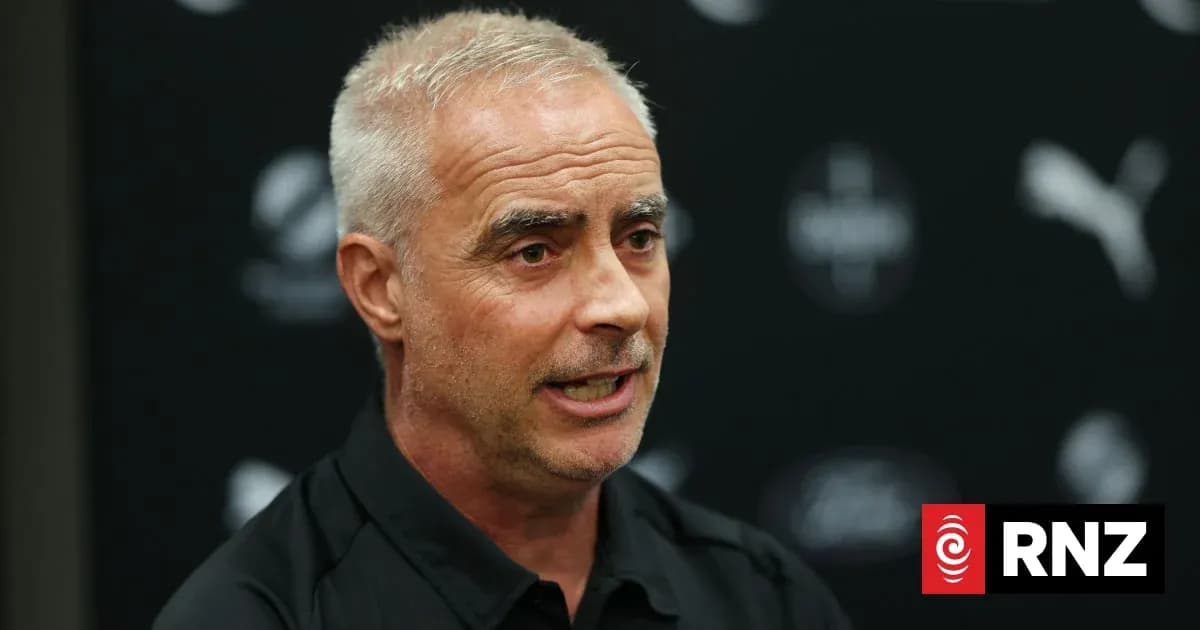
Darren Bazeley’s four-year spell in charge of New Zealand is over, cut short on the other side of a World Cup that delivered history, hope – and a hard ceiling.
New Zealand Football confirmed on Saturday that the 54-year-old will not be reappointed as All Whites head coach once his current deal expires, with his final games to come in two home internationals against India in November.
A World Cup that wasn’t enough
Bazeley led New Zealand to just their second senior men’s FIFA World Cup appearance, a significant achievement for a side that arrived at the 48-nation tournament as the lowest-ranked team in the field, down at 86th in the world.
On paper, the campaign was modest: a 2-2 draw with Iran in June, followed by a 3-1 defeat to Egypt and a 5-1 loss to Belgium. One point from three matches, group-stage exit confirmed yet again.
Inside the camp, though, there was a sense of progress. The All Whites traded punches with Iran, showed flashes of front-foot football, and tried to impose themselves against heavyweight opposition. That ambition, ultimately, did not translate into the breakthrough New Zealand Football wanted most: a first-ever passage beyond the group phase.
Expectations had been set. They were not met. The decision followed.
Disappointment and belief
Bazeley did not hide his frustration at the outcome but recognised the reality of international football, where tournament results tend to speak loudest.
He accepted that there was an expectation on this group to make history by reaching the knockouts for the first time and that falling short carried consequences. At the same time, he pointed to the foundations laid with a young core that he insists is only at the start of its journey.
Across his tenure, Bazeley pushed emerging talent into the frame and spoke often about a long-term project. He leaves convinced that the squad is on an upward curve, even if he will now be watching that evolution from the outside.
The end of a long New Zealand chapter
For Bazeley, this is more than just the end of a contract. It closes a 15-year stretch of coaching in New Zealand, where the former Watford defender has worked across multiple levels of the game.
English-born but deeply embedded in the local football landscape, he served as an assistant with the All Whites before stepping up to replace Danny Hay as head coach in 2022. The promotion was seen as a natural progression: a continuity appointment for a man who knew the system, the players, and the constraints of a small football nation fighting for relevance on the global stage.
Now that continuity breaks.
New Zealand must decide what comes next – a fresh voice, a new direction, perhaps a different risk profile as they look ahead to the next FIFA World Cup cycle. The All Whites have tasted the stage again. The question now is whether the next coach can turn that taste into something more enduring.





