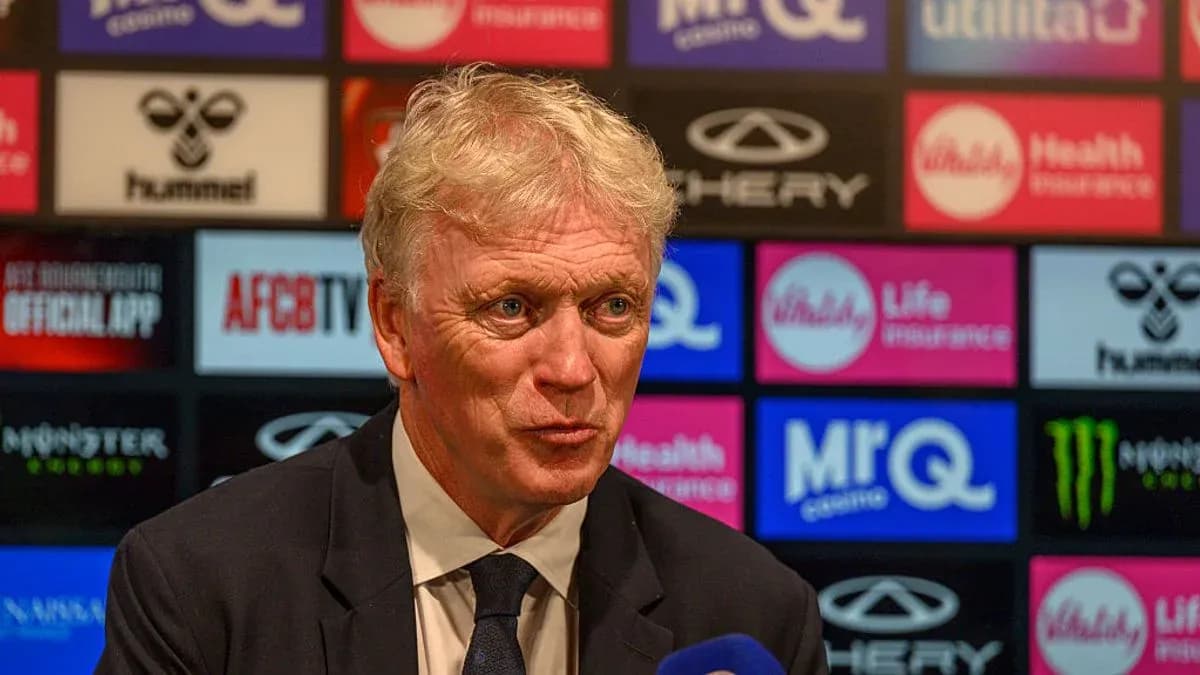
David Moyes cut a familiar figure: honest, a touch bruised, and already thinking about the next problem to solve.
The transfer window has closed, and he did not pretend to be satisfied. Asked for his verdict, he went straight to the point: disappointed. Disappointed they didn’t do more business. Disappointed that, when it mattered, things didn’t quite fall their way.
A window that bit back
Moyes knows what a Premier League squad should look like. He said so himself: “I know what it looks like to build a squad for the PL... some things went against us, some things we could have done better.” The frustration lies there. Not in panic, but in the sense of a plan only half-delivered.
He didn’t want to lose as many players as he did. That, though, is exactly what happened. The market dictated, opportunities arose elsewhere, and Moyes once again found himself managing the fallout rather than the ideal evolution of his team. He has been here before, he reminded everyone, referencing past departures like Wayne Rooney. Star quality emerges, interest follows, and clubs like his are forced into hard choices.
James Garner is the current example. Moyes accepts that when players “emerge as top players” they will draw attention. He wants Garner to kick on again, to build on last season, but he also knows the wider noise that surrounds a player in form. One claim, though, he shut down completely. Reports of a late Chelsea bid? “Completely untrue – there was no truth in that whatsoever.”
Balogun, missed moves and medicals
One of the window’s more intriguing sagas was the failed move for Folarin Balogun. Moyes refused to turn it into a blame game. “It wasn’t anyone’s fault,” he said, explaining that sometimes players encounter issues with medicals and that is simply the end of it. No conspiracy, no hidden drama. Just a deal that never got across the line.
He also acknowledged the financial reality around the squad. It “appears Everton were looking to get some money in,” he said, referencing the talks over Armstrong. Those discussions, he admitted, did happen. He did not want to lose Iliman Ndiaye, but the pattern is familiar: talented players, strong seasons, and offers that test a club’s resolve.
Moyes didn’t dress it up. He didn’t want this level of churn. Yet he is left to work with what remains and what was added, rather than what might have been.
Owners, alignment and an evolving club
Behind the scenes, the landscape is shifting. New owners, new expectations, new ways of working. Asked whether he, the board and TFG are aligned, Moyes framed it as a process rather than a problem.
For the club to be successful, he stressed, everyone has to pull in the same direction. The owners are “still getting to understand the role of owning a PL club” and, in his view, the alignment will improve as they learn. For now, he has had no conversations with TFG about their search for investment. That, at least at this stage, sits outside his remit.
What he can control is the mood around the team. “Behind here there is a lot of positivity and a lot of confidence in how we started the season,” he said. His job now is to keep giving the players the backing they need, to protect that belief despite a window that left him short of everything he wanted.
Ambition checked, not abandoned
Asked how the window had affected his ambitions for the season, Moyes didn’t hide his irritation. “Not very well,” he admitted of how he’d taken it personally. He felt the side overachieved last year and wants to match that again. To do it, he knows he needs help.
Some of that help must come from the stands. He praised the supporters for turning up at Bournemouth and made it clear he will need them again, especially in the big fixtures, including the looming test against Manchester United. This is a season where atmosphere might have to bridge the gap between what he has and what he wanted.
He also wants help in the form of players who see his club as a platform. A platform to grow, to push into international squads. He name-checked the likes of Hayden Hackney and Jarrad Branthwaite as examples of the kind of trajectory he wants to offer: a place where talent can develop and be seen.
The free-agent market remains an option, but only on his terms. Moyes is willing to look, but he will not collect bodies for the sake of it. Any arrival has to improve the team. That is his line and he is sticking to it.
Academy questions and a striker puzzle
Beneath the senior squad, the academy sits as a possible safety net. Moyes, though, is realistic. Asked if anyone is ready to step up, he admitted he isn’t sure. He may need to call on some youngsters this season, but he is not about to pretend the pathway is simple or the solutions obvious.
Braiden Graham is the name on many lips. Moyes likes him. The youngster featured heavily in pre-season and clearly impressed. But the manager was quick to draw a distinction. “I don’t think he is a striker, first of all,” he said. Graham is making progress, but expecting him to be a reliable source of Premier League goals right now would be “tough”.
That comment underlined a broader regret. When asked by Giulia whether there had been conversations with figures like George and Johnson about supporting Barry, Moyes admitted there had not been. He is locked into the present, focused on immediate tasks, but he conceded that if he had known the squad would look like this, he would have tried some of those players up front in friendlies. Pre-season, in hindsight, could have been a testing ground for solutions he now needs.
Those solutions must be found on the fly. The window is shut. The fixture list is not.
A manager braced for the fight
Moyes’ mood was not that of a man defeated by a difficult summer. It was something else: a mix of regret, clarity and defiance. He knows they “did better than expected last season” and wants to prove it was not a one-off. He also knows he will have to squeeze every drop out of a group that, in his mind, should have been deeper and more balanced.
He did not sugar-coat the shortcomings of the window. He did not hide behind vague language. Some deals collapsed. Some exits hurt. Some calls, by his own admission, could have been handled better.
Now comes the hard part. A squad that has lost key figures. Young players who might be needed before they are fully ready. New owners still learning the scale of the Premier League. A manager who believes he understands exactly what is required – and who will be judged on whether he can still deliver it without getting everything he asked for.
The market has had its say. The season will have the final word.