Dejounte Murray Requests Trade from Pelicans: What’s Next?
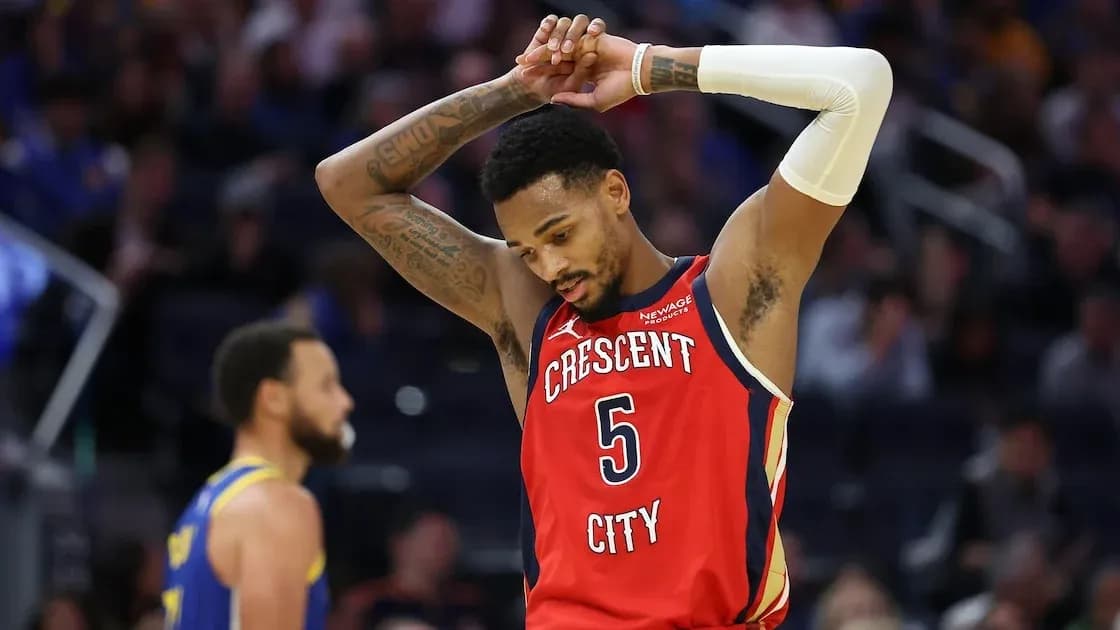
Dejounte Murray has finally asked out. The New Orleans Pelicans have confirmed what the league has sensed for weeks: their starting point guard wants a new home.
In a statement on Friday, the organization acknowledged Murray’s trade request and said it will “evaluate potential trade opportunities that are in the best interest of our organization.” Translation: the breakup is coming; it’s now about timing and return.
Shams Charania first reported the request, adding that Murray’s agent, Rich Paul, is already working with Pelicans officials on a path forward. Once that news hit, the market responded quickly.
Suns, Heat, Bucks circle a distressed asset
The Phoenix Suns have “registered interest,” according to Chris Haynes, and they make immediate sense as a suitor. They need a real organizer in the backcourt, and Murray, even in a down spell, still offers size, defense and pick‑and‑roll craft.
There’s another layer with Phoenix. As The Athletic’s Sam Amick reported earlier Friday, rival teams believe the Suns are “motivated” to move shooting guard Jalen Green for a proven point guard. Murray’s trade request didn’t just pop up in a vacuum; Amick later noted it could reignite trade talks between Phoenix and New Orleans. A young scoring guard for a veteran floor general is exactly the sort of framework that gets both front offices on the phone.
ESPN’s Bobby Marks has already laid out the salary‑cap math on a Murray deal, underlining how tight the margins are for contenders trying to squeeze in another significant contract. That hasn’t cooled interest. When a 27‑year‑old guard with an All‑Star past hits the market, teams find ways to get creative.
Miami and Milwaukee are in that mix, each searching for clarity in unsettled backcourts.
The Heat’s appeal is obvious: another primary handler to organize the offense and take pressure off Bam Adebayo while reshaping the guard rotation. A Murray arrival would free Davion Mitchell from heavy creation duties and push veteran marksman Klay Thompson into a cleaner sixth‑man role, where his shooting can be weaponized without asking him to carry possessions.
Milwaukee, meanwhile, has been tinkering on the fly. Ryan Rollins recently lost his starting spot so rookie Brayden Burries could line up next to Tyler Herro, but Burries has struggled to adjust. A proven initiator like Murray would instantly stabilize that group, give them size at the point of attack, and bring some order to late‑game possessions that have too often gone sideways.
A fracture years in the making
The Pelicans’ decision to rule Murray out of Friday night’s NBA Cup game against the Memphis Grizzlies, as reported by Marc Stein, felt like the final tell. When a player asks out and is quickly removed from a marquee game, it’s rarely precaution. It’s protection of an asset that’s about to move.
The tension didn’t appear overnight. The “writing on the wall” has been visible for some time around New Orleans. Murray has recently been on the defensive with fans, pushing back in now‑deleted social media posts against the idea that he’s to blame for the Pelicans’ uneven form. That kind of public back‑and‑forth between a lead guard and a frustrated fan base usually signals a relationship nearing its end.
Go back further and the fit always felt uneasy. On The Pivot last year, Murray admitted he “never” thought he’d play in New Orleans and described his 2025 torn Achilles rehab as his “worst experience in the NBA.” A player who never quite saw himself in a city, coming off the most grueling stretch of his career, trying to steer a franchise that has never fully settled on its identity — it’s not hard to see how the cracks formed.
From hot start to cold numbers
On the floor, the season has mirrored the off‑court unease. Murray opened the campaign looking sharp: 17.8 points, 5.8 rebounds and 6.0 assists across four October games. Those are borderline All‑Star numbers, the kind that remind you why teams are lining up now.
Then the bottom fell out.
Across his last five outings, Murray has dipped to 10.0 points, 3.6 rebounds and 3.2 assists, failing to reach double figures in three of those games. For a player expected to set the tone, that kind of slide becomes impossible to ignore. It affects usage, rotations, and, eventually, trust.
Yet the league’s interest underlines a simple truth: in the right environment, Murray still profiles as a high‑level floor general. He can defend both guard spots, operate as a primary or secondary creator, and bring playoff experience to teams that expect to be playing deep into May.
A guard on the move, a market on edge
So where does this go?
Phoenix can dangle Jalen Green and youth. Miami can offer structure, a defined role and the pull of a culture that has revived more than one veteran guard. Milwaukee can sell a chance to anchor an offense alongside established stars and chase a title in a win‑now setting.
New Orleans, for its part, holds a valuable but volatile asset. The Pelicans must balance Murray’s desire to move on with their need to extract real value, all while protecting a locker room that now knows its point guard has one foot out the door.
The request is in. The suitors are lining up. The only question left is which franchise will bet that Dejounte Murray, properly unlocked, is the missing piece in a season that still feels wide open.