Dejounte Murray's Trade Request Signals Pelicans' Dilemma
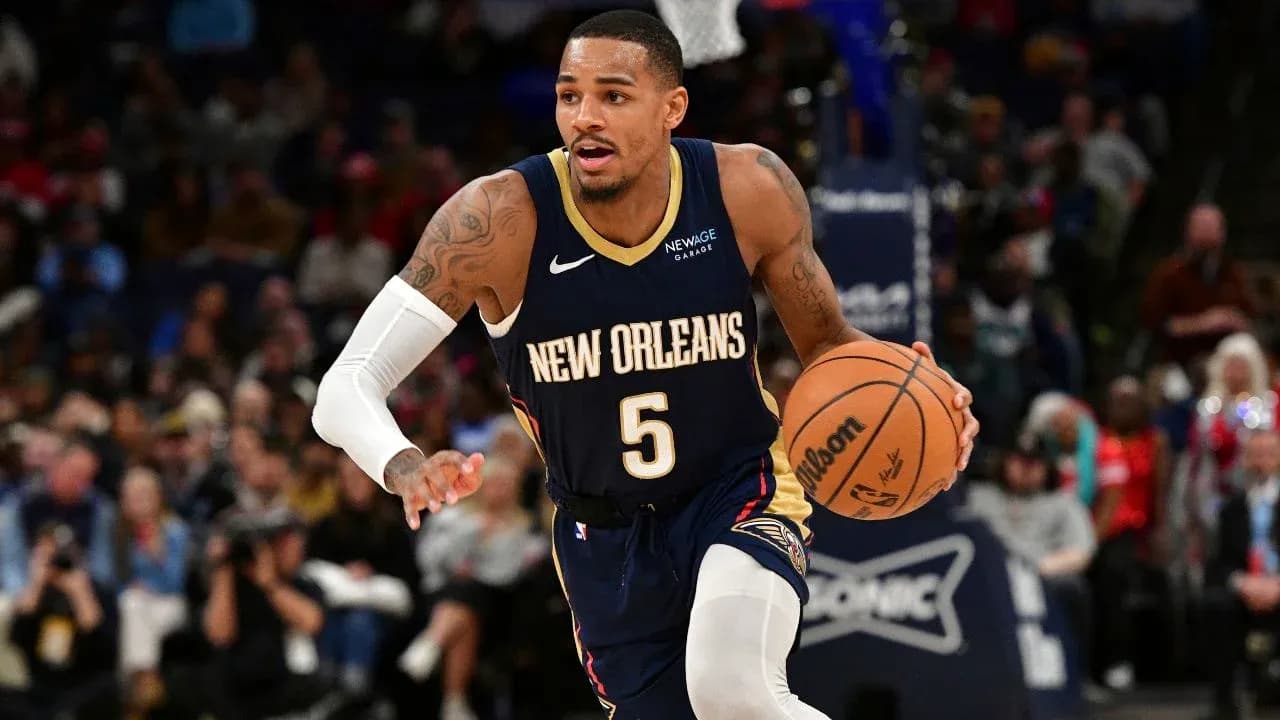
NEW ORLEANS — The Dejounte Murray era in New Orleans never really started. Now, it’s already heading for the exit.
The Pelicans confirmed Friday that Murray has requested a trade through his representatives at Klutch Sports, and the franchise has effectively put a “for sale” sign on a player they once viewed as a key piece next to Zion Williamson.
“Today, Dejounte Murray’s representatives informed us of his request to be traded,” the team said in a statement. “We will evaluate potential trade opportunities that are in the best interest of our organization.”
No drama in the wording. Plenty behind it.
From centerpiece to problem to parting ways
Murray, 30, was supposed to be the two-way guard who stabilized everything. When New Orleans pried him from the Atlanta Hawks in June 2024 — paying two first-round picks and sending Dyson Daniels, Larry Nance Jr. and E.J. Liddell the other way — it was a bold, win-now swing.
David Griffin, then the Pelicans’ executive vice president of basketball operations, saw an All-Star-caliber defender and playmaker who could ease the burden on Williamson, organize the offense and hound the league’s best guards. On paper, it made sense. On film in Atlanta, it looked even better.
On the floor in New Orleans, it never materialized.
Murray arrived off a season in which he averaged 22.5 points, 6.4 assists and 5.3 rebounds per game. That version of him never really stepped onto the court at the Smoothie King Center.
Injuries shredded the plan almost immediately. He broke his hand in the 2024 season opener. When he finally worked his way back, a season-ending Achilles injury in January 2025 cut him down again. Every time the Pelicans tried to reset the rotation around him, the medical report tore it up.
Across three seasons, Murray has managed just 54 games in a New Orleans jersey. He’s averaged 16.6 points, 6.6 assists and 5.9 rebounds in that span — respectable numbers, but not the star turn the franchise hoped for when it pushed those first-round chips into the middle.
This season has only deepened the frustration. Murray has played nine games, averaging 13.4 points while shooting 41.9 percent from the field. The rhythm isn’t there. The impact hasn’t matched the salary.
He is making $32.8 million this season and holds a player option worth $30.8 million for next year. That contract, paired with the injury history and dip in production, now forms the backdrop to every trade call the Pelicans will make.
Absent from the arena, loud online
On Friday night against the Memphis Grizzlies, Murray wasn’t just out of the lineup. He wasn’t in the building.
Officially, the team ruled him out with a left ankle sprain. Pelicans coach Jamahl Mosley confirmed Murray was not at the Smoothie King Center.
His presence has been felt somewhere else: online.
In recent days, Murray has used social media to air his grievances, taking aim at what he sees as internal issues inside the organization. After one reporter highlighted that the Pelicans were 3-0 without him this season, Murray fired back with a pointed reply:
“From what’s going on INSIDE, this sounds like someone hit you to say this! THE ‘SABOTAGE’ IS REAL!”
That one word — “sabotage” — ripped the curtain back on how fractured the relationship has become. This is no quiet, behind-closed-doors trade request. It’s a public unraveling.
A coach under pressure, a locker room under scrutiny
All of this hits as New Orleans stumbles through a four-game losing streak, trying to find any sort of identity. Mosley, asked how he felt about a player demanding a trade in the middle of that skid, steered away from the noise and back toward the group that remains.
“How well we play is very important to me, and making sure that we keep up that standard,” Mosley said. “That’s why it’s so glaring when we don’t, because I know what this team has shown during training camp, what it has shown during the preseason.
“The first couple games didn’t go on the win column, but the way we played, we did a lot of good things. … As the leader of this group, how we’ve been playing these last three games have not been a representation of this organization, the city, of the way we said we were going to play. That’s been my focus over this last day or so. How do we get back to that style of basketball that we know represents this organization the right way?”
While the coach talks about standards and style, the front office now faces a more immediate question: how to extract value from a distressed asset they once treated as a foundational piece.
A costly gamble that never paid off
The price New Orleans paid for Murray always carried risk. Two first-round picks and a pair of useful rotation players for a guard who needed the ball, needed touches and needed to stay healthy.
He never got the last part right.
The Pelicans envisioned Murray locking up opposing guards, creating off the dribble, easing the late-game burden on Williamson. Instead, they got rehab reports, lineup reshuffles and a star guard who turned to social media to vent his anger.
Now, the same franchise that sold Murray as a solution must convince the rest of the league he can still be one.
Rival executives will see the injuries, the shooting dip, the contract and the public frustration. They will also see a 2022 All-Star who, at his best, impacts both ends of the floor and stuffs the box score. Somewhere between those two versions lies the player New Orleans is trying to move.
The Pelicans’ statement on Friday was short and controlled. The reality is not. A high-stakes trade, a broken body, a fraying relationship and a roster still trying to figure out what it is without the guard who was supposed to define it.
New Orleans bet big on Dejounte Murray. The next deal they make will show just how much that gamble is going to cost.