Denver Nuggets Waive Jonas Valanciunas: A Cap Management Strategy
The Denver Nuggets didn’t just move on from Jonas Valanciunas this summer. They turned his contract into a cap-management exercise that will ripple through the next three seasons.
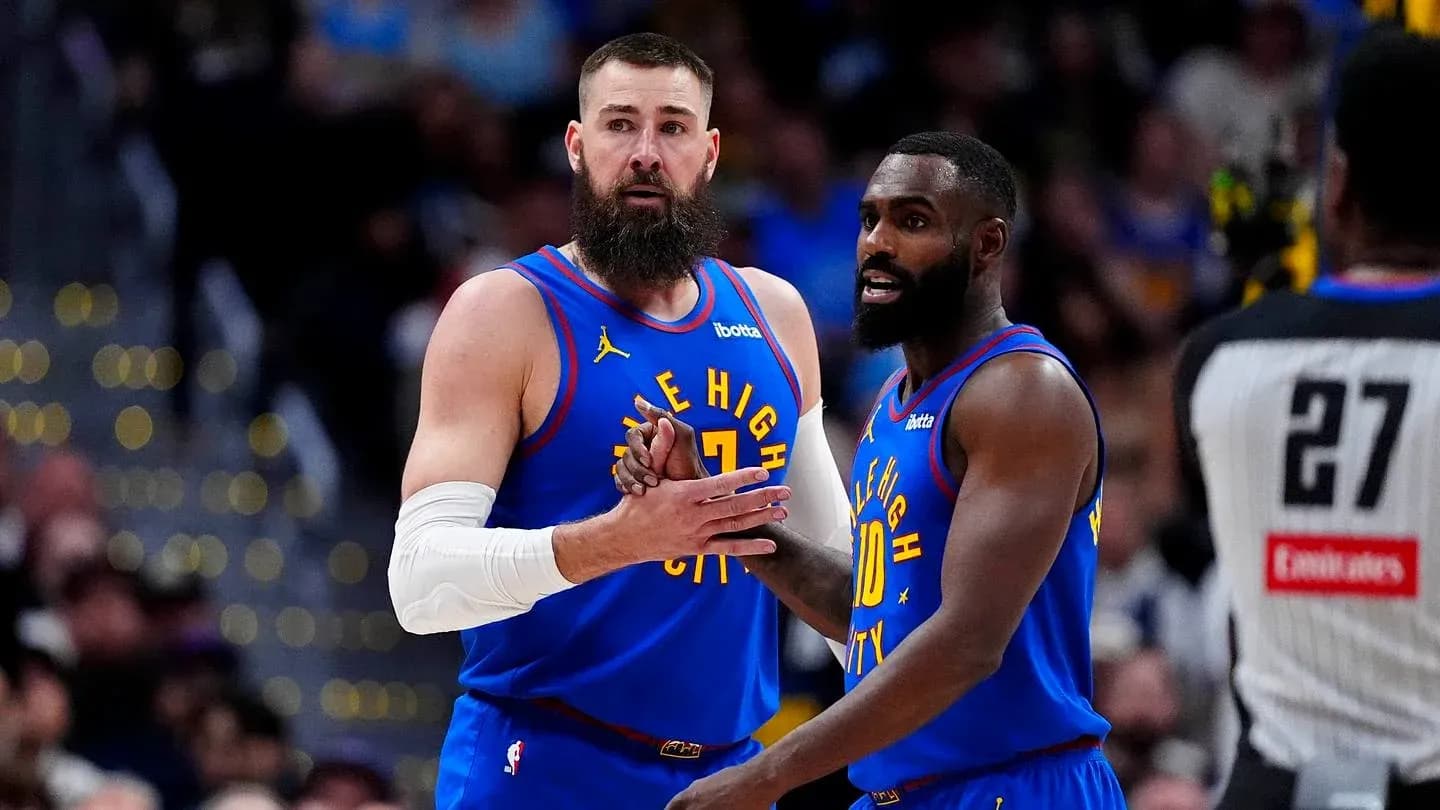
Valanciunas, a 14-year veteran, was waived in July after one year in Denver, a move long expected once it became clear his $10 million salary for 2026-27 was non-guaranteed. On the floor, he had done his job: 65 games, 8.7 points, 5.1 rebounds, 1.2 assists, 58.2% shooting in just over 13 minutes a night behind Nikola Jokic. Solid production. Limited role.
Stretching the final dollars
According to Michael Scotto of HoopsHype, Denver chose to stretch the remaining $2 million on Valanciunas’ 2026-27 salary. Instead of carrying that full $2 million on next season’s books, the Nuggets will now spread it to just under $700,000 per year over the next three seasons.
A minor figure on paper. A meaningful one for a team living in the harshest tax neighborhood in the league.
Denver is currently the only franchise over the NBA’s second apron, the punitive upper tier of the luxury tax that squeezes flexibility from every angle. Every dollar matters there. Every marginal saving changes what you can and cannot do with the back end of your roster.
By waiving Valanciunas before his deal guaranteed, the Nuggets chopped his obligation from $10 million down to $2 million in dead money. By stretching that $2 million, they sliced this season’s hit again, creating a little more breathing room under the second apron and a slightly cheaper total salary bill for 2026-27—now more than $1 million lower than it would have been.
The price of that relief: a small dead-money charge lingering on the cap sheet through the 2028-29 season.
Why Denver pulled the plug
This wasn’t about performance as much as it was about hierarchy and cost.
Valanciunas gave Denver a traditional, physical big behind Jokic, a reliable presence when healthy. But he was still a 13-minutes-a-night backup in a rotation built around its superstar center. Paying $10 million for that role on a second-apron team was never going to be sustainable.
The Nuggets chose the cold math of the cap over the comfort of veteran depth.
Cutting a non-guaranteed contract like Valanciunas’ allowed them to avoid the full $10 million payout, accept a reduced $2 million cap hit, and then soften that even further by stretching it. They now pay less this year to not have him on the roster than they would have paid to keep him in uniform.
For a mid-rotation player on a cap-constrained contender, that’s the new reality.
A small move with big context
On its own, this is a small financial maneuver. No blockbuster trade, no headline signing. Just a veteran big man waived, his remaining money stretched into the future.
Inside Denver’s front office, though, this is the kind of move that shapes what comes next: how they fill out the 15-man roster, which minimums they can afford, how close they skate to the second apron as they try to keep a title window open around Jokic.
Valanciunas’ name will sit quietly on the Nuggets’ books until 2028-29. The real question is whether these marginal savings today help Denver keep enough quality around their star to make those distant dead-money payments feel like a price worth paying.