Derby County were an hour away from changing hands. An hour from a new era, a new owner, a new money man fronting their Premier League dream.
Then the deal vanished.
Turki Al-Sheikh, the powerful Saudi government official and heavyweight player in world boxing, had an agreement in place to buy the club. The Independent Football Regulator had signed it off. So had the EFL. Lawyers were ready, Derby’s hierarchy were braced, and chief executive Stephen Pearce was preparing to watch the club pass from one set of hands to another.
And then, as Pearce tells it, the whole thing collapsed “completely out of the blue”.
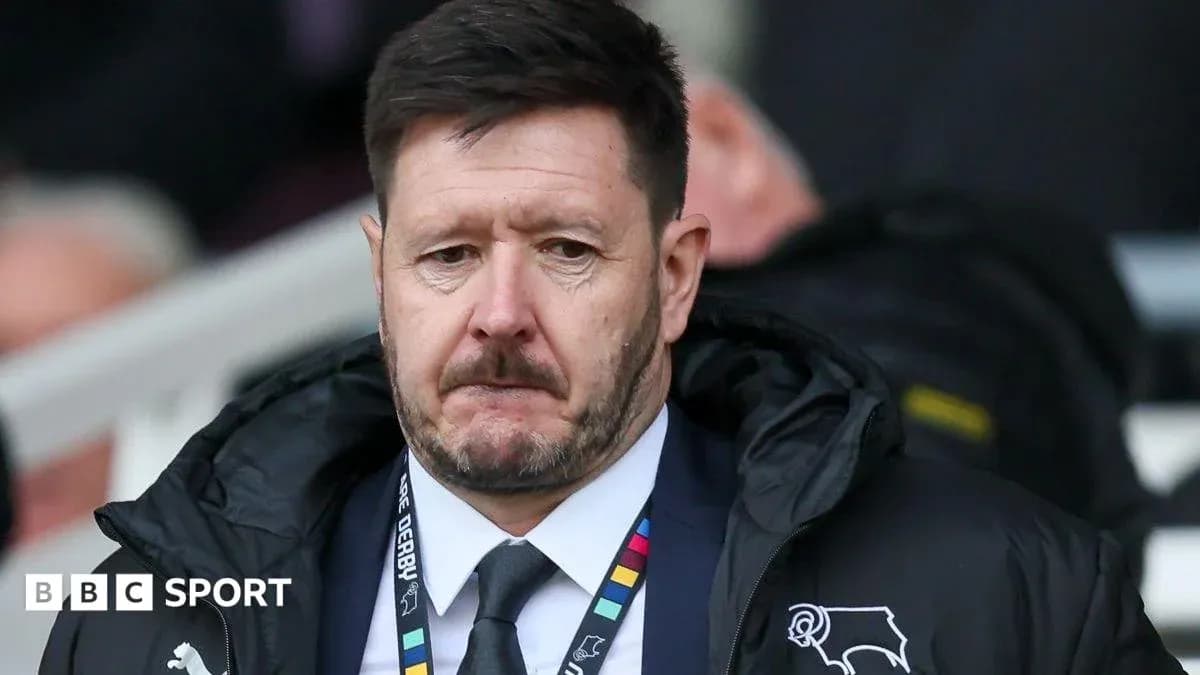
“The wind was taken out of our sails, totally,” he told BBC Radio Derby. “We weren't expecting it to fall down, effectively, an hour before we thought it was going to complete.”
For weeks, Derby had been stuck in what Pearce called a “holding pattern” while the bid was scrutinised. A crucial summer window was ticking away, plans were paused, and a fanbase that has already lived through administration and near-extinction was left waiting again for clarity on its future.
The clarity came, but not in the way anyone expected.
A sale that never was
David Clowes, the Derbyshire property developer and lifelong Rams supporter who rescued the club from administration in the summer of 2022, had always been open about wanting fresh investment. Not to walk away from the project, but to supercharge it. To give Derby the financial muscle to make a serious push back to the Premier League after last season’s near miss outside the play-off places.
Al-Sheikh’s arrival looked like that moment. A high-profile, well-connected investor, vetted and approved, ready to step in.
Instead, he walked away.
No drawn-out saga, no public war of words. Just a sudden withdrawal of interest that left Derby’s hierarchy stunned and, briefly, floored.
Pearce admits the blow was heavy. But he also describes what happened next: “We regrouped and everybody got back on the horse. It was like, right how do we go again? And let's crack on with what we wanted to do.”
The key detail is this: Clowes had never stopped backing the club while the takeover process rumbled on.
Spending while selling
Most owners, knowing they were on the verge of selling, would have tightened the tap. Waited. Protected their own balance sheet.
Clowes did the opposite.
- The £6m move to bring Bobby Clark in permanently from RB Salzburg? Signed off by Clowes.
- The loan-to-buy deal for Sam Szmodics from Ipswich for £2.7m? Again, Clowes’ money.
- The £600,000 outlay to prise Alex Mowatt from West Bromwich Albion? Same story.
All agreed, all funded, at a time when he believed he was about to hand the club over and never see a penny of that outlay again.
“This is why he's such an incredible owner,” Pearce said. “He thought the takeover was going to happen, he knew he was never going to get a penny back for all of that money he spent on those players and he still did it.
“He could have quite easily, on 1 July, said to us and said to John [head coach John Eustace], 'look, I think this is going through, the signs are the club is going to be sold, you're just going to have to wait because every penny I put in into transfers now I'm not going to get back'.
“And he didn't. He backed it regardless and that's why we're such a strong position.”
That is the crux of Derby’s current reality. A failed takeover, yes. But also an owner who acted like he was staying even when he thought he was going.
Off the market, back on the front foot
When the Al-Sheikh deal collapsed, Clowes made a decisive call. No more uncertainty. No more waiting for the next bidder.
He took Derby County off the market.
Instead of shopping the club around, he doubled down on the project he had nearly passed on. The focus turned fully to strengthening the squad that had already been shaped around promotion ambitions.
The £4m signing of David Ozoh from Crystal Palace became the standout statement after the aborted deal. It was the biggest single outlay of the window, backed up by a cluster of free transfers and loans, including a deadline-day reunion with Eiran Cashin.
For a club supposedly rocked by a failed sale, Derby’s spending pattern told a different story: this was not a retreat. It was a push.
So when Pearce was asked whether the disrupted summer had stalled the club’s charge towards the Premier League, his answer carried no hesitation.
“Not in the slightest, otherwise we wouldn't have spent all the money we've spent,” he said. “We want to push on. We want progression this season.”
The takeover that never happened might have changed Derby County overnight. Instead, it has left them with something different: an owner who has already proved, under pressure, how far he is willing to go to chase promotion.
The question now is simple. With the sale off, the squad strengthened and the money still flowing from Clowes’ pocket, can Derby finally turn that commitment into a return to the top flight?