Detroit Pistons Pursue Strategic Moves for 2026-27 Season
The Detroit Pistons didn’t chase headlines this summer. They chased edges.
Coming off a 60-win season and a newfound standard for themselves, Detroit’s front office resisted the urge to blow up the depth chart for a blockbuster. Instead, it layered in experience and shooting, betting that continuity plus a few sharp additions can push a rising group closer to contention in 2026-27.
A New Look Without a Reset
This is not the same Pistons team that stormed through last year’s regular season.
John Collins arrives as the headliner, a veteran forward expected to slide directly into the starting power forward spot. As The Athletic’s Hunter Patterson noted, Collins effectively takes over Tobias Harris’ role, keeping the structure of the lineup intact while adding a different kind of energy at the four.
Around him, the names get quieter but no less important. Isaiah Joe, one of the league’s more dangerous volume shooters from deep, joins the backcourt rotation. Taurean Prince brings switchable size on the wing and a steadying presence. Ebuka Okorie is another fresh face the fan base will need to learn, part of the next wave around the core.
Strip it down, and the plan is clear: keep the bones of a 60-win team, tweak the details.
That plan, however, still hinges on one unresolved question.
The Duren Stalemate
Everything in Detroit’s future runs through Jalen Duren.
The franchise’s top priority remains finding common ground with the 24-year-old big man, whose contract talks have stalled through the summer. Until that dispute breaks, the Pistons’ offseason is incomplete, their flexibility partially frozen.
Assuming Duren returns, the starting lineup should look familiar. Same structure, same identity. Collins in for Harris, everyone else in place. That kind of stability is rare for a team still on the rise.
If Duren signs, the real maneuvering can begin.
A Door Opens to Derrick White
Locking in Duren would do more than secure the paint. It would free Detroit to finally consider a move that nudges them from “up-and-coming” to something more dangerous.
One such swing sits in Boston.
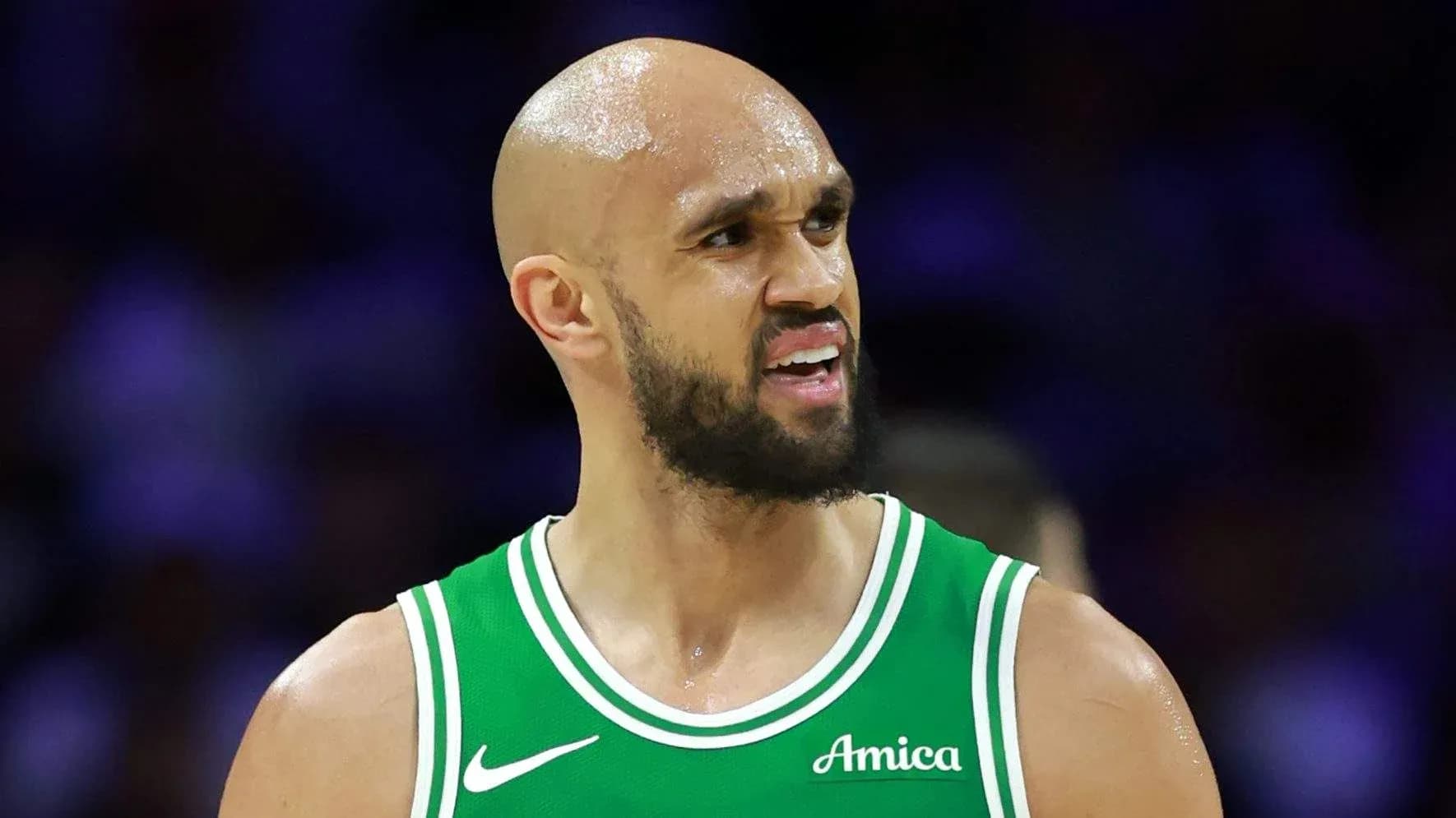
The Pistons could, in theory, call the Celtics about Derrick White — an elite perimeter defender with a reliable three-point stroke and a résumé stamped by a championship run. If Boston ever chose to listen, there’s a framework that makes sense for both sides:
- Pistons receive: Derrick White and second-round picks in 2028 and 2030
- Celtics receive: Duncan Robinson, Ron Holland II and a 2031 first-round pick
On Detroit’s end, the cost is real. Duncan Robinson remains one of the league’s purest shooters, a floor-spacer who bends defenses simply by standing behind the arc. Ron Holland II projects as a fierce on-ball defender, exactly the kind of young wing every contender wants in its pipeline. A future first only raises the stakes.
Yet the return is the kind of player teams chase for years and rarely land. White is not a theoretical upside play. He’s a proven playoff performer, a guard who guards, hits threes, and makes winning plays when possessions tighten.
Losing Robinson’s shooting would sting, but Detroit has already moved to soften that blow with the addition of Isaiah Joe, another deep-range threat who can punish defenses from well beyond the line. Watching Holland grow somewhere else would be tougher. That’s the emotional tax of a real trade.
Championship-caliber defenders don’t come cheap.
Would Boston Really Let White Go?
Any discussion of White starts with a simple reality: he’s central to what Boston does.
The Celtics acquired him at the 2021-22 midseason trade deadline and have watched him evolve into a cornerstone of their title-winning core. His two-way impact has pushed him into annual All-Star conversations, even in a crowded Eastern Conference backcourt.
Inside the organization, his value runs deeper than numbers. As NBA insider Jake Fischer reported last month, it would be a surprise if Boston chose to move on from him. The 31-year-old is described as a beloved figure within the franchise, the kind of player coaches trust and teammates follow.
That’s what makes any hypothetical deal so delicate. Boston would not part with White lightly. Yet the return in this scenario is not insignificant.
Robinson’s shooting would be a weapon in Boston’s already potent offense, giving them another specialist who can stretch defenses to the logo. Holland, meanwhile, brings the kind of defensive ceiling that front offices covet — a young, disruptive wing defender who can grow into a long-term piece on the perimeter.
For a 32-year-old guard, that’s a serious package.
How Far Is Detroit Willing to Go?
Detroit’s approach this offseason has been measured. No wild overpays, no panic swings. The front office has clearly valued asset preservation, content to let a 60-win core mature rather than cash everything in at the first sign of opportunity.
A deal built around Robinson, Holland, and a single future first-round pick would test that philosophy without shattering it.
It’s not an all-in gamble that empties the cupboard. It’s a calculated push: trading a specialist, a prospect, and one chip from the future for a guard who has already played high-stakes basketball in June and thrived in it.
For a franchise trying to turn last season’s breakthrough into something sustainable, that’s the kind of question that defines an era.
If Duren signs, and if Boston ever cracks the door open on Derrick White, how bold are the Pistons ready to be?