Borussia Dortmund’s transfer business is done. The talking stops now. The real examination begins in Sinsheim.
After easing past Hamburg in the league and HEBC in the cup, Dortmund arrive at Hoffenheim with six goals scored, three points on the board, and a sense that the warm‑up is over. This is the first real measuring stick of Niko Kovac’s new season.
Hoffenheim’s Revival, With a Twist
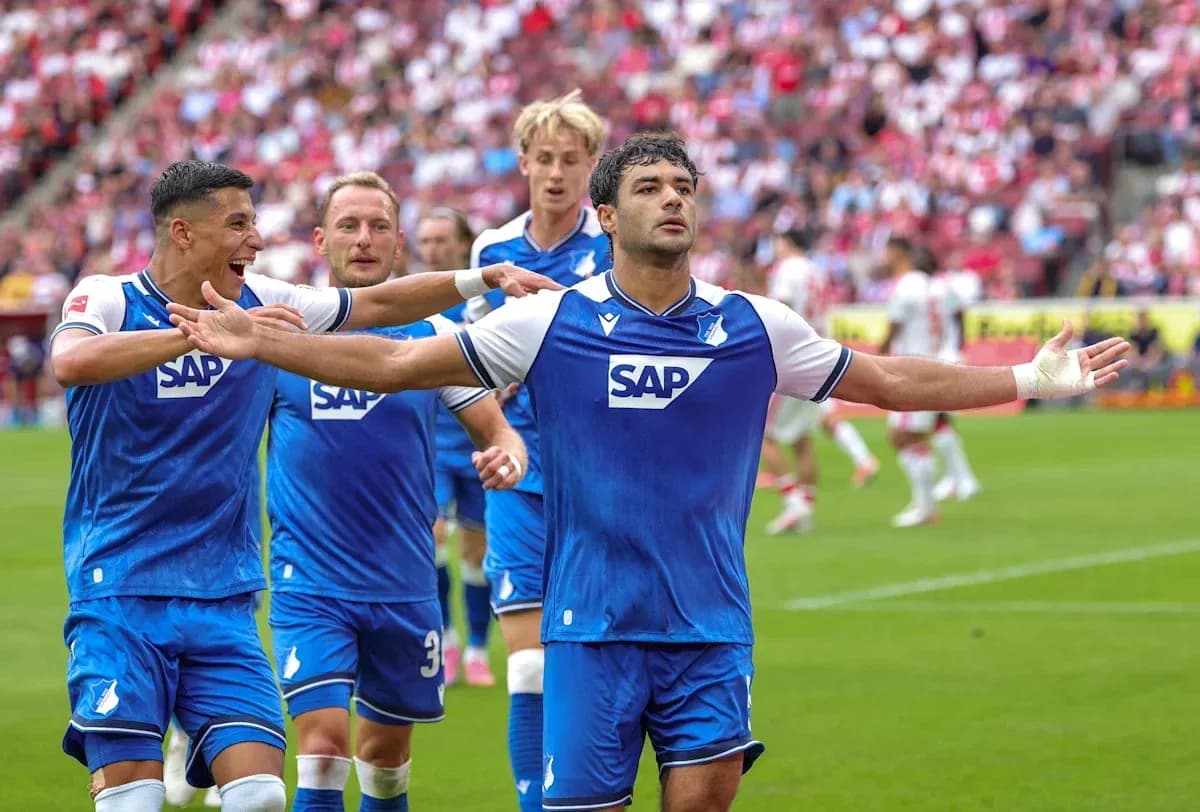
Hoffenheim come into the game as a side reborn. Under Christian Ilzer, they went from relegation fears in 24/25 to finishing just a point shy of the Champions League last season. He dragged them to safety, then doubled their points tally the following year. That kind of turnaround doesn’t happen by accident.
The summer, though, has reshaped his attack. Bazoumana Toure, the winger who gave them so much thrust, has gone. Fisnik Asllani’s move to RB Leipzig collapsed at the medical table, and he remains sidelined through injury. Ilzer has had to recalibrate.
To fill the Toure void, Hoffenheim moved for Patrick Wimmer from Wolfsburg, a direct, aggressive wide player built to stretch defences. Around him, they’ve added youthful energy and personality: Mats Rots and Nathan De Cat, two names made for headline writers and, more importantly, two players built for Ilzer’s high-tempo game. De Cat, a dynamic two-way midfielder, is expected to slot in alongside Wouter Burger in the centre of the pitch.
Only Wimmer started in the 2–3 defeat to Köln on the opening weekend, a game in which Hoffenheim dominated the ball with 59% possession yet still walked away empty-handed. That statistic matters. Ilzer’s side were fourth in the Bundesliga for possession last season. They want the ball, and they usually keep it. A repeat of the Köln lineup feels unlikely; this is the kind of fixture where he tweaks and sharpens.
Dortmund’s Selection Puzzle
For Dortmund, the questions start before a ball is kicked.
Konstantelias’s ACL injury and Samuele Inacio’s suspension have ripped a hole in Kovac’s attacking structure. Someone new must step in alongside Karetsas, just behind Serhou Guirassy. The options are clear: Marcel Sabitzer, Carney Chukwuemeka, or newly signed Ethan Nwaneri. The expectation, though, is that Kovac turns to experience. Sabitzer knows these games, knows these spaces, and offers the blend of control and aggression Dortmund will need away from home.
The second question is tactical. Against both Hamburg clubs, Dortmund dictated everything. They out-shot their opponents 35–9 across the two games, with an astonishing 20 efforts in their Bundesliga opener alone. They had the ball, they set the tempo, they suffocated.
Hoffenheim will not let them do that.
Last season Dortmund sat sixth in the possession table; they are comfortable with the ball, but they are about to meet a side that treats it as non-negotiable. If Ilzer’s men repeat the 59% they posted against Köln, Kovac’s team will have to show a different face: either win the midfield battle against a technically sharp, hungry unit, or turn leaner possession into ruthless efficiency.
This is where the season’s tone can shift. Do Dortmund impose, or do they adapt?
The Kramaric Problem
Lurking behind all of this is a familiar ghost in blue and white: Andrej Kramaric.
At 35, he is no longer the guaranteed starter, more the super-sub with a veteran’s radar for chaos. Yet for Dortmund, his name still carries a particular weight. Only five players in Borussia Dortmund’s entire history have scored more goals against them than Kramaric. Four of those sit in the Bundesliga’s all-time top ten scorers; the other is 15th. That is the company he keeps when he sees black and yellow shirts.
The numbers are brutal: 11 goals in 18 matches against Dortmund, including two in this exact fixture last season. He knows the angles, he knows the gaps, and he knows how to punish even the slightest lapse.
Expect him to start on the bench. Expect him to come on with the game stretched. Expect him to make the stadium hold its breath.
How Dortmund Are Likely to Line Up
Kovac experimented with a 4‑3‑3 in the cup at HEBC, but this trip feels like a night for familiarity and structure. The expectation is a return to the 3‑4‑2‑1.
Gregor Kobel comes back in goal after Meyer’s midweek appearance. In front of him, a back three of Gadou, Anton, and Ryerson offers a mix of physicality and mobility, tasked with holding the line against Hoffenheim’s fluid movement.
Out wide, Svensson and Beier should operate as wing-backs, asked to do the dirty work in both directions: pin Wimmer and company back when Dortmund have the ball, then race 60 yards the other way when Hoffenheim break.
In midfield, Nmecha and Bellingham remain the trusted axis. They will have to survive long spells of pressing and passing exchanges, turning turnovers into fast, vertical attacks. Ahead of them, Sabitzer and Karetsas are expected to occupy the half-spaces, linking midfield to the penalty area and feeding Guirassy.
Up front, Guirassy leads the line again after scoring last week. His job is simple and brutal: make every half-chance count, because there may not be many.
A Narrow Edge?
So the stage is set: Dortmund’s first major domestic test against a possession-heavy, confident Hoffenheim side that knows how to hurt them and owns a specialist in Kramaric.
The margins look thin. The battle for the middle of the pitch will decide whether Dortmund can turn this into a statement win or whether they spend the evening chasing shadows and relying on Kobel and Guirassy to bail them out.
A tight 2–1 away victory feels entirely plausible. The bigger question is what that kind of win would say about this Dortmund side: are they just flat-track bullies, or are they ready to grind out points in places like Sinsheim when the season really starts to bite?