
When Sir Jim Ratcliffe bought into Manchester United in early 2024, he sold a clear idea: a rebuilt club with a hard British spine, from the dugout to the dressing room. It sounded romantic, even logical. A return to roots.
Reality has been harsher.
Michael Carrick, the first permanent British managerial appointment of the Ineos era, is fighting to keep his job before the project has truly begun. Performances have dipped, pressure has spiked, and Saturday’s meeting with Chelsea already feels like a verdict rather than just another fixture.
In the background, United are doing what United always do in a crisis: drawing up a list.
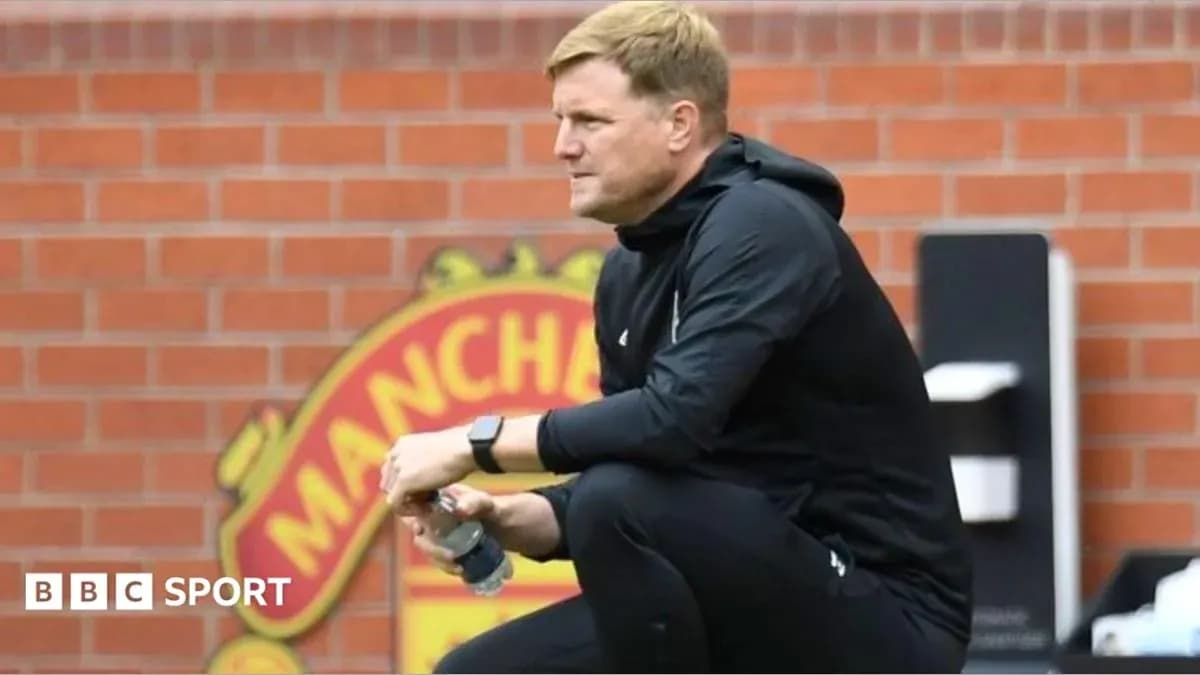
And near the top of it sits Eddie Howe.
Howe’s body of work
If Howe’s name jars with a section of United’s support, it doesn’t with people inside the game.
Those who have worked with him paint the same picture: a coach obsessed with the training ground, forensic in his preparation, relentless in his demands. Players improve under him not by accident but by design. He builds habits, then builds culture around them. That matters in a dressing room stitched together by six different managers and six different ideas of how football should be played.
His résumé is not the traditional “superclub” route, but it is substantial.
In January 2009, Bournemouth were staring down relegation from League Two. Howe, still in his early 30s, took over and dragged them not just to safety, but on a climb that ended in the Premier League by 2015. He then kept the Cherries there, punching above their weight season after season, before leaving the club for a second time in 2020.
Newcastle came next. Appointed in 2021 with the club in relegation trouble, Howe turned a drifting side into a Champions League team, twice securing qualification for Europe’s elite competition. In 2025 he added the EFL Cup, Newcastle’s first major trophy in 56 years. That is not a glamorous footnote. It is a statement of competence at a club that had forgotten how to win.
The step from Bournemouth and Newcastle to Manchester United is huge. Everyone knows it. But the idea that Howe arrives without pedigree simply doesn’t stack up.
The split verdict
Still, his emergence as a leading contender to replace Carrick has not been met with universal approval.
On social media, a vocal portion of the fanbase has dismissed Howe as not a “big enough name” for Old Trafford. The argument is not about tactics or training methods, but profile. Some want a banner signing in the technical area as much as on the pitch.
Former United midfielders Paul Scholes and Nicky Butt have not thrown their full weight behind Howe either. On their podcast, they stopped short of a ringing endorsement, even though both had previously spoken positively about the 48-year-old when Ruben Amorim was sacked in January. Their hesitation now reflects the mood of a support that has grown suspicious of almost every football decision since Ratcliffe’s minority stake was confirmed.
Not everyone is unconvinced.
Roy Keane, never shy of a strong opinion, has publicly backed Howe as a serious candidate. Darren Bent, Gareth Barry and Jack Wilshere are among other former top-flight players who see him as the right fit for the job. Inside the game, his name carries more respect than some online reaction suggests.
Look hard enough and you will find advocates and detractors for any manager. The real judgement will not come from podcasts or timelines.
It will come from the boardroom.
Power, money and timing
The decision-makers are now clearly defined. Chief executive Omar Berrada will weigh the recommendations of sporting director Jason Wilcox and director of recruitment Christopher Vivell, before minority owner Sir Jim Ratcliffe and co-chairs Joel and Avram Glazer make the final call.
Wilcox is thought to be firmly in Howe’s corner. Vivell is understood to prefer Julian Nagelsmann, the former Bayern Munich and Germany coach. Two very different profiles, two very different visions of what United should become.
Before any of that, one question looms: what happens to Carrick?
If Saturday goes badly against Chelsea and United choose to act, the financial calculation begins immediately. Carrick and his staff would need to be paid off before a new coach even walks through the door. This is a club that has burned through managers and money alike over the past decade, and there is a clear desire at executive level to stop the churn from becoming even more expensive.
Howe’s situation adds another layer. When he left Newcastle in the summer, both parties agreed a compensation structure designed to protect the Magpies from him walking straight into another job. The details remain confidential, but multiple sources have indicated that any club or national team hiring him right now would owe Newcastle a seven-figure fee.
That figure began at around £6m and has already dropped by half. The payments also come with an expiry date, understood to be before the end of the current season. After that, Howe can be appointed without a compensation fee.
For a club of United’s size, paying up to £3m for a head coach is not exactly a financial crisis. Yet when set against the millions already spent hiring and firing managers in recent years, it becomes another line in a ledger that Ratcliffe, Berrada and Wilcox are under pressure to control.
The question is simple: do United move quickly and pay, or wait and risk the landscape changing?
What Howe would walk into
Strip away the noise and one truth remains. Manchester United is not an easy job for anyone.
The structure has been widely questioned. Some fans insist no manager can truly succeed with the club configured as it is, with a squad assembled by six different permanent managers, each with their own philosophy and shopping list. The result is a dressing room that looks less like a coherent squad and more like a decade-long collage.
Since Ratcliffe arrived, matchgoing supporters have grown increasingly disillusioned with the football decisions taken. Yet managers have been backed. Erik ten Hag, Ruben Amorim and now Michael Carrick have all been given significant support in the market and in public.
The unease around Howe, in part, seems to stem from that same frustration. Wilcox himself was targeted by supporters during the 3-0 home defeat by Bournemouth, a night that laid bare just how far United have drifted from their own standards. For some, Howe is too closely associated with that “middle tier” of clubs they feel United should never be compared with.
History offers a counterpoint. In the modern game, very few managers are allowed to build a long, detailed body of work at one club as Sir Alex Ferguson did at Aberdeen before heading south in 1986. If that appointment were made today, the reaction might not be so different to the scepticism Howe now faces.
A choice that reveals the plan
Strip it back, and this is about direction as much as it is about any one man.
Eddie Howe is an obvious contender for Manchester United. So is Nagelsmann. So, potentially, would Howe be for the England job if that ever becomes vacant. The competition for elite coaches is constant, and United can no longer assume they are the automatic destination.
Who they choose next will say as much about the club’s identity as any signing on the pitch.
Do Ratcliffe and his football department trust a British coach with a proven track record of building teams, improving players and establishing culture over time? Or do they chase a bigger continental name to satisfy those who still see United as a stage for superstars, even on the touchline?
The answer will not just decide who stands in the technical area after Carrick. It will reveal, at last, what kind of club Manchester United intend to be in this new era.





