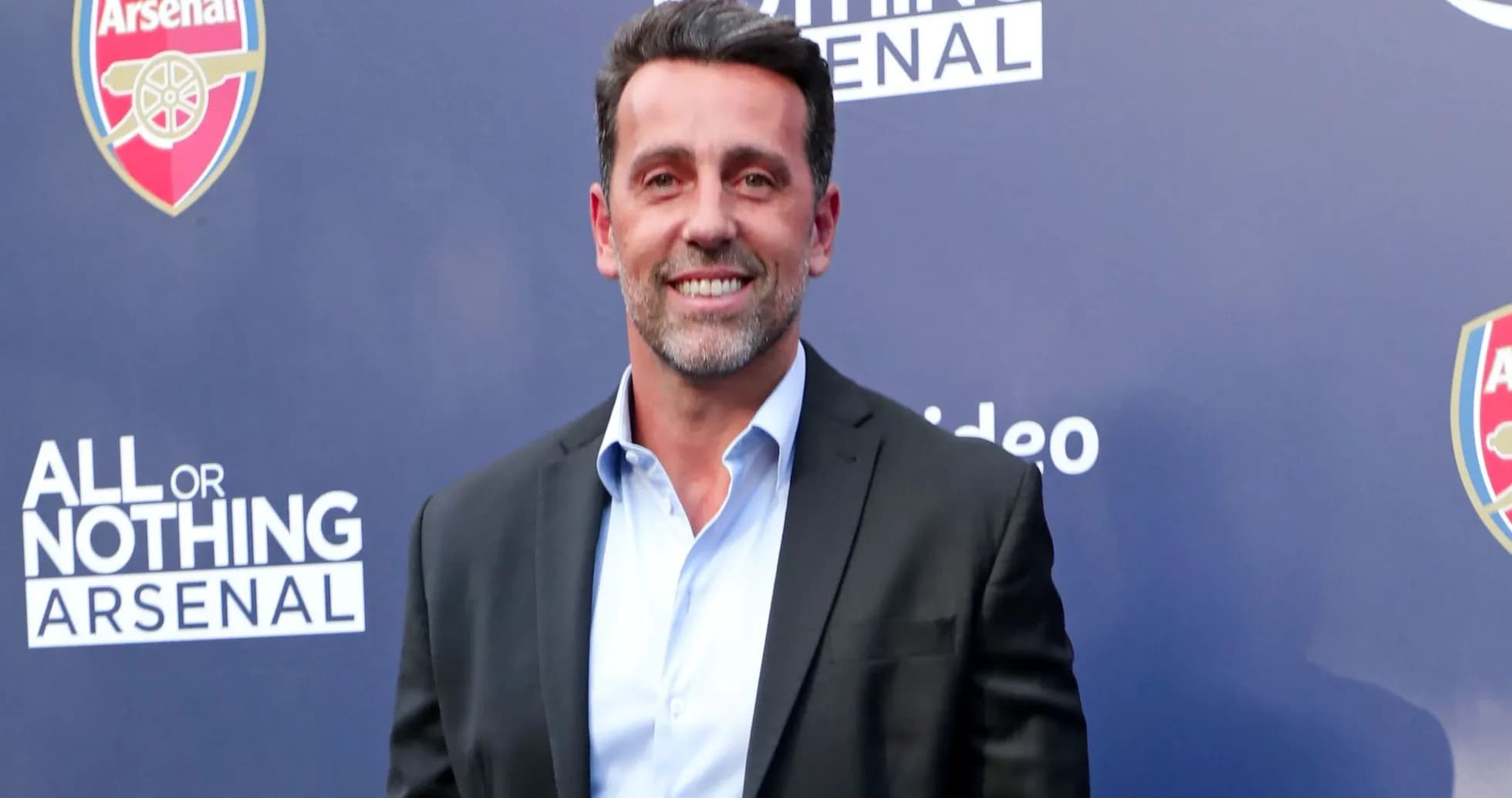
Edu’s time at Nottingham Forest has ended not with a statement or a tribute, but with a quiet exit and a locked office door he stopped walking through months ago.
Just over a year after arriving as global head of football to front an ambitious multi-club project, the Brazilian executive has officially left the club, according to The Athletic. In reality, his departure had been playing out in slow motion since winter. He has not attended a match since February, nor visited the City Ground or the training ground since early March, when the first reports surfaced that his days at Forest were numbered.
The club will not announce his exit. There will be no direct replacement either. Instead, Chief Football Officer George Syrianos has already stepped into the vacuum, assuming broader responsibilities once Edu was effectively sidelined. Syrianos’ expanded role also cushions the blow of another key departure: Ross Wilson’s move to Newcastle United in October last year, which had already stripped away a layer of experience from Forest’s football structure.
A Project Unravels
Edu arrived with a heavyweight reputation. This was the architect who had helped reshape Arsenal’s squad, the former Invincible who had moved seamlessly from the pitch to the boardroom. Forest handed him the keys to a bold, multi-club vision.
On the ground, the reality turned chaotic.
After previously flirting with a Champions League place under Nuno Espirito Santo, Forest’s season disintegrated into a relegation scrap. The turning point came off the pitch. A breakdown in the relationship between Nuno and Edu triggered the manager’s exit and set off a chain reaction that the club never truly controlled.
The dugout became a revolving door. Ange Postecoglou lasted just 39 days before Forest pulled the plug. Sean Dyche followed, brought in to steady the ship, only to be dismissed in February. Vitor Pereira arrived, then departed just as quickly. Oliver Glasner, the former Crystal Palace boss, is the latest man tasked with restoring order to a club that has forgotten what stability looks like.
Each change was supposed to be the reset. Each one deepened the sense of drift.
Transfer Strategy Under Fire
The turmoil on the touchline was matched by confusion in the transfer market. Edu’s recruitment at Forest came under heavy fire from supporters and pundits alike.
The club spent aggressively. The names were big. The impact was not.
Omari Hutchinson arrived with excitement around his potential. Douglas Luiz and Oleksandr Zinchenko came with Premier League pedigree and reputations forged at the top end of the table. None of them managed to leave a meaningful mark at the City Ground. The squad grew more expensive, not necessarily better. The gaps in the team remained, while the dressing room filled with players struggling to justify their billing.
For a club fighting to stay in the division, such missteps carry a brutal cost. The criticism inevitably landed at Edu’s door.
A Stark Contrast To Arsenal Glory
The failure of Forest’s project under Edu stands in sharp contrast to the image he had built in North London.
He became Arsenal’s first technical director in 2019 and quickly put his stamp on the club’s future by appointing former teammate Mikel Arteta as manager later that year. The partnership helped drag Arsenal back into title conversations, and in November 2022 Edu was promoted to sporting director. He held that role until his surprise resignation in November 2024, leaving with his stock high and his work widely praised.
Forest looked like the next logical step: a chance to apply that experience to a broader, multi-club model, to turn potential into a long-term structure.
Instead, it has become the lowest point of a career otherwise defined by success.
From Invincible To Unwanted
Edu’s CV remains formidable. As a player, he was part of Arsenal’s iconic 2003-04 ‘Invincibles’ side. Off the pitch, he cut his teeth in serious administrative roles long before the Forest experiment.
He spent five years as director of football at Corinthians, one of Brazil’s biggest clubs. He briefly advised the Iran national team in 2014. He then spent three years as general coordinator for the Brazil national side, working at the heart of one of world football’s most pressurised environments.
Those roles built the reputation that brought him to Arsenal and then to Nottingham.
Yet at Forest, the combination of boardroom conflict, managerial churn and muddled recruitment left that reputation exposed. By the time this official exit arrived, the club had already moved on without him, structurally and emotionally.
Forest now push ahead under Syrianos and Glasner, still chasing the consistency that vanished on Edu’s watch. For the Brazilian, the question is simple and sharp: does this year at the City Ground become an asterisk on an otherwise glittering résumé, or the moment his executive career has to be rebuilt from the ground up?