
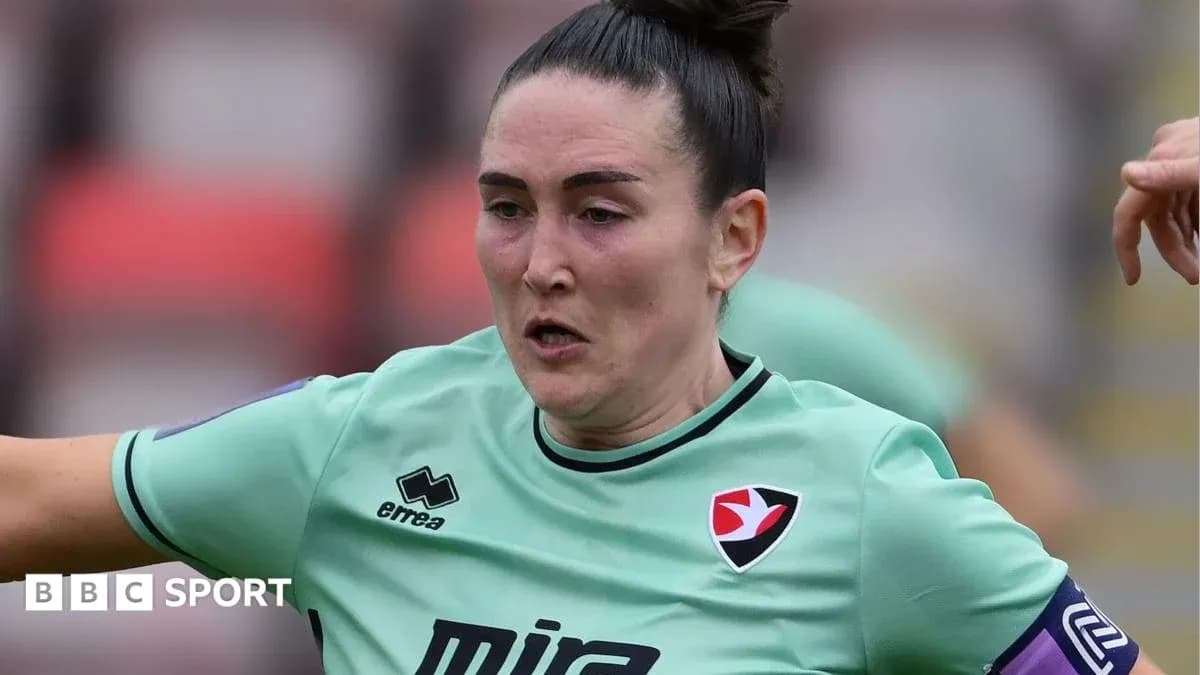
Emily Owen, the long-serving captain of Cheltenham Town Women, has launched a blistering attack on the club’s internal culture after confirming her departure from the side she has led for the past four years.
The defender, who has made more than 130 appearances for the Women's National League Southern Premier club, announced on Monday that she was leaving. At first, it looked like the usual farewell of a respected senior player. Then the tone changed.
Once Cheltenham Town Women shared news of her exit on social media, Owen responded with a public statement of her own, insisting she had not simply moved on but walked away because of what she described as deep-rooted problems behind the scenes.
She said she left due to “a lack of an individual's principles and outright failures in processes” and made clear she wanted “to set the record straight” after hearing rumours about why she had gone.
In her comments, Owen did not name the person she was referring to, but accused “one individual in particular” of holding “far too much control within this team, turning the environment into a dictatorship where players feel psychologically unsafe”.
Those are heavy words from a former captain. They cut right to the heart of a club’s duty of care.
Owen went further, claiming she was not alone in her stance. She said three other players had also left Cheltenham “on moral grounds as boundaries were crossed, that shouldn't be crossed in women's football”.
The allegations place a sharp spotlight on the club’s internal structures and how power is managed within the squad environment, especially at a time when welfare standards in the women’s game are under growing scrutiny.
Cheltenham Town Women, for their part, have chosen not to engage in a public back-and-forth over the specifics. In a statement, a spokesperson said the club would not comment on individual cases but stressed that it “takes all matters relating to the welfare and wellbeing of its players extremely seriously”.
The club added: “Cheltenham Town Women are committed to ensuring that every player, member of staff and volunteer is treated with respect and feels safe, valued and supported within our environment. We will ensure that any concerns brought to our attention are treated appropriately, sensitively and in line with all relevant policies and procedures.”
For a side competing in the third tier of the women’s pyramid, this is not the kind of headline they would have wanted. Yet once a respected captain publicly talks of a “dictatorship” and players feeling “psychologically unsafe”, the conversation around Cheltenham Town Women can no longer be confined to results and league tables.





