Empowering Girls in Northern Nigeria Through Basketball
Abuja, Nigeria – For years, the sound of a bouncing ball in Kano’s neighbourhood courts almost always meant one thing: boys were playing. Girls, if they were there at all, watched from the edges.
Khamila Sani Ibrahim refused to stay on the sidelines.
Growing up in northern Nigeria, she learned early that her love for basketball would have to squeeze itself around expectations at home. Visits to her grandparents during school holidays meant sneaking time with the game she loved.
“It is very hard for me to train in basketball,” she said. “I only go out to play when they are not around, or I tell them that I’m going to visit my friends, and from there I go to the court.”
In much of northern Nigeria, courts and pitches have long been treated as male territory. Girls who want to play run into a familiar wall: not enough facilities, little or no equipment, barely any coaching, and almost no structured competitions. Even when they show up, they are often treated as guests in someone else’s sport.
Grassroots To Greatness changes that.
Grassroots To Greatness (G2G) is not a club, not a federation, but something more elemental: a doorway. Built specifically for girls, it offers them a place to train, compete and be taken seriously.
Youth sports advocate Jawahir Bello started the initiative after seeing how rarely girls in the region were given that chance. She didn’t just want them on the court; she wanted them there on their own terms.
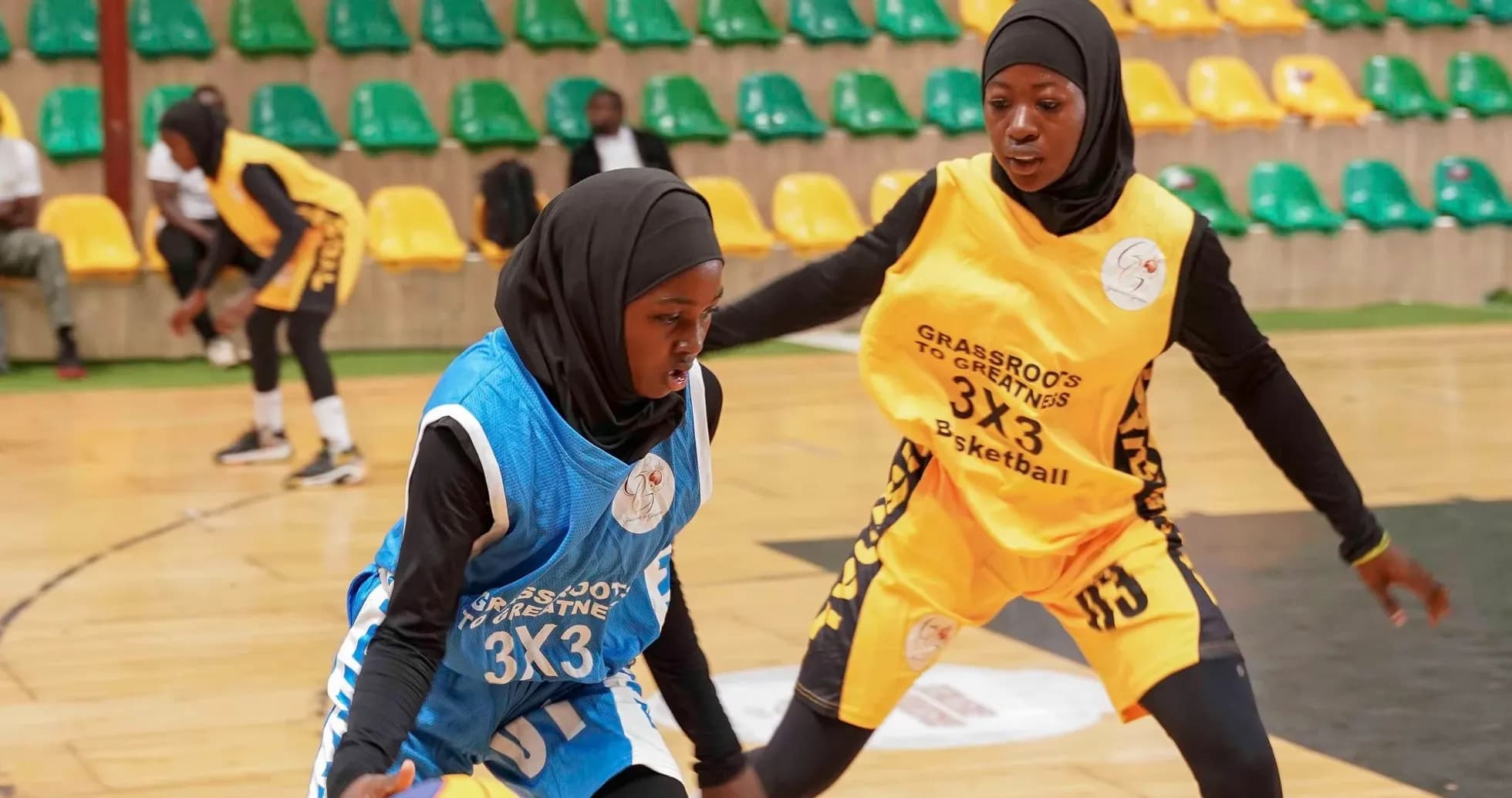
At G2G tournaments, players line up in custom hijabs, long sports vests and athletic tights. The look is deliberate, a visual answer to the old argument that serious sport and modest dress cannot coexist.
“Our core value is about participating in sports without doing anything that goes against our cultural values or our identity as Muslims,” Bello told Al Jazeera. “Whether you put on a hijab or innerwear under your jersey, modesty is key. You come out modest, decent and fully covered.”
She expected pushback. Female-only tournaments. Community training sessions for girls. In some areas, that can be enough to draw a hard line of resistance.
Instead, something else happened. Community stakeholders began to welcome the project. Local leaders saw that the girls were not being asked to trade their beliefs for a game. They were being given space to thrive within them.
To reach those girls, G2G works through people who already know the terrain. The initiative partners with grassroots coaches who run community teams, the same coaches who understand which courts are safe, which families might be open, which girls are quietly desperate for a chance.
Their own tournament, their own rules
When Ibrahim pulled on a jersey for Kano State at a multi-state G2G tournament, she stepped into a world that felt completely different from the male-dominated teams she had grown used to.
No more being the token girl. No more being underestimated before the first whistle.
“What G2G did for us was incredible,” she said. “They provided jerseys, custom hijabs, basketballs, cover for our transport and even financial stipends for all the teams, regardless of who won or lost. It made us feel seen and valued.”
On those courts, the details mattered. The uniforms that fit their values. The logistics covered. The message that every team, not just the champions, deserved to be supported. For players who had spent years fighting just to be allowed to play, that kind of backing landed with real force.
In Abuja, 11-year-old schoolyard games were the starting point for another young player, Fatima Diouf. She found basketball at school, then went looking for something tougher. G2G became her proving ground.
Her team didn’t reach the finals. That didn’t seem to bother her.
“I have learned a lot beyond just basketball. I learned teamwork, confidence, discipline and how to keep improving,” she said.
The scoreboard mattered. The lessons stayed longer.
The fight off the floor
The real struggle for these girls often begins when they leave the court.
For Ibrahim, every training session is a negotiation. She battles self-doubt planted by years of hearing that girls can’t keep up. She shrugs off the dismissive looks from male players who assume the game is theirs by default. Then she goes home to domestic chores and schoolwork, trying to carve out hours that don’t exist.
Those daily battles are exactly why figures like Mansur Abdullahi pay attention to what is happening at grassroots level. As assistant coach of Nigeria’s U-20 women’s national football team, the Falconets, he understands how narrow the pathway can be.
“Official sports bodies have big structures, but local groups provide the actual trust and cultural understanding,” he said. “So it’s only through community-led initiatives that more professional teams will understand what’s acceptable for girls and boys and how to frame sports so it fits the existing values instead of clashing with them.”
The message is clear: big federations may control the elite stages, but it is community programmes like G2G that build the bridge to them.
Dreams that stretch beyond the baseline
For many of these girls, the tournaments are more than a weekend of competition. They are glimpses of another possible life.
Before G2G, Ibrahim’s ambition ran into a wall at home. Her father worried that competitive sport might pull her away from the family’s standards. Then he came to watch.
He saw the hijabs, the long vests, the structure. He saw his daughter compete without abandoning anything he considered essential. The doubts faded. Support took their place.
“I want to secure a college sports scholarship in the United States and eventually turn professional,” Ibrahim said. “More than that, I want other Muslim girls across northern Nigeria to see that sports build your health, strength, and confidence, and that nothing should hold you back from chasing your dreams.”
The vision is personal, but it is not small. One scholarship, one professional contract, can change how an entire community views the game.
Diouf’s horizon widened in a different way. Watching the web of coaches, organisers and stakeholders around the G2G tournament, she began to picture herself not just in Abuja, not just in Nigeria, but on courts across Africa.
That is the quiet power of a well-run grassroots event: it doesn’t just crown a winner. It redraws what feels possible.
Bello knows that putting on tournaments is only one part of the job. The deeper aim is to show girls that they belong in sport, that they can chase excellence without shedding the identities that shape them.
“You can keep your identity, stay covered and still achieve something in life,” she said.
In northern Nigeria, where a girl once had to sneak out just to touch a basketball, that statement is no longer theory. It is walking onto the court, lacing up, and waiting for the ball.