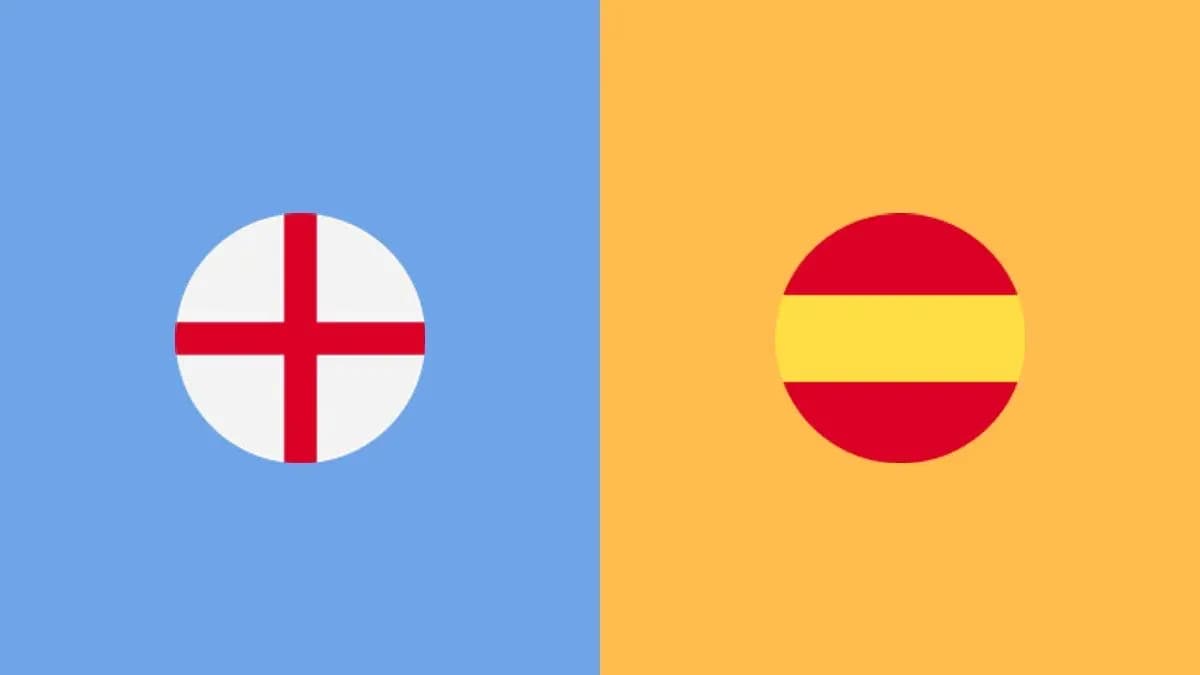
Wembley braces for a blockbuster. England against Spain. Thomas Tuchel against the European champions. A Nations League night that feels far bigger than the label on the competition.
On Saturday, September 26, 2026, under the arch and under the lights, Wembley will be full to the brim again. Ninety thousand fans, a wall of white and red, ready to test the noise levels against one of the most technically polished sides on the planet. This is not just another date in the international calendar. It’s a collision between England’s new era and the team that currently sits on world football’s throne.
A heavyweight clash with World Cup scars
Both teams arrive carrying fresh memories from the World Cup. England’s campaign ended in familiar heartbreak, but not before they reminded everyone how dangerous they can be when the game opens up.
Four wins from five at the tournament. Eleven goals scored, eight conceded. A 6-4 quarter-final epic against France on July 18 that felt more like basketball than football, a wild showcase of attacking intent and defensive frailty. Before that, a 2-1 win over Norway and a 3-2 victory over Mexico. They attacked with abandon, they entertained, and they paid the price in the end.
Argentina stopped them in the semi-finals, 2-1. A narrow defeat, a familiar story. England had the momentum, the goals, the belief. They didn’t have the final word.
Spain did.
Luis de la Fuente’s side walked through the World Cup with the cold efficiency of champions. Five wins from five. Seven goals scored, only two conceded. They didn’t just win; they controlled. They strangled games, dictated tempo, and then killed them.
A 2-0 win over France in the semi-final. A 1-0 victory over Argentina in the final on July 19. Three clean sheets in those five matches, each one a reminder of how hard it is to break them down when they settle into their rhythm. While others burned out, Spain never blinked.
Now the world champions come to Wembley, Nations League badge on the sleeve, world crown on the head.
Old wounds and recent history
If England needed extra motivation, they only have to look back two years.
The last time these two met in a competitive game, Spain walked away with the European Championship. A 2-1 win in the Euro 2024 final on July 14, 2024, left England staring at another summer of what-ifs. That night added another layer to a rivalry that has quietly become one of international football’s most compelling modern matchups.
Across the last five meetings, Spain hold the edge: three wins, one draw, one England victory. The one bright spot for the Three Lions came in the 2018 Nations League, a breathless 3-2 triumph in Seville that briefly suggested England were ready to mix it with the elite on a regular basis.
Since then, Spain have usually had the final say. They arrive in London not just as European and world champions, but as a team with recent, painful form against England.
Nations League stakes and group picture
On paper, it’s a UEFA Nations League Group 3 fixture. In reality, it feels like something far more loaded.
As the group gets underway, England sit third and Spain fourth. Positions that mean almost nothing at this stage, yet still offer a hint: both giants have work to do. This is not a dead-rubber friendly dressed up as a competitive tie. Points matter. Seedings matter. Momentum matters even more.
For Tuchel, it’s an early litmus test at Wembley against the most complete international side in the game. For De la Fuente, it’s a chance to stamp Spain’s authority on a group they will expect to dominate.
Inside Wembley: tickets, prices, and the scramble for seats
The demand reflects the occasion. Wembley’s 90,000 seats will not be enough for everyone who wants to be there.
Ticket sales roll out in phases, and for fixtures like this, the early windows are everything. My England Football members and England Supporters Travel Club (ESTC) members get first shot at general admission seats, with dedicated presale windows that usually decide who gets in and who stays at home.
Once those members have had their pick, whatever remains goes to general public sale via the FA’s official ticketing portal. Against Spain, those “remaining” seats rarely last long. High-profile opponents, prime-time kick-off, a Saturday night in London – the ingredients are obvious. The sell-out tends to happen early.
Fans still chasing a seat look to verified secondary platforms, such as LiveFootballTickets, to find last-minute options or access sold-out sections. Prices rise with demand, but the appetite for this particular fixture rarely cools.
Inside the stadium, the pricing map tells its own story. General admission is split into four main categories:
- Category 1: Prime longside views on Level 1 and Level 2, the most coveted positions, with adult face-value tickets typically starting around £35 and stretching beyond £110 for the very best seats.
- Category 2 and 3: Solid views with slightly less central positioning, balancing cost and sightline.
- Category 4: Upper-tier corners and behind-the-goal areas, the entry point for many fans, often the loudest pockets in the ground.
Concession discounts cut through some of the cost. Juniors (Under 16), Young Adults, and Seniors can access reduced prices in designated sections, keeping parts of Wembley accessible to families and younger supporters who will grow up on nights like this.
Every ticket is digital. No paper, no collection points. Access comes via mobile tickets delivered to smartphones, stored in digital wallets or matchday ticketing apps. The turnstile scan is the final step in a process that begins weeks earlier in online queues and member ballots.
The travelling champions
Spain will not be alone.
The away allocation at Wembley sits in the East Stand corner, Upper and Lower Tier, typically Blocks 113 to 115. That pocket of red and yellow will carry the sound of a nation that has watched its team conquer Europe and the world in the space of two summers.
UEFA guidelines regulate away pricing, keeping tickets in the €35 to €60 range for Spain’s travelling support. To get one of those seats, fans must be registered with the Royal Spanish Football Federation’s official supporter club, the Selección Española / RFEF.
Demand there is just as fierce. Away allocations usually vanish through internal member lotteries long before the ball is kicked.
Kick-off, and what it really means
The game starts at 7:45pm local time on that September Saturday. That’s the line on the fixture list.
In reality, kick-off marks the latest chapter in a story that has been building for years: England chasing the final step, Spain defending a standard they’ve set better than anyone else.
One side arrives with scars and ambition. The other with trophies and targets on their backs.
Under the arch, in front of 90,000, which of those stories moves forward?