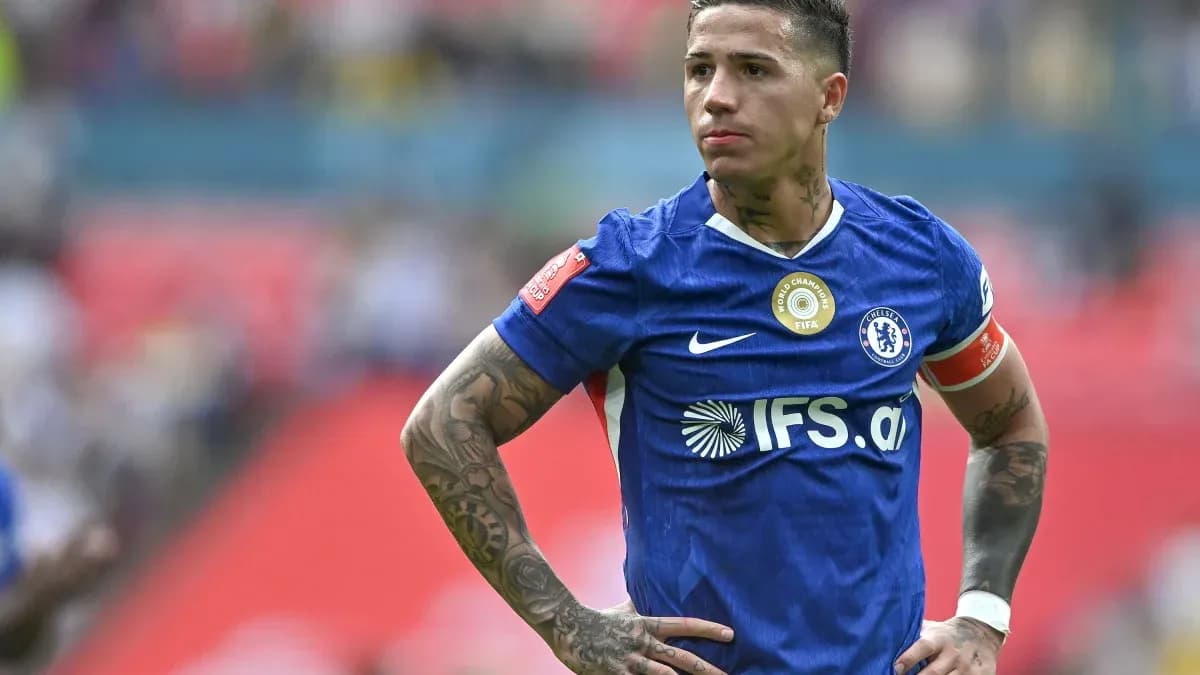
Enzo Fernández’s Chelsea story moved into a new, sharper chapter this week. Not with a statement, not with a transfer request, but with something far more telling for a footballer: absence.
No Enzo in the squad. Not even on the bench.
For a Carabao Cup second-round tie against Luton at Stamford Bridge, Xabi Alonso chose to go without the World Cup winner, a player signed to be the heartbeat of Chelsea’s midfield and a symbol of their new era. Instead, he watched from the outside as his team advanced without him, his situation suddenly louder than any chant in the ground.
A “sporting decision” – and a pointed one
Alonso did not hide behind vague explanations. He owned the call.
“The decision not to call him up was mine,” the Chelsea head coach said after the win, stressing that the omission was, in his words, “simply because of today’s match.”
He leaned on the logic of rotation. Minutes to manage. Legs to protect. Other players in need of game time.
“We have other players who need minutes,” he explained, adding that he had made the decision on Wednesday afternoon and that it was his, and his alone.
On the surface, it sounded routine. A manager juggling a busy schedule, trimming his squad for a domestic cup tie. But context makes this different.
Enzo had already made it clear before the summer that he wanted to leave Stamford Bridge. That desire has hovered over the club all window. So when a player of his stature is dropped entirely, the conversation immediately stretches beyond tactics.
Professional in training, uncertain in future
Alonso went out of his way to protect the midfielder’s professionalism.
“Enzo is a good professional. He is training well and I have nothing to say about that,” he insisted, repeating the line to make sure no one mistook this for a disciplinary issue.
This, he framed, was about the game plan, about the night, about Luton. Not about attitude. Not about commitment.
Yet the symbolism is hard to ignore. A £100m-plus midfielder, a World Cup winner, omitted from a matchday squad while his future hangs in the balance. For a player who arrived as a centrepiece, he suddenly feels peripheral.
Alonso did leave the door ajar. Asked if Enzo could return for Sunday’s league fixture against Brighton at Stamford Bridge, he kept it open.
“They are simply decisions we have to make with the match we were playing tonight in mind. We’ll see on Sunday.”
Three words lingered: “We’ll see Sunday.” For Chelsea, for Enzo, for the market, Sunday now feels like more than just another league game.
Manchester City watching closely
While Chelsea talk about squad management, England talks about something else: Manchester City.
In the background of this omission, reports in England indicate that City are considering a move for the Argentine before the transfer window closes. No bids on the table yet, no formal agreement, but clear interest in a midfielder of Enzo’s profile and pedigree.
City do not often circle without intent. When they sense an opening, they move quickly, decisively. A player unsettled, a club under pressure, a market window ticking down – this is the territory where they thrive.
For Chelsea, the equation is complex. Enzo was supposed to be part of their long-term spine, one of the flagship signings of the Todd Boehly era. Letting him go would be a major admission that the project is being reshaped again, and fast. Keeping a player who has already signalled a desire to leave brings its own tension.
A crossroads at Stamford Bridge
So the Carabao Cup tie against Luton, on paper a routine early-season assignment, became something else entirely for Enzo Fernández. He didn’t kick a ball, yet his name dominated the post-match discussion.
Alonso calls it a sporting decision. The club frames it as rotation. The player waits. City watch. The window clock keeps ticking.
The next team sheet, against Brighton, will say plenty. Will Enzo’s name be back where it once seemed guaranteed to appear? Or was this quiet omission the first clear step towards the exit door?