Some battles are fought with rifles and tanks. Others play out under fluorescent lights in courtrooms, in the echo chamber of social media, under TV spotlights — or on a single surfboard cutting through a cold Pacific swell.
Episode 25 of ALL CAPS, ynet Global’s weekly current affairs show, stitched all of those fronts together. In less than an hour, it moved from the U.S. Senate to Colombia, from Hollywood activism to a Muay Thai ring, from legal ambushes abroad to a wounded officer chasing waves with one arm. Different arenas. Same thread: Israelis refusing to let others write their story for them.
Washington’s hearing, and a missing half of the room
The show opened in Washington, where Sen. Ted Cruz chaired a Senate hearing on what he described as the Muslim Brotherhood’s network of influence in the United States. The cameras showed one half of American politics in its seats — and the other half absent.
Democratic senators chose not to participate. That boycott became the panel’s starting gun. They argued over what that empty side of the room really signified: a tactical protest, or a deeper symptom of a West so polarized it can’t even agree on how, or whether, to confront extremist movements.
The question hanging over the segment was blunt: if one camp refuses to show up to the conversation, who is left to set the terms of the fight?
Colombia flips the script
From Capitol Hill, the show headed south to Bogotá.
Colombia’s new leadership has sharply altered the country’s relationship with Israel, and the panel treated it as more than a bilateral spat. They dug into what the shift could mean for Israel’s standing across Latin America, and whether changing governments across the region might trigger a broader realignment either toward Israel and the West or away from them.
Colombia, they argued, is a reminder that diplomacy never sits still. Allies can drift. Critics can turn back. A government falls, an election flips, and a country that once seemed to be closing its doors to Israel can suddenly crack a window open again — or slam it shut.
Hollywood, Barghouti and the battle over memory
Then came Hollywood.
The panel examined a campaign by actors calling for the release of imprisoned Palestinian leader Marwan Barghouti. Supporters have tried to cast him as a Palestinian Nelson Mandela. The show’s panel pushed back hard.
They pointed to Barghouti’s convictions in Israel for involvement in attacks that killed civilians and challenged the attempt to wrap that record in the language of nonviolent resistance. For them, this wasn’t just about one man. It was about the vocabulary of history.
Celebrity campaigns, they warned, can bend political narratives, even when the facts are fixed. Call someone “Mandela” often enough and the word starts to do the work.
“Read the indictment, read the verdict, see who you're dealing with,” host Nitsana Darshan-Leitner said, accusing Barghouti’s supporters of trying to “whitewash terrorism with stardust.” In her framing, the red carpet had become another front line.
Nili Block: a fighter who refuses to shrink
Then the cameras moved from global politics to a single fighter.
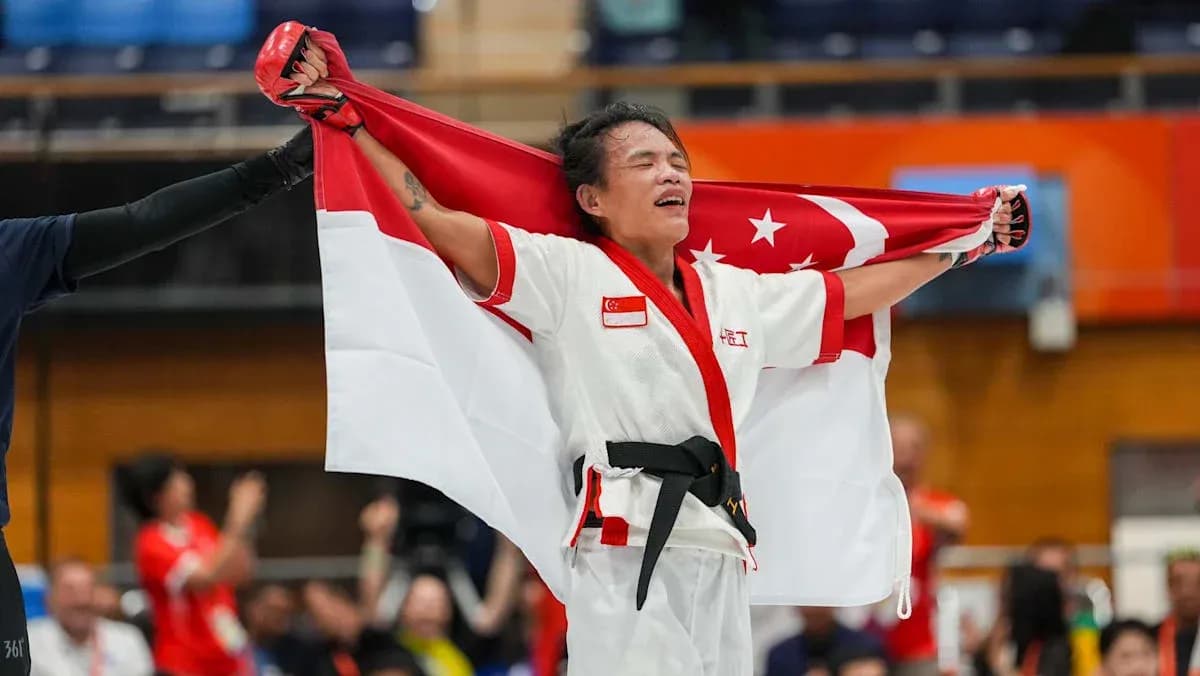
Nili Block, world champion in kickboxing and Muay Thai, joined the show with the calm of someone used to stepping into rings where the exits are very clear and very far away. She has spent years carrying the Israeli flag into international arenas where cheers and hostility often mix in the same stands.
Block started training at 10. Even then, she knew she wanted to be a professional athlete, long before “world champion” sounded like anything more than a fantasy. It stopped being a fantasy. She won titles. Then won again.
But her story on the show wasn’t a victory parade. It was about everything that came before and after the belts: growing up in a sport still widely coded as male, walking into gyms where people underestimated her, hearing the quiet doubts and the louder dismissals.
Each one, she said, became fuel.
“You say I can't do it, I'm going to prove you wrong,” Block told the panel. That line could have been a slogan; it sounded more like a habit.
Her fight is no longer confined to the ropes. Representing Israel has shifted from a simple sporting role into something more charged, especially as Israeli athletes abroad face protests and open hostility. Block recalled French Jews approaching her, thanking her not for a knockout, but for something more basic: standing there, visibly and unapologetically Israeli.
“They were scared,” she said. Her presence in the ring, flag on her shoulders, became a small act of defiance on their behalf. “Me coming out there and just standing strong, I think it gave them a lot of hope.”
The titles matter. But Block insisted they haven’t changed how she moves through the world: still learning, still working, still treating people with respect. In her telling, being a champion isn’t a finish line. It’s a responsibility.
A new front for IDF soldiers
From the ring, the episode cut to a different kind of arena.
Since October 7, more Israeli soldiers and reservists traveling overseas have found themselves targeted by legal complaints, investigations and attempts to detain them under universal-jurisdiction laws. The battlefield, the show suggested, now extends into passport control lines and foreign police stations.
The panel spotlighted organizations that scour social media to track Israeli soldiers, log their movements and file cases against them in courts around the world. In response, Shurat HaDin has launched Shakpatz, described on air as a “legal flak jacket” for those same soldiers.
The idea is straightforward. Before reservists and veterans board a plane, Shakpatz provides country-specific briefings, legal alerts and instructions on what to do if they’re stopped or questioned. Behind that guidance sits a network of lawyers ready to be activated when an Israeli traveler suddenly finds a routine trip turning into a legal trap.
The metaphor was sharp: when they served, these soldiers wore body armor to protect themselves on the front line. Now, in civilian clothes, they may need legal armor to protect them from a different kind of ambush.
“You protected us. Now we are protecting you,” the segment declared. The line captured a new reality for Israeli servicemen and women: stepping off the battlefield no longer guarantees you’ve stepped out of the fight.
From Jabalia to the break
The final story stripped the politics back to a single, stubborn decision.
Tamir Dudi, 26, an IDF officer, was seriously wounded in Jabalia. Seventeen surgeries followed. He lost his right arm. For most people, that would become the headline of a life.
Dudi chose not to let it.
He went back to surfing.
Now he is training for the World Adaptive Surfing Championship in California. His goal is disarmingly simple: stand on the podium and win a medal. No grand speeches, no metaphors. Just a man with one arm chasing a wave and a result.
The ALL CAPS panel watched footage of him back in the water, and their reaction said as much as their words. Surfing is brutally physical even with two arms: paddling out through whitewater, popping up quickly, keeping balance on an unstable board. Dudi has to solve all of that with one.
His comeback, framed against the roar of the ocean, closed what the panel called an “episode of champions.” Not the kind who only lift trophies, but the ones who keep getting up — in rings, in courts, in foreign airports, on surfboards.
Episode 25 tied them together: Nili Block, fighting both opponents and expectations; IDF reservists, discovering that legal crosshairs can follow them long after the gunfire stops; and Tamir Dudi, deciding that his story would not end in a hospital ward but on a wave.
His answer to the battlefield was simple. He got back on the board.