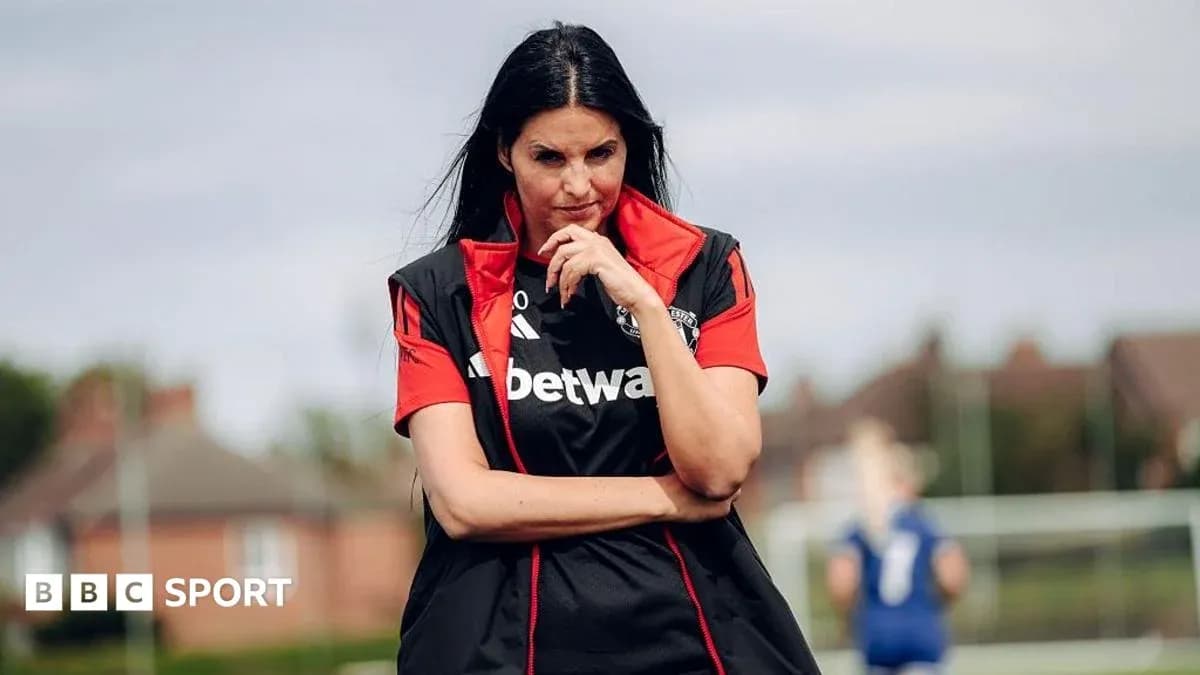
Eva Olid wants Manchester United to play on the front foot. And she is not hiding behind caution or caveats.
On Friday night, under the lights and the scrutiny that comes with the Manchester United job, the Spaniard walks into her first Women’s Super League game in charge, away to London City Lionesses. It is a new dugout, a new league, and a club still wrestling with what comes next after Marc Skinner’s departure in the summer.
The noise around them has not been kind. A subdued transfer window, fewer big-name arrivals than many supporters demanded, and a changing of the guard in the technical area have all fed the same question: can United really push for the top three this season?
Olid has heard the doubts. She is not running from them.
“It’s normal, no? It’s normal to have people doubting,” she said, before quickly turning the spotlight towards those who do believe. “I have felt the support a lot too. People that followed me in the last years with Hearts know I made something impossible possible, so I believe in what we are going to do.”
That spell in Scotland, where she built a reputation for bold, front-foot football, is the foundation of her conviction. She talks about time, not miracles. About process, not quick fixes.
“It’s not something you get in weeks,” she admitted. “But I believe with a little time you get impossible things.”
The challenge now is to translate that belief into something visible on the pitch, and to do it quickly. Pre-season has not exactly crackled with promise. Performances have been uneven, the adaptation to a new style still clearly a work in progress.
Olid has not softened her message because of that. If anything, she has sharpened it.
“My ambition is attacking football. I focus the gameplans on how we can hurt the teams. All teams have weaknesses we can exploit,” she said, outlining a philosophy that leaves little room for timidity.
She wants bravery. In possession. In pressing. In decision-making. United, she insists, will not be a team that simply reacts to the opposition.
“This team will play the first match in the league and I want it to be as close as possible to what I want. The style of play is different to what we had last year.”
That line carries weight. This is not a tweak; it is a shift. And shifts come with pain.
“You can imagine it’s not an easy task,” she continued. “What I did was put aside the principles of play that I thought was easier to change for the first match so we can compete.”
In other words, the full Olid blueprint will have to wait. For now, she is prioritising what the squad can absorb quickly, stripping back certain ideas so that others can land. It is a pragmatic move from a coach who still speaks like a purist.
Inside the club, the brief is clear. United want to be exciting. They want to be aggressive. They want an identity that supporters can recognise and opponents can fear.
“The club wanted to play attractive football and be brave. We know that can have risks but the club support me in that. They signed me for that.”
That last sentence lingers. United have not just hired a coach; they have nailed their colours to a style. On Friday in London, under the weight of doubt and expectation, we start to find out whether that bet on bravery can carry them back into the WSL’s elite.