Formula 1 has quietly closed the escape hatch.
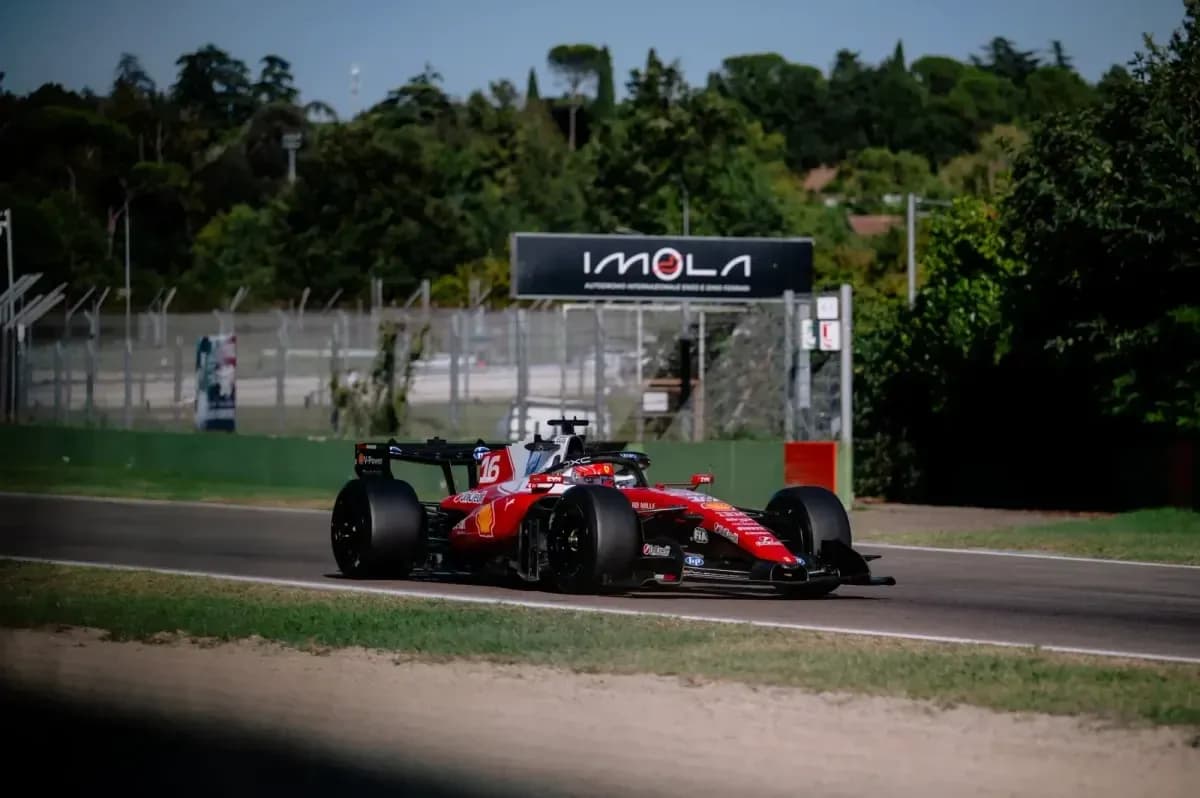
Imola, long prepared in the background as a contingency venue for the 2026 season finale, has been formally stood down. The championship will now end where the calendar always said it would: under the lights of Qatar on November 29 and Abu Dhabi on December 6.
That decision comes against a geopolitical backdrop that has turned race planning into a rolling crisis-management exercise.
A season run under a shadow
The US/Israel–Iran conflict has hung over F1’s Middle East swing from the outset. Safety concerns forced April’s races in Bahrain and Saudi Arabia off the calendar, ripping a hole in the early season schedule and sending planners back to the drawing board.
Putting those races back on at their original venues proved impossible. The Bahrain Grand Prix eventually re-emerged in September, not in Sakhir but in Malaysia, after a highly unusual agreement between the Bahraini authorities and Sepang. It was a workaround that underlined how far F1 was prepared to go to keep a 24-race season intact.
Yet the real anxiety always sat at the other end of the year. The finales in Qatar and Abu Dhabi became hostages to a conflict that could flare or cool in a matter of days. That uncertainty opened the door for Imola.
Inside Plan B: Imola on standby
F1’s preference never shifted: finish in Qatar and Abu Dhabi, provided security assessments said it was safe. But preference and planning are not the same thing.
The championship needed time. Time to watch how the situation in the Middle East evolved, and time to avoid a scenario where a late cancellation left the season ending weeks early with no alternative. The answer was Plan B.
Under that plan, if the final two races in the Gulf could not run, the 2026 finale would move to Imola on December 6. F1 was prepared to underwrite the cost of that insurance policy – a bill estimated at $10–15 million – to protect the original season end date.
There was a catch. Circuits do not spring to life in a fortnight. Grand prix infrastructure takes weeks of build-up, and F1 knew it had to start preparations at Imola before it had any definitive read on Qatar and Abu Dhabi.
Leave it too late, and a late cancellation in the Middle East would be compounded by an unready Imola. So the sport agreed to fund early work at the Italian track, keeping the option alive while the security picture developed.
This week was the tipping point. Either F1 signed off on major infrastructure spending at Imola or it walked away and backed its Gulf finale.
On Tuesday, the call came. Imola was told to stand down. F1 would proceed with its original plan to close the season in Qatar and Abu Dhabi.
That does not mean the final races are now bulletproof. It simply confirms the philosophy F1 has operated under all year: the races are on, until they are not.
Two-week window, constant surveillance
Imola’s removal from the equation buys F1 another small but important cushion. The sport now has a two-week window, up to the Las Vegas Grand Prix, before freight and personnel must be committed to the Middle East.
Inside that window, the message to teams and drivers remains blunt. If any of the threat assessments that F1 and the FIA receive – and those reports land hourly – indicate an unnecessary risk in travelling to Qatar or Abu Dhabi, the championship will pull the plug.
Stefano Domenicali’s track record backs that up. The F1 CEO shut down the Emilia Romagna Grand Prix in 2023 on the Wednesday before the race because of flooding. In 2022, the Russian Grand Prix disappeared from the calendar and lost its contract altogether after the invasion of Ukraine. When the line is crossed, he has shown he will act.
For now, F1 is satisfied that the Middle East finale can proceed. The monitoring, though, has not eased.
Since tensions spiked in February, a joint F1–FIA operation has been running in the background. Domenicali and FIA president Mohammed Ben Sulayem are at the top of a multi-layered effort that includes security staff, FIA member clubs and constant contact with local authorities – police, military and intelligence – in Qatar and Abu Dhabi.
National governments have been part of the loop too. F1 has leaned on information from the UK Foreign Office, the US State Department, European foreign ministries and Middle Eastern intelligence services to build as accurate a picture as possible.
Travel advice has become a key barometer. Outright “do not travel” orders would slam the door on any race, not just from a safety standpoint but because they would shred insurance coverage. Despite strong warnings about the risk of escalation and disruption in the region, Qatar and Abu Dhabi have not been placed under those strict bans.
Another layer sits in geopolitics: the potential fallout from the Israeli election and the US Midterms. Both have been watched closely for signs of inevitable escalation. So far, that threshold has not been crossed.
On the ground, F1 has drawn comfort from last weekend’s Qatar MotoGP round, which ran without incident. Liberty Media CEO Derek Chang travelled to that event to get a first-hand view of the security and logistics. F1 also has its own personnel already in Doha and Abu Dhabi, feeding back daily.
Teams and drivers have been kept in the loop throughout. Concerns have been aired and, where possible, addressed. F1 knows not everyone in the paddock feels entirely at ease about travelling to the region. It also knows the only way to maintain trust is to show that no race is worth ignoring a credible threat.
2027 already in the firing line
Even if Qatar and Abu Dhabi pass without a hitch, there are no guarantees for the next cycle of Middle East races.
The 2027 season is due to open in Bahrain and Saudi Arabia, and the same intense monitoring that shapes this year’s finale will continue into that campaign. Contingency plans are already being sketched out in case those early rounds cannot run.
Right now, Bahrain looks stable enough to stay on the schedule. Saudi Arabia is a different story.
Escalating clashes with Yemen’s Iran-backed Houthi movement have pushed Saudi Arabia onto “advised against travel” lists issued by several governments. In practical terms, that makes hosting an F1 race there impossible at present.
Unless there is a dramatic improvement before the start of next year, the March Saudi Arabian Grand Prix will not happen.
That uncertainty throws the 2027 opener into doubt, but not into chaos. F1 has options.
If Saudi Arabia drops off the calendar but Bahrain remains viable, the season would likely start with pre-season testing at Sakhir in February, followed by the Bahrain Grand Prix on March 14 and then the Australian GP on April 4.
If Bahrain also becomes unworkable, the sport already has a template. The successful relocation of Bahrain’s 2026 race to Malaysia has put Sepang firmly back in the frame as an emergency host.
Under that scenario, Malaysia would probably stage pre-season testing in February and the opening round, before freight rolls on to Australia, then China and Japan in one clean logistical sweep. That route would also spare F1 from dragging the Chinese and Japanese Grands Prix forward to the front of the calendar – an option previously floated but laden with knock-on complications.
There is no rush to lock in those decisions. Any firm call on how 2027 begins can wait until early next year, when the political and security picture should be clearer and the impact on the rest of the calendar easier to judge.
For now, the focus is narrower, but no less complex: keep watching, keep listening, and steer a global championship through a region where the situation can change faster than any car on the grid.