At Monza, the tifosi came for the scream of V6 engines. Instead, for a few minutes, the global TV audience got a concert.
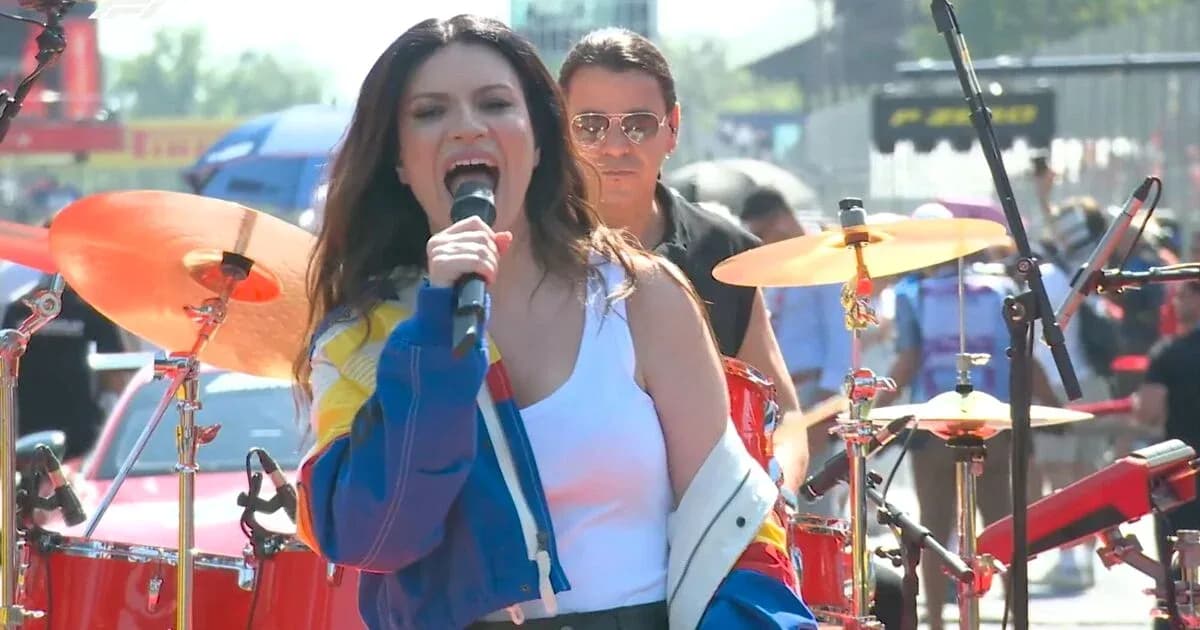
F1’s Grid Gigs concept returned at the Italian Grand Prix with Grammy Award-winning Laura Pausini delivering a two-song set from a stage on the grid, backed by a live band. The performance, in Italian and Spanish, played out not only to the grandstands but in full on Sky Sports F1’s pre-race coverage, which cut away from the usual build-up to show the mini-show start to finish.
That decision lit up social media faster than a qualifying lap.
Some viewers loved it. For them, the combination of Monza, a homegrown superstar and a live band turned the grid into a festival stage. One fan called for Grid Gigs to become a permanent part of race day, saying they “thoroughly enjoyed it”. Another, previously unconvinced by the concept, admitted Pausini’s performance “can persuade me”.
The mood was very different in other corners of the fanbase. Many tuned in expecting tyre talk, strategy debates and last-minute paddock whispers. Instead, they found their pre-race analysis replaced by a music segment they hadn’t signed up for.
“If ‘Grid Gigs’ are going to be a thing in the future, I might have to rethink when I start watching this coverage,” one viewer wrote, summing up a growing frustration. Another asked bluntly: “Was Sky F1 forced to show this?”
That question kept coming back. Some fans speculated whether FOM had leaned on broadcasters to air the performance. “Have FOM forced Sky F1 to show this Grid Gigs thing, I wonder? I'm pretty sure they've never bothered with it in the past,” another comment read.
The split was stark. While some labelled the show “amazing” and “emotional”, others were withering, dismissing it as “embarrassing” and “drivel”. The music itself wasn’t the only point of contention; the timing was. Interrupting the build-up, rather than dropping the performance earlier or packaging it differently, felt like a misstep to many who see that pre-race window as sacred.
For Pausini, this was familiar territory. She has already performed on one of the biggest stages in sport this year, appearing at the World Cup final in New Jersey alongside Robbie Williams and Nicole Scherzinger to deliver their ‘FIFA Anthem’, Desire. F1, keen to pitch itself as a global entertainment brand as much as a racing series, clearly saw Monza as the perfect moment to showcase the only Italian artist ever to win a Grammy.
Grid Gigs itself is still a relatively new experiment. The idea debuted in Austin last year, with country singer Drake Milligan performing before the United States Grand Prix. It resurfaced in Las Vegas with former One Direction star Louis Tomlinson, then again in Miami in May with Colombian singer-songwriter Manuel Turizo fronting the show.
Monza, though, was billed by F1 as its “biggest ever” Grid Gigs edition, anchored by a national icon on home soil. The official announcement promised a live stream across F1’s social media platforms, a clear nod to the sport’s push towards younger, digitally engaged audiences. What it did not do was spell out whether TV rights holders would be expected to carry the full performance live.
Sky did exactly that, and the reaction exposed a tension at the heart of modern F1. The sport wants to be a spectacle that stretches beyond the race itself, with concerts, celebrity cameos and big-stage production. Hardcore viewers want the noise, the data, the jeopardy of the grid. They don’t want to miss a word from the pit wall because a camera is locked on a microphone stand.
At Monza, that fault line was impossible to ignore. As F1 leans further into its entertainment era, the question now is simple: how much show can you bolt onto Sunday without losing the race-day soul that built the audience in the first place?