Top Fantasy Centers to Target in 2023 Drafts
In most fantasy drafts this fall, the center conversation starts and ends with Nikola Jokić and Victor Wembanyama. Then reality hits. Unless you’re sitting in the first two chairs, you’re shopping in a very different aisle.
That’s where this season gets interesting.
The middle and late rounds at the five are loaded with volatility, opportunity and a few big men whose roles have shifted just enough to turn them into matchup-swingers, especially in Yahoo’s High Score format, where only a player’s best game of the week counts. You’re not hunting safe floors here. You’re chasing spikes.
These are the centers who can deliver them.
Kel’el Ware, Milwaukee Bucks
A ceiling built for High Score
Kel’el Ware already teased what he can be. Now he lands in a spot that might force the issue.
The 7-footer quietly sharpened his shooting last season, jumping from 31.5% to 39.5% from three. In just 22 minutes a night with Miami, he still managed 11.1 points, 9 rebounds, 0.8 steals, 1.1 blocks and 1.2 threes. The real story, though, came in those 10 games where his minutes cleared 30: 18.1 points, 14 boards, 1.1 steals, a monstrous 3.3 blocks and 1.8 threes.
That’s not a tease. That’s a blueprint.
With Bam Adebayo locked in as Miami’s anchor, Ware became part of the blockbuster that delivered Giannis Antetokounmpo to South Beach. Milwaukee didn’t take him as a throw-in. He arrives as a frontcourt pillar for a franchise easing into a transition phase. Myles Turner still starts the year ahead of him, but the Bucks’ long-term timeline tilts toward Ware, and his minutes should expand as the season unfolds.
Expect something in the 25-minute range early. The upside is obvious.
In High Score, those 30-minute explosions are gold. A 14-rebound, 3-block outing alone is worth roughly 23 fantasy points before you even add his scoring. Ware’s top-end games stack up with anyone in his draft range, and because the format only cares about his best night, the inconsistency that would scare you in traditional leagues barely matters.
Mitchell Robinson, Boston Celtics
The perfect misfit for a quirky format
Mitchell Robinson spent last season as the unsung insurance policy behind Karl-Anthony Towns on New York’s title run. Sixty games, his highest total since 2021-22, but only 19.6 minutes a night. Even in that limited role, he still posted 5.7 points, 8.8 rebounds and 1.2 blocks on a ridiculous 72.3% from the field.
Boston saw enough.
The Celtics moved quickly, handing Robinson a three-year deal after a season in which Neemias Queta overachieved and Nikola Vučević never quite clicked into place. The frontcourt picture in Boston has been crowded on paper, but not convincing on the floor. That’s Robinson’s opening.
His medical history makes 30 minutes a night a fantasy more than a projection. Around 25 minutes is a far more realistic target, and that’s all he needs.
Robinson is almost purpose-built for High Score. Free throws — his glaring flaw — don’t count. Strip that away and you’re left with a specialist who can wreck a week with one game. A 16-board, 3-block line sits comfortably in his range and checks in around 25 fantasy points without a single field goal attempt beyond put-backs and lobs.
You’re not drafting him for volume. You’re drafting him for the one night he turns the paint into a no-fly zone.
Nic Claxton, Chicago Bulls
A modern big in a changing frontcourt
When Chicago moved Vučević at last year’s deadline, it signaled more than a trade. It marked the end of an era built on a steady double-double machine and the start of something more dynamic.
Enter Nic Claxton.
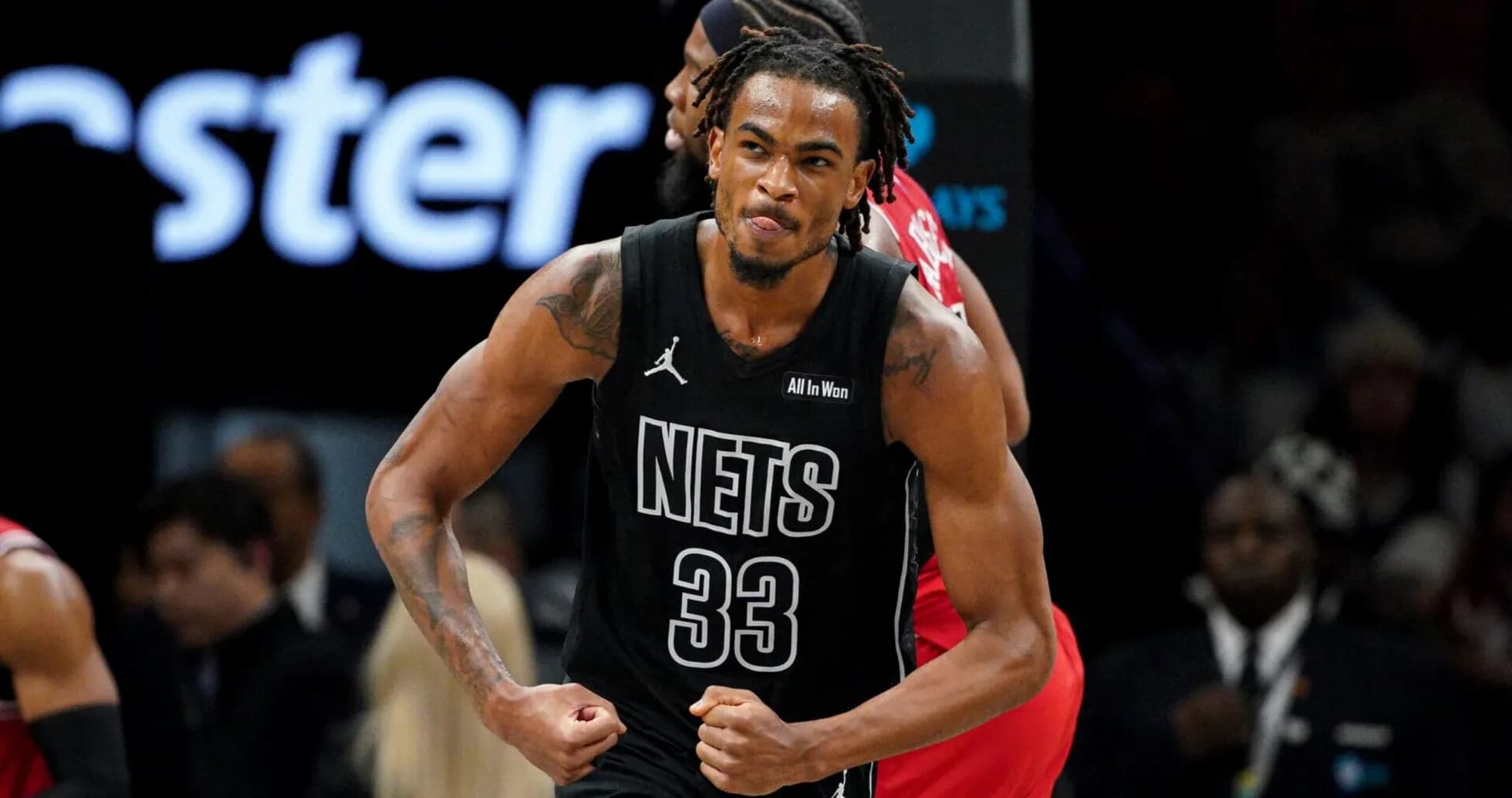
The Bulls acquired him from Brooklyn this offseason, and while his raw numbers dipped on a young, uneven Nets team — 11.7 points, 6.9 rebounds, 3.7 assists and 1.1 blocks — that assist spike jumps off the page. This is a big who can connect plays, not just finish them.
It wasn’t long ago that Claxton delivered back-to-back seasons of at least 11.8 points, 9.2 rebounds and 2.1 blocks. Chicago’s rebuild, unlike Brooklyn’s, already has some structure: Caleb Wilson and Matas Buzelis on the wings, Josh Giddey orchestrating from the point. Giddey is one of the league’s most gifted passers, and the lob game with Claxton should be a regular feature.
Under High Score rules, Claxton might be the most complete scorer of this group. He offers traditional big-man stats with a playmaking twist. A 10-point, 10-rebound, 3-assist line with two blocks translates to roughly 32 fantasy points — the kind of all-around performance that can sit comfortably as your weekly best.
If you miss the early elite bigs, Claxton is the kind of mid-round anchor who keeps your ceiling intact.
Hannes Steinbach, Charlotte Hornets
A rookie to stash in your mind, not your lineup
Charlotte stumbled into something last season when Moussa Diabaté seized the starting center job in December. His energy and rebounding gave the Hornets a heartbeat. His scoring didn’t. Diabaté shot 63.1% from the field but averaged just 7.9 points on an 11.2% usage rate, living almost entirely off hustle plays.
The front office responded by reshaping the frontcourt. Naz Reid arrived from Minnesota, and with Miles Bridges gone, Reid should slide between power forward and center. Then came the draft, and with it Hannes Steinbach.
At Washington last season, Steinbach played like a ready-made glass cleaner with touch: 18.5 points, 11.8 rebounds and 1.2 blocks per game. That’s not a raw project profile. That’s someone who already understands how to own the paint.
The path to immediate minutes isn’t wide, but it exists. Reid’s positional flexibility, Diabaté’s limited offensive role and Charlotte’s broader rebuild all leave room for Steinbach to creep into relevance as the year wears on.
In a High Score league with only 10 roster spots, stashing a rookie is expensive. Steinbach is a watchlist name, not a draft priority. Still, if the minutes crack open, his rebounding alone plays right away.
Day’Ron Sharpe, Brooklyn Nets
A starter-in-waiting with a ready-made line
Brooklyn’s roster turned over again. Julius Randle arrived to carry a chunk of the offense. Rookie guard Mikel Brown Jr. joined the backcourt. Moritz Wagner came in as frontcourt depth. The most important vacancy, though, sits at center after Claxton’s departure.
Day’Ron Sharpe is the frontrunner to claim it.
He started only seven games last season, but those starts tell you everything you need to know. In 28 minutes a night as a starter — compared to 18 off the bench — Sharpe averaged 11.1 points, 7.9 rebounds, 3.6 assists and 1 block. That’s not just a rebounder; that’s a big who can facilitate and stay on the floor.
Randle will log some minutes at the five in smaller lineups, but Sharpe is lined up to handle the bulk of the traditional center work.
Run that starter line through High Score scoring and you’re looking at more than 30 fantasy points. That’s top-30 output from a player you can often scoop in the late rounds. He doesn’t need to live there. He just needs to visit once a week.
If Brooklyn hands him the job, Sharpe turns from afterthought to quiet league-winner very quickly.
Khaman Maluach, Phoenix Suns
An injury away from mattering everywhere
Phoenix bet big on Khaman Maluach when it took the Duke product 10th overall in the 2025 Draft. Year one was a slow burn: 46 games, 8.9 minutes per outing, more apprenticeship than impact.
The depth chart ahead of him looked settled. Mark Williams, freshly re-upped on a new three-year deal, returns as the starter. Oso Ighodaro, who filled in last season, rounds out the rotation. On paper, that’s a closed door.
Then came the latest setback.
Williams, who has battled injuries throughout his career, underwent surgery to repair a torn labrum in his left shoulder and now faces the possibility of an extended absence. That injury reshapes the entire conversation. Phoenix still needs to win now, but the backup with the higher long-term upside is Maluach, not Ighodaro.
The immediate goal for the rookie is simple: grab every minute that Williams leaves behind and don’t let them go.
Right now, Maluach is going undrafted in most leagues, and with 10-man rosters in High Score, that’s understandable. He doesn’t belong on your bench yet. He belongs at the top of your waiver watchlist.
If the Suns’ rotation opens up as expected while Williams recovers, Maluach is the first center you pounce on. In a format built on weekly peaks, that kind of midseason pivot can turn a quiet frontcourt into a winning edge.