
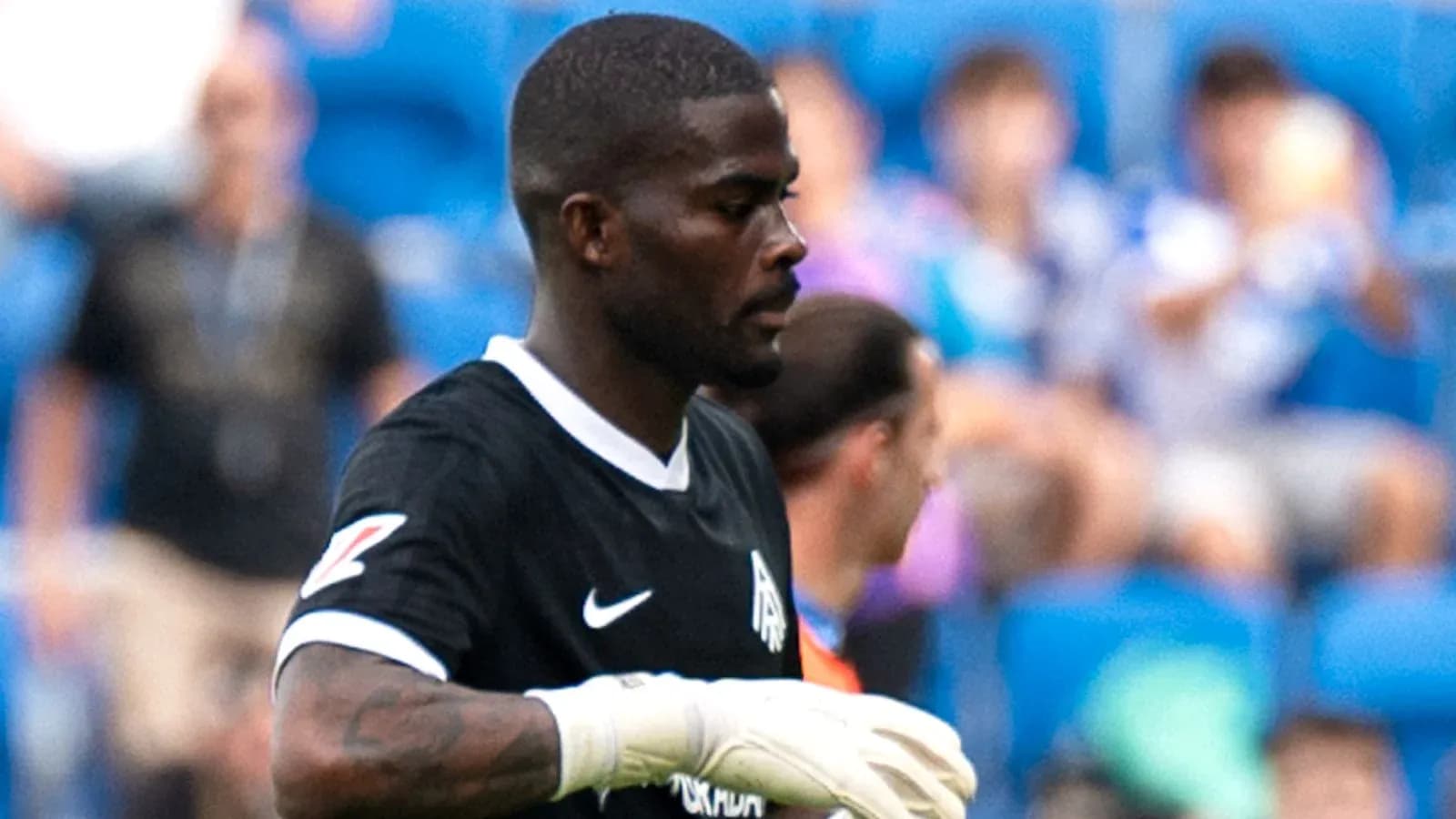
Spanish football has delivered its harshest sporting sanction in the wake of one of its darkest nights.
FC Andorra goalkeeper Jesús Owono has been suspended for 12 matches after a challenge deemed to have used “excessive force” led to the death of Tenerife forward Jesús de Miguel earlier this month in a Segunda División match.
Owono, 25, was sent off late in the game after a violent collision with De Miguel. The Tenerife forward died the following day, turning what began as a routine league fixture into a tragedy that has shaken the sport far beyond Spain’s second tier.
Maximum Sanction for “Violently Striking” Opponent
After reviewing the incident, the disciplinary committee of the Spanish Football Federation imposed the maximum punishment allowed under its regulations on the Equatorial Guinea international.
In its written decision, the committee anchored its ruling in the referee’s report, which it treated as the decisive account of events.
The report stated that Owono was dismissed for “violently striking an opponent in the chest with his leg, using excessive force, while the ball was in play.”
From there, the committee drew a direct line between the nature of the challenge and the severity of the sanction.
“The tragic outcome of the incident, resulting in the death of Jesús de Miguel, is public knowledge,” the statement read. “In view of the nature of the conduct described and the accompanying circumstances—the maximum sanction, 12 matches of suspension, is justified.”
No sporting punishment can touch the scale of the loss, but the federation has made clear it views this as the outer limit of what its rules can impose.
Match Scoreline to Stand
The game itself, abandoned seven minutes into stoppage time as the gravity of the situation became clear, will not be replayed.
The federation confirmed that the 2–2 scoreline at the time of the incident will stand as the official result.
“This avoids having to resume play from the precise moment at which the tragic incident occurred—the most respectful course of action, given the extraordinary and tragic circumstances of this case,” its statement said.
No restart. No attempt to reconstruct the final minutes. Just a frozen scoreline and a match that will be remembered for everything except the football.
Owono’s Future in Doubt
Inside FC Andorra, the fallout is as emotional as it is procedural.
Head coach Carles Manso said on Thursday that Owono has not yet decided whether he will return to football at all. A 12-game ban is, on paper, a sporting punishment; the real weight here lies in whether the goalkeeper feels able to step back onto a pitch after being involved in such an incident.
Previously, Owono released a statement speaking of his “enormous pain” at De Miguel’s death and saying he “will face whatever comes with the utmost respect.” Those words now sit alongside the federation’s verdict and the looming legal process.
Police Investigation Underway
Away from the disciplinary sphere, Spanish police have opened an investigation into possible involuntary manslaughter. Under Spanish law, that step is standard procedure in a case involving a death of this nature, but its presence only underlines how far this tragedy extends beyond the touchline.
A routine league fixture has left a player dead, another facing a 12-match ban and a profound personal reckoning, a club in mourning, and a legal investigation still to unfold.
The season will move on. The Segunda División table will keep shifting. But for everyone who watched that night, one question will linger far longer than any suspension: how does football find its way back from a moment like this?





