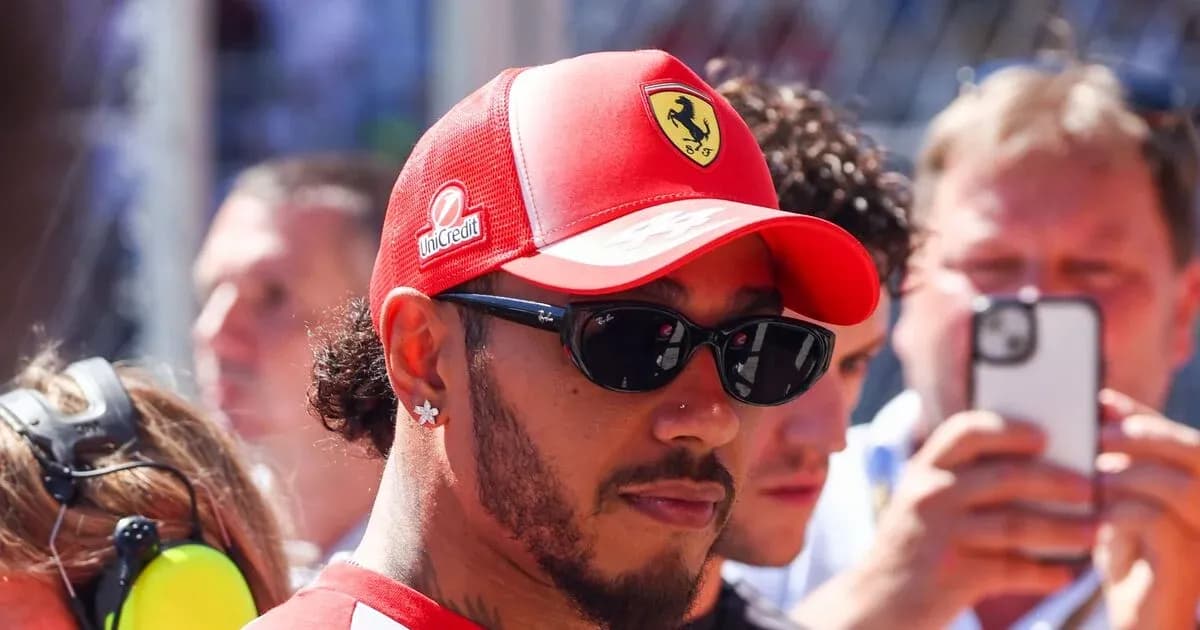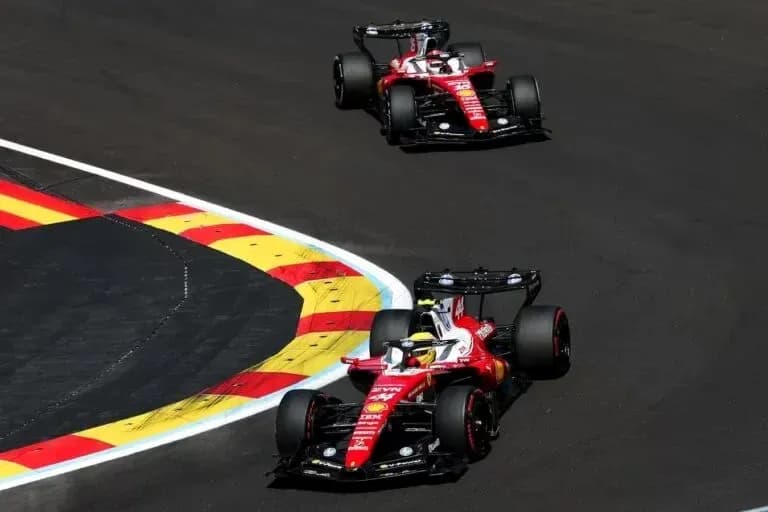
Lewis Hamilton’s first Spanish Grand Prix in red barely made it past the opening laps before trouble arrived – and it came from the one place a driver never wants doubt: the brake pedal.
Barely into the race at Madring, as the debate raged over whether Max Verstappen should hand back position after cutting the first-corner chicane, Hamilton was wrestling a very different problem. The seven-time champion reported a “long” pedal, a vague, untrustworthy feel that instantly changes the way a driver attacks every braking zone.
The timing was brutal.
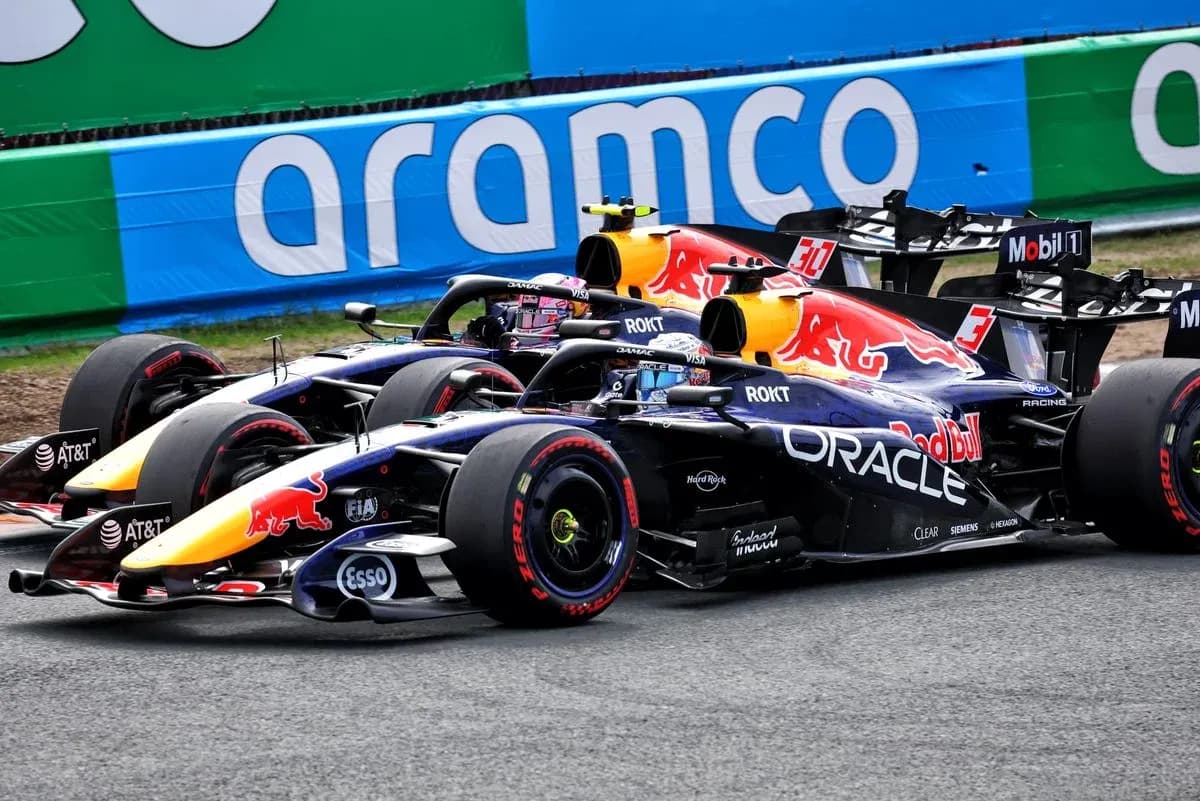
Verstappen slowed to give back the place to Andrea Kimi Antonelli and Hamilton, as instructed. Hamilton, though, couldn’t capitalise. With his braking compromised, he was immediately re-passed by the Red Bull, the Mercedes-style fight at the front dissolving before it had even begun.
On the Ferrari pit wall, Frederic Vasseur and his engineers tried to play firefighter from afar.
“We tried to fix it from the pit wall,” Vasseur explained afterwards. The team worked through remote settings and system resets as Hamilton circulated. For a moment, it looked like they’d cracked it. “It was back to normal when Lewis continued for another lap,” Vasseur said.
Then the problem returned.
At that point, risk management took over. A long, inconsistent pedal on a high-speed, heavy-braking track is the sort of issue that can end a race – or worse – in a heartbeat.
“I think in this kind of track, we also don't want to take any risk,” Vasseur stressed. “We were on Lap 1, it was still 56 to go. The first time that happened was Lap 2, and it was too risky to go to the next lap. It would have made no sense to take a crazy risk.”
Hamilton’s race unraveled before it ever had the chance to breathe. Ferrari’s attention, and their hopes of a result, shifted to the other side of the garage.
Leclerc’s long game and the one that got away
Charles Leclerc’s afternoon became a strategic tightrope walk shaped by an early Virtual Safety Car. Ferrari rolled the dice: the Monegasque stayed out on hard tyres, stretching the stint deep into the race and banking on chaos – a full Safety Car, maybe even a red flag – to swing the race back towards him.
It never came. No lifeline. No neutralisation. Just lap after lap of management and patience until he finally had to peel into the pits.
Vasseur remained adamant the raw speed was there. “The race was more than good, we did a stint of 49 laps with the hard and the pace was still there,” he pointed out. Ferrari had split their options, as many teams did: one car on softs or mediums, the other on hards, covering every scenario the race might throw at them.
Leclerc led the group of hard-tyre runners, and in Vasseur’s mind, the sliding doors moment was clear. “With the second incident, the red flag, it was the win. With a safety car, he would have been P2, P3, nothing like P4. It’s more a strategy than something else.”
The message from the Ferrari boss was blunt: Sundays are not the problem.
“On his side, the pace was good, it's the only thing that we can do on Sunday,” Vasseur said. “If we miss something, it's more qualifying… But today, I think we did what we have to do, and we took the risk that we have to take, and the pace is the pace that we need to have.”
Ferrari’s race craft, at least in their own view, is not what’s holding them back. It’s Saturday. Grid position. The heavy lifting that has to be done before the lights even go out.
A soft-tyre mystery stalls Leclerc’s late charge
Leclerc’s race contained another twist, one he didn’t fully unpack in public.
On the hard tyres, he looked sharp, controlled, and quick. The car responded, the lap times held up, and the long-run gamble looked justified. When he finally switched to the soft compound late on, the script should have been simple: fresh rubber, the softest available, and a chance to attack.
He never really did.
“I think the pace was quite strong on the hard,” Leclerc said. “On the soft at the end I couldn't really push for other reasons, but the hard stint was a good one.”
He admitted he and race engineer Bryan were deliberately keeping radio chatter to a minimum. On a track like Madring, with its rhythm and relentless sequence of corners, Leclerc wanted as few distractions as possible. At one point he simply checked in to understand what they were actually fighting for, so detached was he from the bigger picture inside the cockpit.
The real intrigue came when he was asked directly about the late-race issue on the softs. Leclerc smiled, then shut the door.
“No, not really, no I can't,” he replied when pressed to explain. “But it's fine, I mean it will be fine for the next race.”
Whatever the problem was, it stopped him from hunting down Lando Norris in the way the tyre choice suggested he might. It also sharpened his own diagnosis of Ferrari’s broader weakness.
“Eventually where we are paying the price, it's our qualifying pace,” Leclerc admitted. “Because when you are starting further away, then you get to the race and it's very difficult to make up those positions.”
The car works. The race pace holds. But too often, Ferrari are starting on the wrong side of the grid.
Hamilton cleared as Leclerc shuts down blame game
One potential flashpoint was quickly dismissed. With Hamilton’s brake drama unfolding in the opening laps, there was a question over whether the Briton had compromised Leclerc’s race by backing him up or delaying him.
Leclerc would have none of it.
“No, I mean he did it very, very quickly obviously,” he said of Hamilton’s early issue and the brief position shuffle. “I wasn't losing so much time because obviously with the brake problems he was kind of cutting the corners, so he didn't hold me up and wouldn't have changed anything in my race.”
No finger-pointing. No tension between the new Ferrari signing and the established team leader. Just a clear line drawn under the incident.
So Ferrari leave Spain with one car hamstrung by a brake problem they didn’t dare gamble on, and the other boxed in by qualifying form and a late-tyre puzzle no one is ready to explain publicly.
The pace, they insist, is there. The question now is simple: can they start far enough up the road – and keep the gremlins away – to finally turn it into wins?