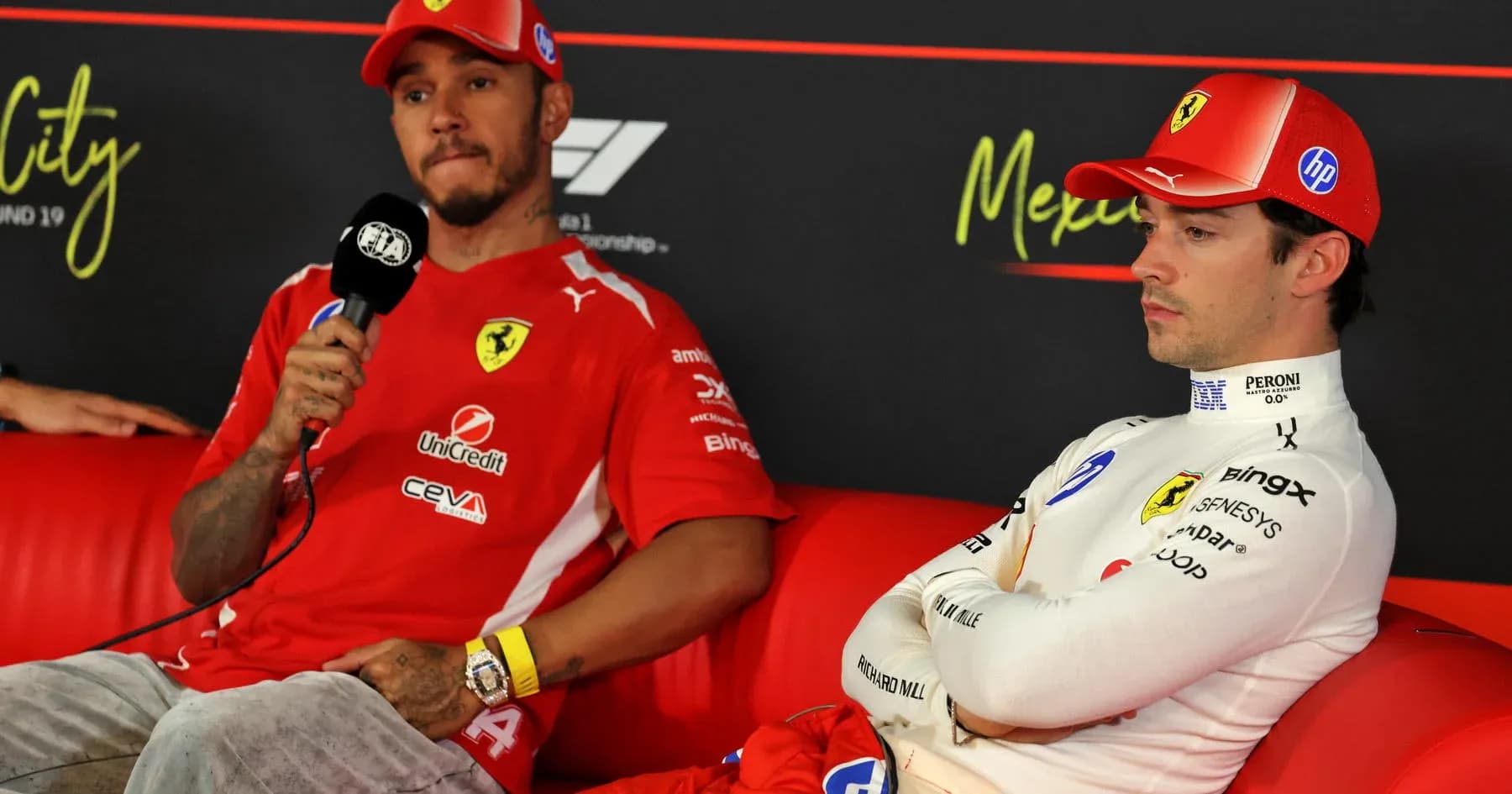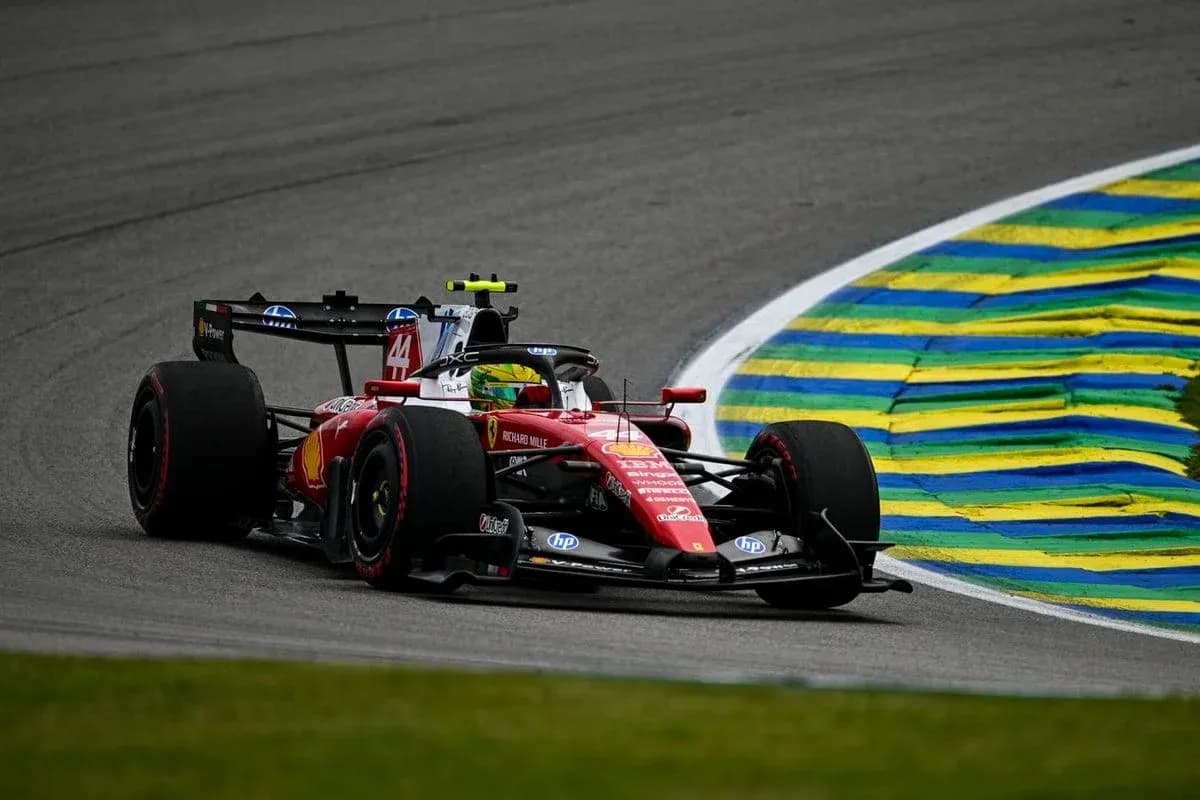
Lewis Hamilton will start the Brazilian Grand Prix on the back foot, with Ferrari braced for an engine-related grid penalty after one of its most subdued Fridays of the 2026 season.
At Interlagos, where Hamilton has authored some of the great comeback drives of his career, the raw pace simply wasn’t there.
Ferrari off the pace – everywhere
Hamilton ended FP2 as the quicker of the two Ferraris, yet he still trailed world champion Kimi Antonelli by 0.450s over a single lap. Charles Leclerc was almost three tenths further back, his deficit largely pinned on a deployment issue down the start/finish straight.
The real concern sat in the long runs. On comparable fuel, Ferrari looked like the fourth-best car.
FP2 long-run pace (best averages)
- Antonelli – 1m15.331s (S)
- Norris – 1m15.497s (H)
- Verstappen – 1m15.501s (M)
- Piastri – 1m15.520s (S)
- Hadjar – 1m15.569s (S)
- Russell – 1m15.657s (S)
- Leclerc – 1m15.872s (S)
- Hamilton – 1m16.027s (M)
Leclerc’s long-run pace sat more than half a second per lap slower than Antonelli’s on the same tyre. Hamilton, on mediums, drifted even further away.
The data told the story everyone in red already knew. Ferrari bled time where Interlagos is most brutal: the long, flat-out charge from Juncao up to the line. Hamilton alone dropped three tenths to Antonelli in that section, the Ferrari trace a painful red line against the Mercedes blue on the overlays.
Down the second straight, before the plunge into Descida de Lago, Hamilton was clocked 11km/h slower than Antonelli. That single stretch cost him more than a tenth and a half.
For years, Ferrari’s answer to straight-line vulnerability has been cornering strength. Not this time. Leclerc didn’t sugar-coat it after FP2, describing the car’s behaviour in the twisty sections as “probably one of the worst Friday feelings of the season”. Team principal Fred Vasseur was just as blunt, conceding there was “a lot of work to do on the balance” overnight.
Penalties and pressure
As if the lack of pace wasn’t enough, the team now has to swallow penalties.
The Race understands Ferrari has scheduled engine component changes for Hamilton after FP2, triggering a grid drop for Sunday. The exact number of places has not been confirmed, but any sanction at Interlagos is brutal: traffic, tyre chaos, and limited clean air for those trying to recover.
Hamilton has been here before. In 2021 he stormed from 20th to fifth in the sprint and then won the grand prix from 10th on the grid, turning a five-place penalty into one of his most celebrated victories. The memory hangs over the weekend like a challenge: can he conjure something similar with a car that, on current evidence, doesn’t want to play?
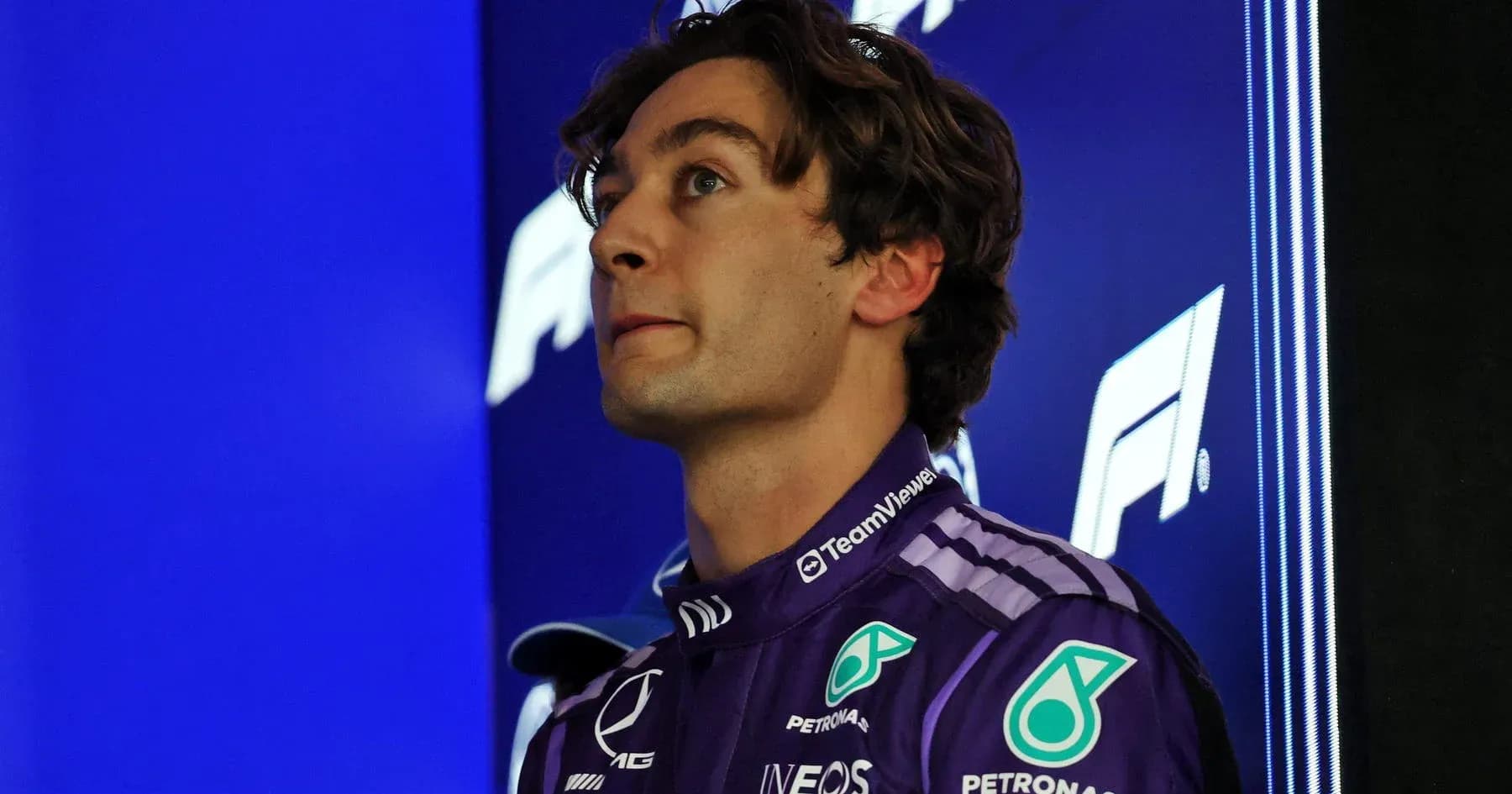
George Russell already carries a five-place grid penalty of his own. Leclerc, meanwhile, is expected to take his medicine later, with Ferrari likely to push his engine changes to the next round in Las Vegas.
Constructors’ fight tilting Mercedes’ way
All of this unfolds against the backdrop of a constructors’ championship that could be decided in São Paulo.
Ferrari must avoid being outscored by Mercedes by three points in Brazil to keep the title fight alive. That already looked like a tall order before Friday. After it, the scale of the task is obvious.
Antonelli topped both the short and long-run pace charts, his Mercedes looking composed over a lap and relentless over a stint. Russell, even with his looming penalty, slotted into the sharp end on race runs. Mercedes didn’t just look quick; it looked complete.
Ferrari, by contrast, left the paddock facing a familiar equation: draggy on the straights, unsettled in the corners, and now staring at the wrong end of the grid with its lead driver.
Interlagos has seen Hamilton rip up scripts before. This time, the story might not be about a miracle charge, but about whether Ferrari can stop Mercedes from closing the book on the championship altogether.