Ferrari’s new engine didn’t rewrite the script on Friday. It did something more subtle, and arguably more important: it proved this car still has headroom.
Fred Vasseur rarely bites on the upgrade hype. So when the Ferrari team principal admitted the second power unit step under the FIA’s ADUO rules is a “step for sure” but still short of Mercedes, you knew exactly where this left Maranello — closer, but still chasing.
Ferrari Finds Gains, But Not Enough
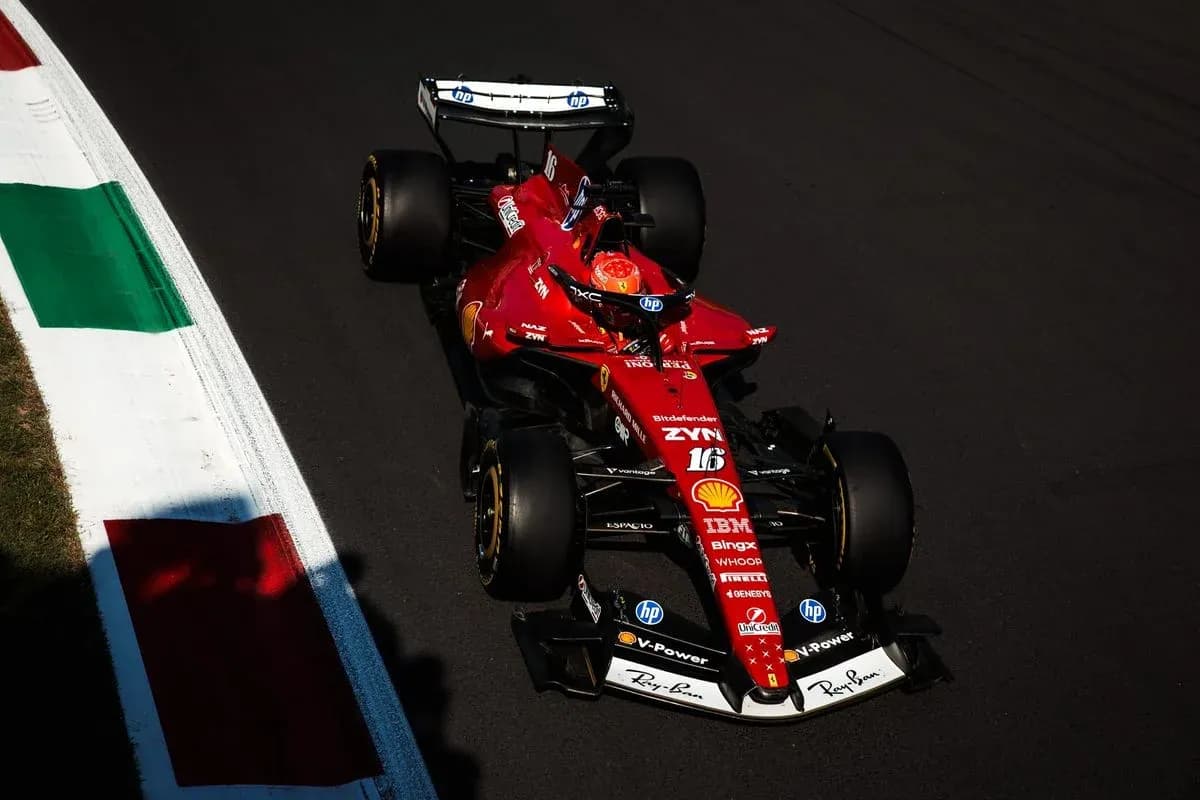
Charles Leclerc’s headline number was tidy rather than spectacular: second in FP2, just 0.120s off George Russell’s Mercedes. The stopwatch said Ferrari had edged forward. The GPS traces told the real story.
On Leclerc’s best lap, the Ferrari bled time down the straights, then clawed it back under braking and through the corners. He lost roughly six tenths in the first two-thirds of the lap, then recovered a chunk on the final straight as Russell suffered more clipping on the run to Parabolica. The pattern was clear: Ferrari’s engine has improved, but the car is still paying a price in pure top speed.
Vasseur didn’t hide behind the power unit alone.
“Performance in the straight line is the drag, the weight of the car, it’s everything, it’s not just the engine,” he said. “We did a step for sure, and we didn’t bring ADUO 2 for nothing, but I think we still have a decent gap.”
On long runs, though, Leclerc looked like the lead disruptor. His stint average sat just three hundredths of a second per lap away from Kimi Antonelli’s Mercedes. The caveat matters: Leclerc ran softs, Antonelli hards. Even so, the Ferrari’s consistency suggested it could be the closest challenger once fuel loads even out.
Most in the paddock still expect Mercedes to own the upper hand when it counts. But Ferrari at least has a car that can lean on the leaders, not just stare at their gearbox.
Mercedes: Power Up, Questions Remain
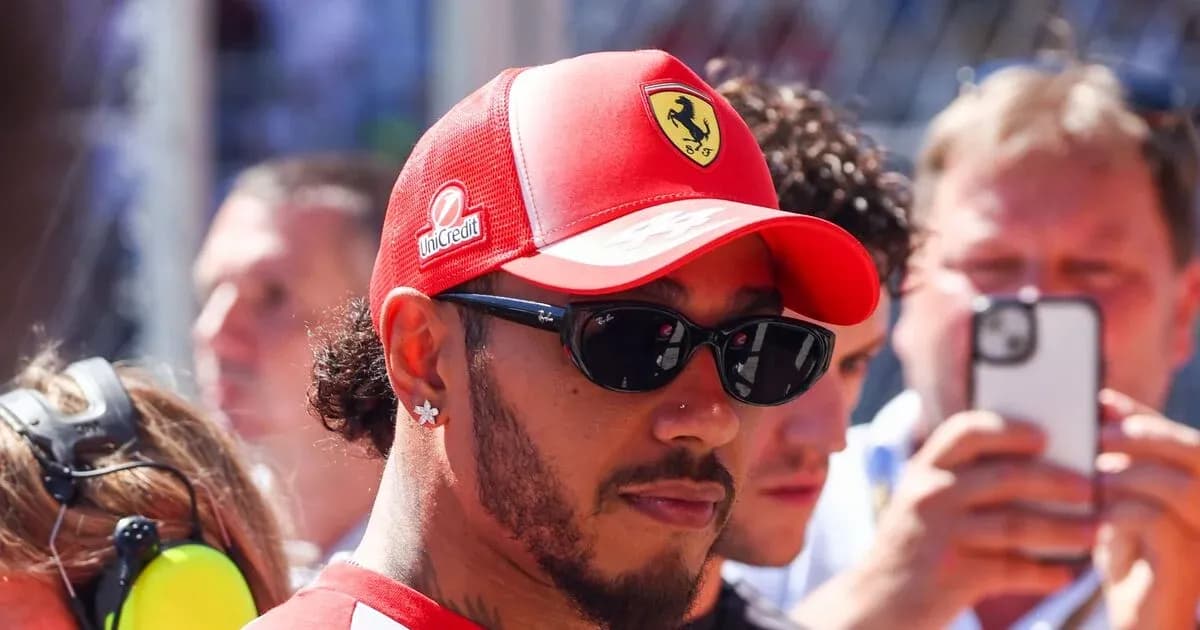
On the other side of the garage divide, Lewis Hamilton painted a more complicated picture. He called the deficit on the straights “considerable” and admitted the car, after FP2 set-up changes, was “really hard to pull the lap out of” and “not an easy one to drive”.
The seven-time champion sees opportunity in the margins: less drag, smarter energy deployment, a more settled balance.
“That’s what we need to look into, if it’s that or if it’s the deployment,” Hamilton said when asked whether trimming downforce could unlock the missing speed.
What he did not question was the direction of the new engine.
“The engine is an improvement, which I’m really grateful for the guys back at the factory for working on. But our deployment schedule is different to the others, our competitors. It seems like they maybe have less drag for the straights, so that’s something we need to definitely look at.”
Hamilton described the unit as “really nice to drive in the low speed,” a small but telling compliment on a day when the stopwatch didn’t flatter him. The raw pace, though, came from Russell and Antonelli, with Mercedes again looking like the reference over a stint.
This is an energy-starved circuit, and teams are still juggling harvesting and deployment strategies. There’s time on the table, and Mercedes knows it.
Red Bull Off-Balance, Lawson On It
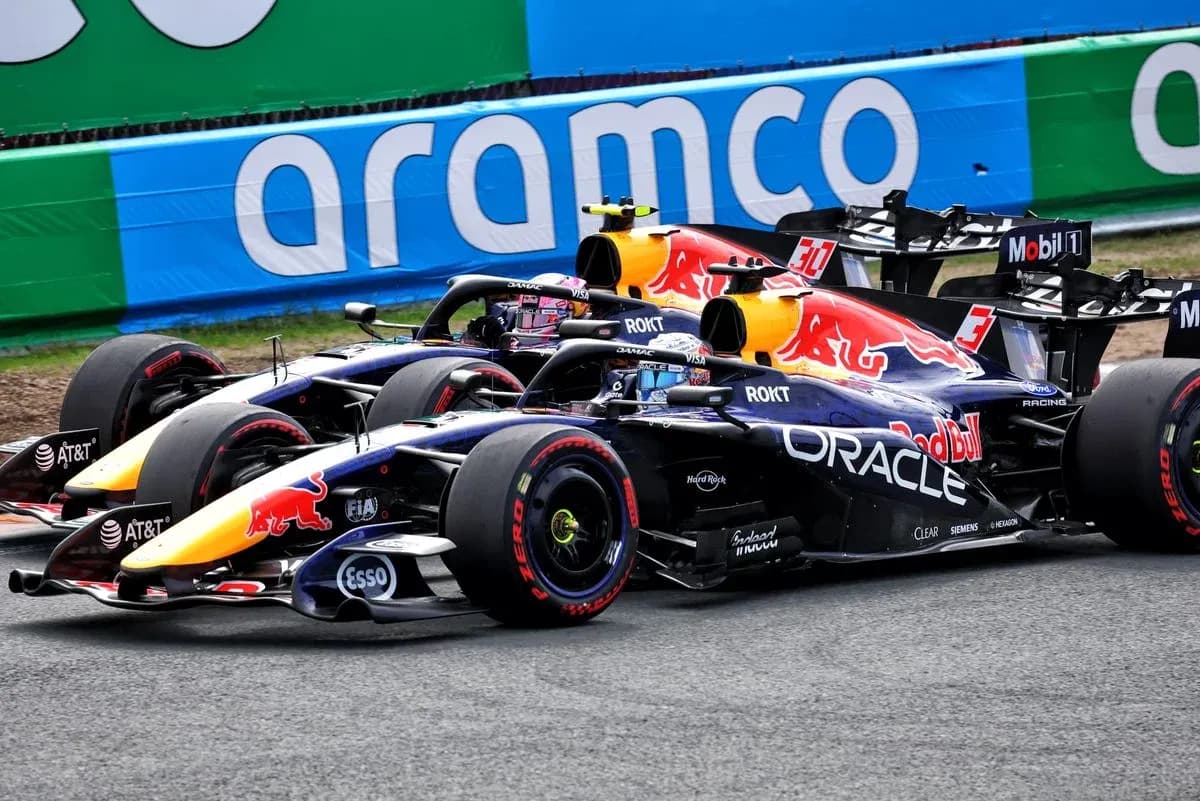
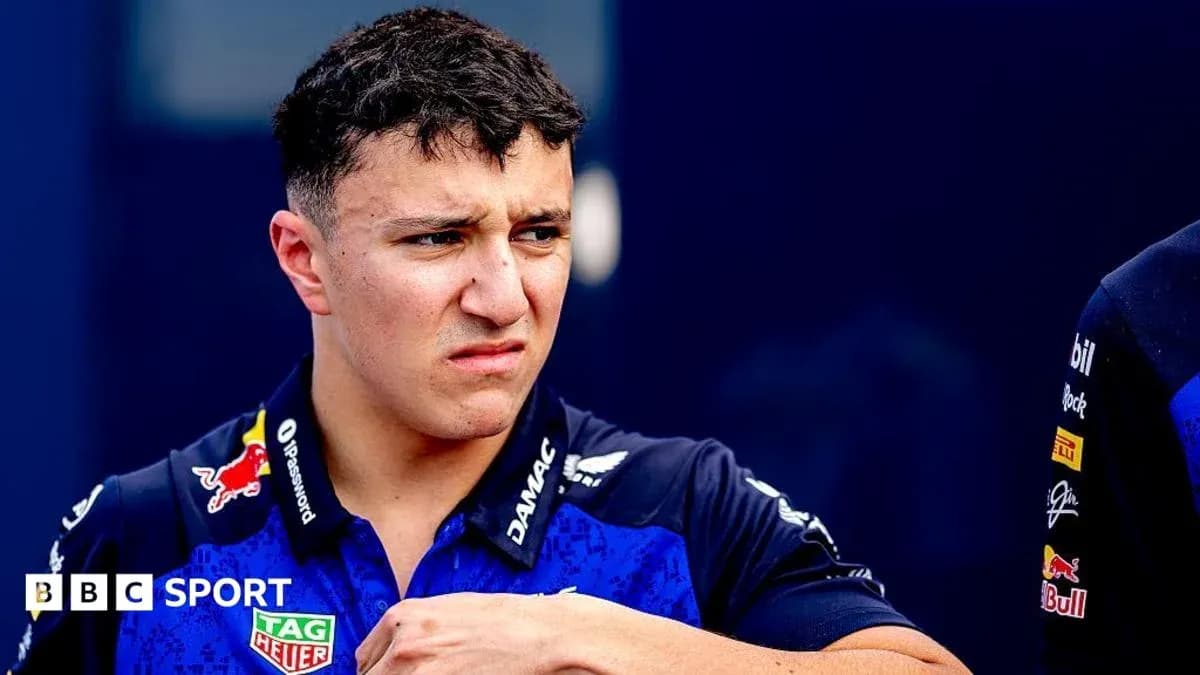
Red Bull’s day never really settled. Max Verstappen, already on the back foot after giving up FP1 to Ayumu Iwasa, climbed into a car that simply didn’t behave.
“Clearly we have a balance issue on the car,” said technical director Pierre Wache. “A little bit like Zandvoort, to be honest, and we try to understand what the issue is, try to fix it in a different way by setup and car components.
“It’s the main thing we are working on. What doesn’t help is when Max didn’t drive during FP1 and he jumped in the car there, we have less time to react and now we have to react for FP3.”
While Verstappen wrestled with the set-up, Liam Lawson quietly put together one of the standout long runs of the day. His hard-tyre stint in the other Red Bull matched Antonelli’s averages, a serious marker from a driver juggling preparations for both his current team and Racing Bulls amid uncertainty over Isack Hadjar’s fitness.
Traffic complicated the picture. Both Leclerc and Antonelli hit slower cars during their stints, a factor that may have slightly flattered Lawson and Red Bull. Even so, when a team complains of Zandvoort-style balance issues and still sits in the mix on long-run pace, it’s hard to ignore.
McLaren Searching for It Everywhere
Lando Norris walked away from Friday with more questions than answers. The double race winner, who has turned recent Fridays into a personal playground, found this one “much trickier than the last few Fridays”.
On long-run pace, Norris sat 0.443s adrift, running the hards. His overall deficit on single-lap speed was 0.384s. The worrying bit was where the time disappeared.
“It’s a bit everywhere, honestly,” he admitted. “There’s not one corner we’re quicker than anyone else ahead of us.
“We’re losing a bit in the straights compared to Mercedes, which we kind of expect, but also the high speed is where we lose most of our laptime, which is normally where we’re quick. So we have to try and figure out a few things, but we’re just off the pace everywhere at the minute.”
When McLaren isn’t strong in high speed, alarm bells ring. Norris and the engineers have work to do overnight if they want to restore their usual profile as the late-braking, high-speed kings.
Midfield: Racing Bulls Lead, Haas Encouraged
In the midfield, the tone shifted. Arvid Lindblad lit up the timing screens for Racing Bulls, topping a strong day for the Faenza squad. Just 0.021s back, though, came an unusual name in that company: Ollie Bearman in the Haas.
Over a stint, Haas faded behind Racing Bulls and Alpine. Franco Colapinto, delighted with his Alpine in FP1, later called the car “disconnected” in FP2, a sign of how quickly confidence can evaporate in this tight pack. Yet the raw one-lap speed from Haas, on a day of big changes, gave the team something it has lacked for weeks: optimism.
Both VF-26s carried a major aerodynamic update. Only Bearman, however, had the upgraded Ferrari engine, with Haas receiving just one unit for this weekend. Team principal Ayao Komatsu said the new power unit is “delivering in terms of characteristics” — crucial for a team that hasn’t scored in six events and has been dogged by “inconsistency issues” affecting both cars, Esteban Ocon included.
If Haas can turn that encouraging feel into a clean, repeatable performance window, it finally has the tools to rejoin the points conversation.
Audi, Williams and the Fine Margins
Audi took a different route. No new aero for Friday, but it played its joker on homologated gear ratios and final drive. The expectation was a neat step towards the front of the midfield.
The reality fell short. Audi struggled more than anticipated against the class leaders in that group, with the team banking on a Saturday improvement. On single-lap pace it sat only just ahead of Carlos Sainz’s Williams, and on long-run pace it was a fraction behind — despite Sainz running softs on what was essentially an experimental Friday.
Williams knows its big upgrade doesn’t arrive until Azerbaijan later this month. Until then, days like this are about gathering data, not chasing glory. Even so, the fact Sainz could keep an Audi honest with a stopgap package will not have gone unnoticed.
Aston Martin Slips Back Again
At the rear, a familiar early-season subplot resurfaced. Aston Martin, even with the upgraded Honda engine introduced at Zandvoort, remained mired in the struggle many inside the team feared.
The driveability at least improved. Lance Stroll called it “a little bit better,” a small step from the snappy, awkward behaviour that has haunted them. Yet Valtteri Bottas’s assessment that Cadillac “have the upper hand on the straights” cut through the optimism.
If Cadillac is beating Aston Martin in a straight-line fight, the green cars have a structural problem, not a bad day.
Fernando Alonso’s Zandvoort heroics showed what happens when the car and circuit fall into sync. Here, the signs point in the opposite direction. With the field compressing and the midfield sharpening, Aston Martin now faces a harsher question: is this just a blip in development, or the first clear sign it is being left behind?