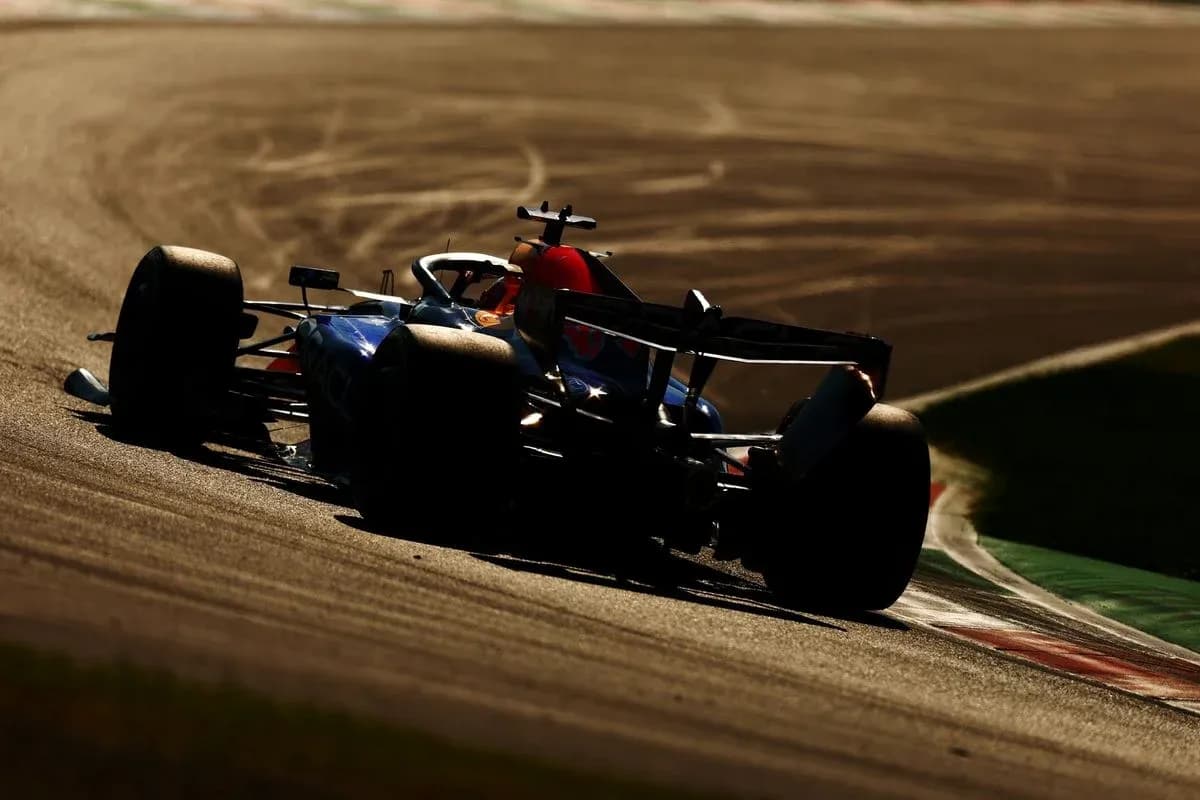
The old place was already humming by Friday afternoon. Monza in early September, scarlet flags draped over every spare piece of fencing, and an Italian leading the Formula 1 world championship as the sport rolls into Italy’s temple of speed for the first time in more than 70 years.
Kimi Antonelli carries that weight for Mercedes this weekend, even with a grid penalty hanging over him. George Russell, on the other side of the garage, smells opportunity. And Ferrari, armed with a fresh engine and the last flicker of an outside title hope, came to see if its season still has a pulse.
By the end of FP2, the early winners and losers were already clear.
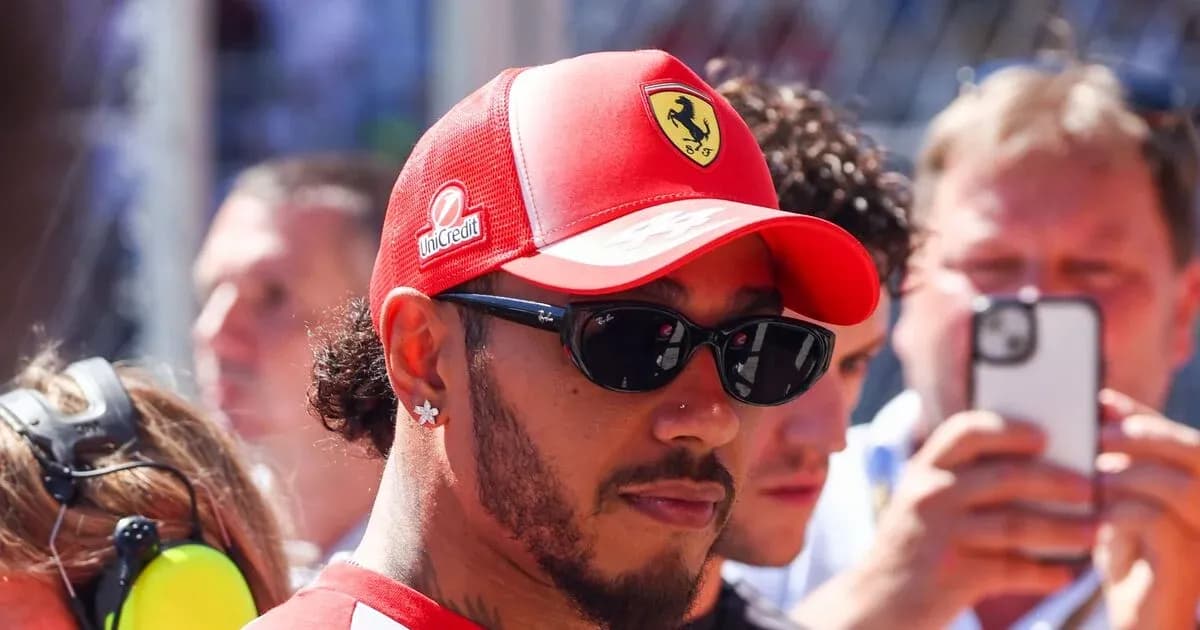
Ferrari’s new heart finds its voice
For Ferrari, this weekend was always going to be about the engine. The second ADUO upgrade arrived with expectation and a dose of realism: no miracle cure, just a chance to trim the power deficit that Monza exposes with brutal honesty.
On Friday, it did exactly that.
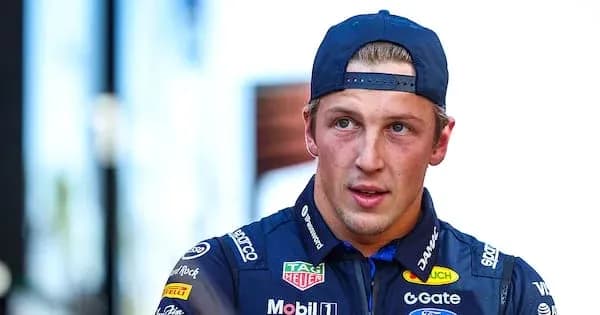
Charles Leclerc pushed the new unit to second in FP2, just 0.120s shy of Russell’s benchmark. The headline time came on soft Pirellis, unlike the hards on both Mercedes cars and the rapid Red Bull of Liam Lawson, but the long-run pace backed up the single-lap promise.
This was not a glory run on fumes. Ferrari looked properly in the fight.
The caveats still stand. It’s only Friday. Fuel loads are unknown. Engine modes stay hidden. Yet the numbers matter here because the team never expected to erase Mercedes’ advantage in one step. The goal was to narrow the gap, not leapfrog it. On that measure, the upgrade delivered a reassuring first answer for the Tifosi.
At a circuit that has so often underlined Ferrari’s weaknesses, the new engine at least allowed the car to stand tall on the straights. In front of its own people, that counts for a lot.
Leclerc finished FP2 in second, team-mate Carlos Sainz in fifth. For a team clinging to faint title hopes, that’s not a dream. It’s a platform.
Honda’s latest step falls flat
At the other end of the spectrum, Honda’s much-scrutinised power unit walked straight into the harshest spotlight F1 can offer and blinked.
Fernando Alonso had suggested on Thursday that Monza, not Zandvoort, would reveal the true state of Honda’s latest engine evolution. Zandvoort’s twist and turns can hide sins. Monza’s long straights expose them.
The early verdict was brutal.
Aston Martin and Honda sank to the depths of the timing sheets in FP2: Alonso and Lance Stroll mired near the back, split only by the Cadillacs and realistically more than a second off the next-slowest car once Esteban Ocon’s compromised Haas is discounted.
Power is king here. Honda knew it. Trackside general manager and chief engineer Shintaro Orihara had already called for realism and warned of a “challenging” weekend for the power unit. Even so, nobody in green or white will be satisfied with being anchored to the foot of the table.
This was the test they circled in red. On Friday, they failed it.
Russell seizes control
If Antonelli arrived as Italy’s story, Russell wrote Friday’s headline.
The Briton had played things down on Thursday. He talked about opportunity, not expectation, pointing out that recent races had rewarded chassis strength more than engine muscle. The margins, he said, were so tight that a tenth in qualifying could swing a podium.
Twenty-four hours later he was the driver to beat.
Russell topped FP2 with a 0.120s cushion over Leclerc, overturning the three-tenth deficit Mercedes had to Ferrari in FP1. On a circuit that rewards low drag, strong efficiency, and confidence under braking, the Mercedes package came alive.
The context makes his position even stronger. Antonelli, his main title rival and team-mate, will carry a grid penalty into Sunday. When qualifying reaches its sharp end, Russell can expect a tow, a tactical ally, and a clear run at pole while Antonelli plays the team game.
There are still unknowns. Ferrari’s ADUO 2 engine may have more to give. Russell’s own Mercedes power unit is deep into its life cycle. But on a day when momentum could have swung towards the home favourite, it was Russell who planted a flag.
He starts the weekend on the front foot, with the championship picture ever so slightly tilting his way.
Red Bull’s slide continues
Red Bull arrived in Monza already knowing this was not a title season. Max Verstappen’s new deal came with long-term optimism, not short-term illusions. Even the bright spots this year have leaned on the Dutchman’s ability to wring chaos into results.
Since that pre-Zandvoort announcement, though, the trend has turned ugly.
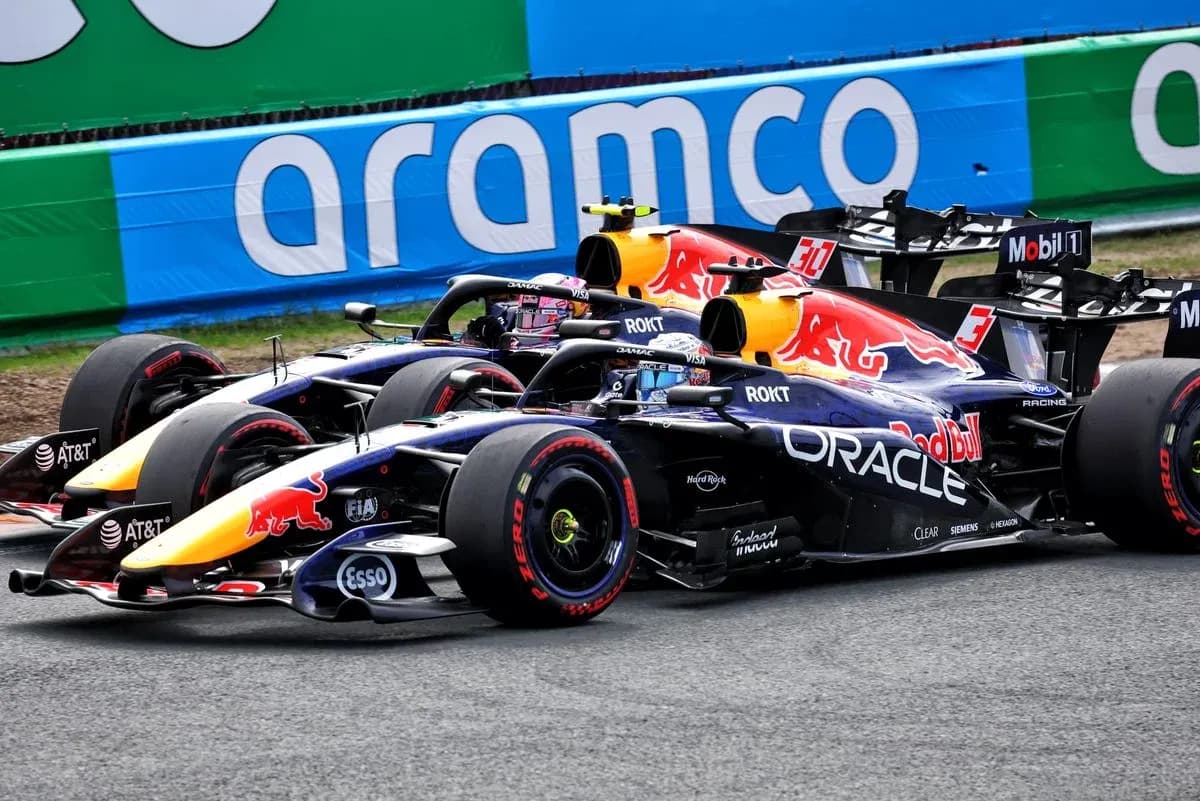
Sixth in the sprint in the Netherlands. A crash in the Dutch Grand Prix. Then came Friday at Monza, and with it a barrage of complaints from Verstappen in FP2: no downforce, a wing change, no grip in slow corners, braking issues, and a car that “jumped” on the front axle.
The stopwatch told the same story. Red Bull ended the session stuck in the pack, ninth and 12th, not just off the front but looking adrift of the leading midfield.
This is not a blip. It’s a pattern.
On current form, Verstappen’s trademark heroics won’t be about hunting wins or podiums. They might be needed just to drag Red Bull clear of the midfield swarm.
Bearman lights up Haas
Haas turned up with its biggest upgrade of 2026 – and put it all on one car.
Ollie Bearman got the full package: overhauled bodywork and the new Ferrari engine that Ocon is still waiting for. He made it count. Eighth in FP2, only 0.8s off Russell and a mere 0.02s behind Racing Bulls rookie Arvid Lindblad.
For a team stuck in a six-race run without points, that mattered.
Bearman called it Haas’s best Friday since around March. The numbers back him up. The car carried more downforce through the corners, and the Briton sounded more at ease, more willing to lean on it. He did admit the package is a little draggy compared to rivals, which at Monza is no small thing, but the net gain is obvious.
Hoagy Nidd, Haas’s head of car engineering, didn’t play it down. “It’s a huge upgrade,” he said, outlining how the team has updated virtually all of the chassis and the bodywork rearwards of the cockpit.
On a day when many teams sandbag or hide their hands, Haas didn’t look like a team in disguise. It looked like a team finally moving forward.
Ocon left exposed
The flip side of that progress sat in the other Haas garage.
Esteban Ocon has the new bodywork but not the new Ferrari engine, a quirk of F1’s engine homologation rules leaving him one step behind Bearman on the power unit ladder. The gap on the timesheets was painful: Ocon more than a second adrift of his team-mate in FP2 and down in 18th.
Nidd was quick to insist the engine alone doesn’t explain that deficit. Ocon, he argued, simply didn’t get “the best opportunity” to show his pace. Traffic on his push laps – a Monza classic – cost him dearly at the very moments the lap needed to come together.
Even so, the optics are harsh. One Haas in the top 10 with the full upgrade, the other marooned in the lower reaches without it.
For a driver already under pressure to prove he can lead a midfield team, Saturday brings a different kind of test: can he close the gap with less firepower under his right foot?
Friday at Monza didn’t settle anything. It never does. But it did sharpen the storylines.
Ferrari’s new engine has given the home team a fighting chance. Honda’s latest step looks alarmingly short. Russell has grabbed control of a weekend that could reshape his title bid. Red Bull is still searching for solid ground. Haas has found a spark in Bearman, while Ocon waits for his turn.
Now the question is simple: when the engines wind up for real, whose promise survives the glare of Saturday and Sunday in Italy’s temple of speed?