Lewis Hamilton left Monza with more than just tyre marks and a bruised points tally. He left with the firm belief that any talk of Ferrari throwing their weight behind his title bid has come far too late.
The seven-time world champion arrived at the Italian Grand Prix level on points with George Russell and still clinging to the fringes of the championship fight. He left sixth on the road, 10 points behind his former Mercedes team-mate and a distant 76 off runaway leader and race winner Kimi Antonelli.
On Ferrari’s home asphalt, the cracks in the Scuderia’s internal dynamics were laid bare.
Ferrari’s first-lap flashpoint
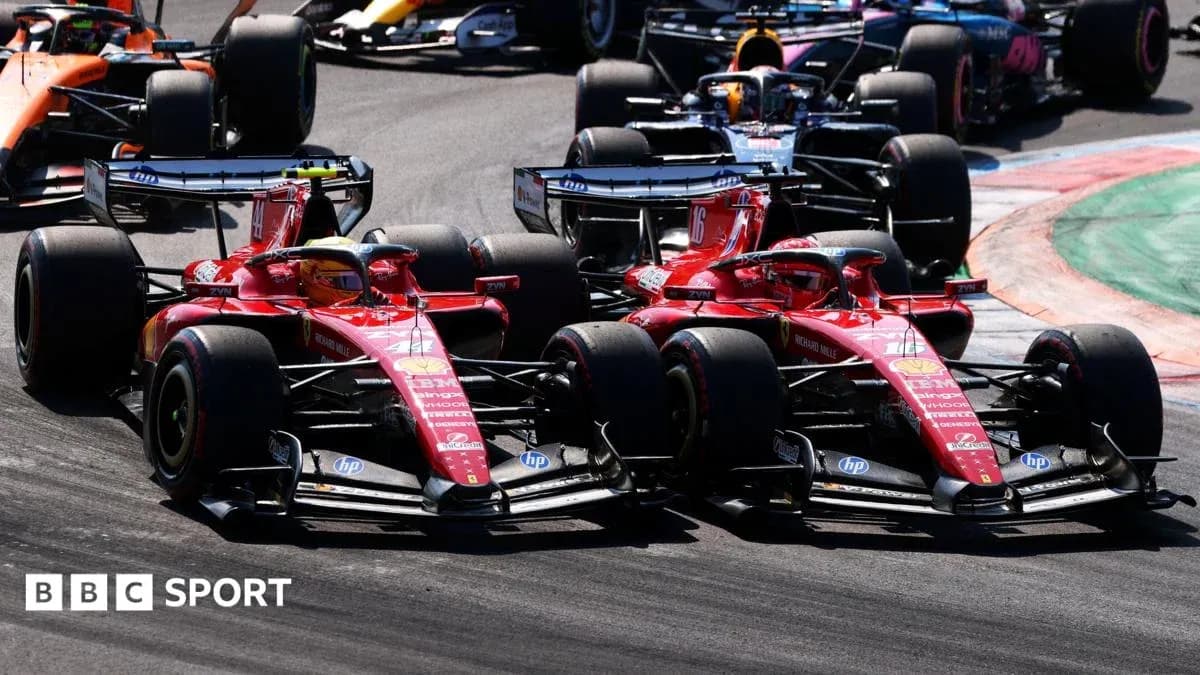
Hamilton started fourth, Leclerc fifth. Two scarlet cars, one narrow escape road, and no room for diplomacy.
Off the line, both Ferraris attacked the first chicane with typical Monza aggression. On the exit, as they fought wheel-to-wheel, Leclerc squeezed Hamilton onto the grass. The Briton was forced to back out, skipped across the run-off, and dropped to 10th. In a season where every point matters, it was an early self-inflicted wound.
Moments later, the other shoe dropped.
Leclerc, pushing hard to recover, lost control in a high-speed crash at Parabolica. His Ferrari snapped away and slammed into the barriers, triggering a red flag and leaving Hamilton as the team’s only hope of salvaging a podium on home soil.
That hope never really materialised.
When the race restarted, Hamilton could not live with the pace of the Mercedes pair. Russell and Antonelli disappeared up the road, locked into their own private duel, while the Ferrari faded from the lead fight. Sixth at the flag felt like a missed opportunity and a brutal reality check.
“I think from today, we've just lost so much ground to [Mercedes] on points,” Hamilton admitted. “It's far too late for those decisions to come. It's too late. All I can do is just try and turn up. I'll get up tomorrow morning and I'll give it my best.”
He still refuses to surrender, but he knows the scale of the task.
“It's never over until it's over. I don't know how many points it is now, but I'm sure it's 60, 70. It's an amount that, with the pace that they have, it's a very, very difficult amount to close out.”
Old questions, sharper edges
The tension did not begin at Monza. It merely escalated there.
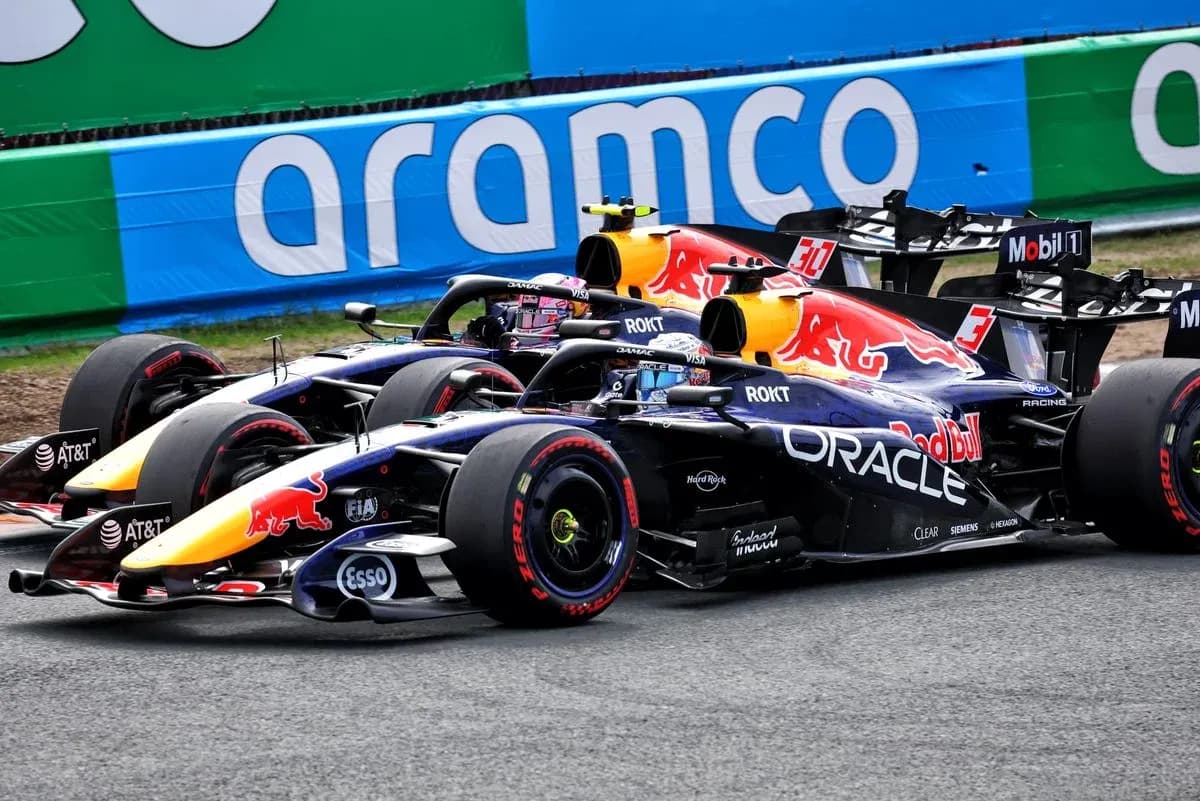
At Zandvoort, Hamilton had already voiced frustration at how Ferrari handled the intra-team balance. Running on fresher tyres and clearly quicker, he felt the team waited too long to move Leclerc aside while the Monegasque, on a different strategy, held track position in third.
By the time Ferrari pitted Leclerc, Hamilton’s patience had snapped. “Great way of wasting time, good job,” he fired over the radio, a rare flash of public irritation. He later apologised, but the feeling lingered.
Monza turned that simmer into a boil.
Leclerc, speaking after his lap-two crash, acknowledged how close things had been at the start. “It was way too close into turn one,” he said of the scrap with Hamilton, adding he did not know if there had been contact. “I was quite a lot on the inside kerb and tried to make the corner, which I didn't do it tight enough. And then I only saw in the mirrors what happened, which is never what you want between two cars of the same team.”
Hamilton saw it differently.
“I was ahead in turn two by the ethics, I was ahead. There was no ‘we’ in it,” he said, pointedly underlining his view that the move crossed a line.
Asked whether Ferrari fans should fear a full-blown feud with Leclerc, Hamilton pushed back.
“Look, I don't race dirty. I've always raced clean and fairly and always left space. So I don't think they should be worried about me.
“I've come into the team and tried to be respectful of space and definitely not put the team in jeopardy. I stand by that and that's all I can talk about.”
Vasseur walks the tightrope
Team principal Frederic Vasseur did not hide his displeasure at the first-lap skirmish.
He labelled the incident between his two drivers “not good”, but he also moved quickly to frame it as part of the reality every top team faces when both cars are operating in the same patch of tarmac and ambition.
His message was clear: managing egos and expectations is not unique to Ferrari.
Vasseur also pushed back on the idea that Ferrari should already have nailed its colours to one mast in the title race. He pointed to last season as a cautionary tale, referencing how Oscar Piastri led McLaren at a similar stage, yet any attempt to build the team solely around him would not have stopped Max Verstappen and Red Bull from cruising to the championship.
“For sure, at one stage you have to make a decision,” Vasseur said, “but I think it was too early to make a decision before Monza. Now we have time to discuss with the guys.”
The timing of that decision, though, is exactly what Hamilton now questions.
“We’ve got to change things”
Hamilton’s criticism went beyond one incident or one race. It cut into how Ferrari operate under pressure.
“If we continue to travel the same path, we get the same result,” he said. “And it's like we keep getting the same result. We've got to change things because it's not helping us to move forward. I think they're receptive to it and we'll take it offline.”
That line – “we keep getting the same result” – will sting in Maranello. Ferrari brought in Hamilton not just for his speed, but for his experience in title fights and his ability to shape a team’s culture and processes. When he talks about communication and decision-making, the words carry weight.
On a day when Mercedes delivered a crushing one-two at Ferrari’s home race, those words felt even heavier.
Hamilton still talks about giving his best, still clings to the racer’s creed that “it’s never over until it’s over”. But the numbers are brutal, and the calendar is shrinking. The question now is not whether Ferrari should back him over Leclerc in the championship.
It’s whether that choice, when it finally comes, will arrive in time to matter at all.