Fred Vasseur has never been in this job for compliments. Podiums, titles, the sound of the Italian anthem on Sunday afternoon – that’s his currency. Yet even he admits there is a particular satisfaction in seeing the rest of the grid suddenly sprout Ferrari-inspired wings.
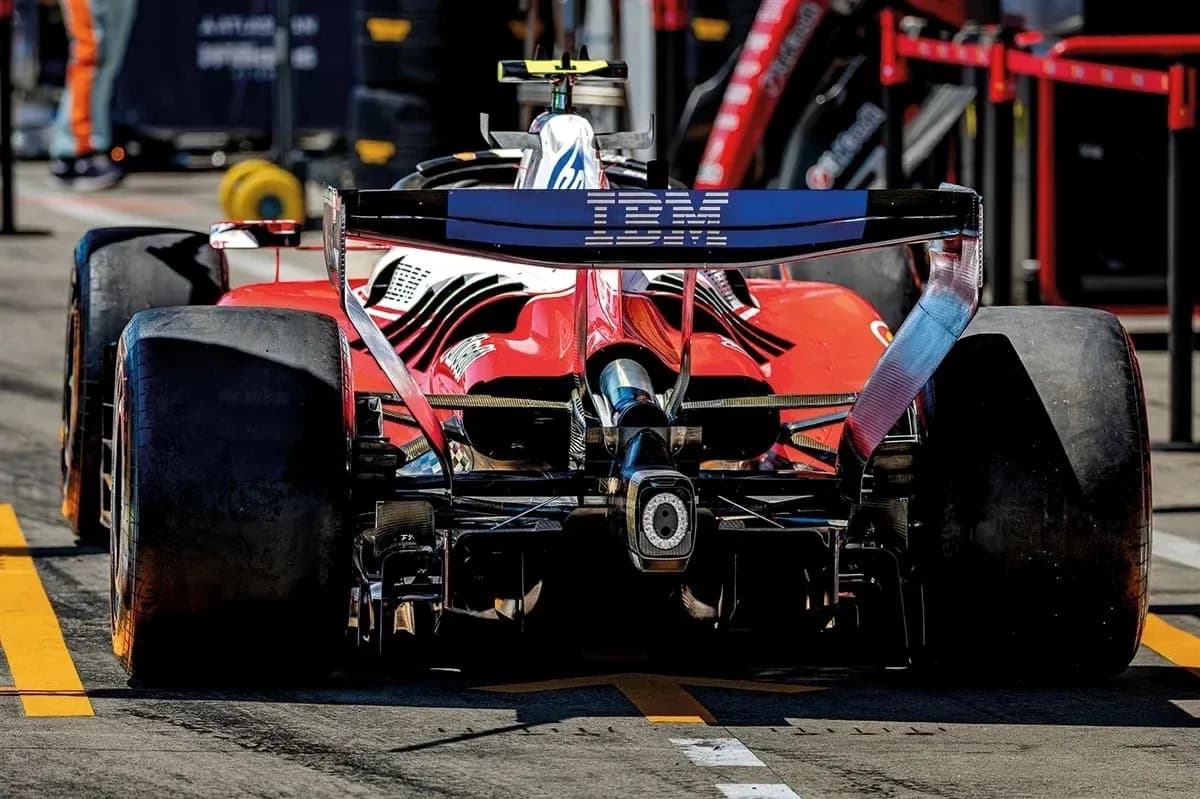
In 2026, the SF-26 rolled out as a statement. Visually striking, aerodynamically daring, it looked different because it was different. At Bahrain winter testing the car arrived with a tiny but telling flourish: a winglet mounted on the structure behind the exhaust, internally christened “Flick Tail Mode” (FTM). Its job was simple and ruthless – squeeze more downforce out of the rear of the car, accept a touch more drag, and trust the concept.
The next day, Ferrari doubled down. Out came a rotating rear wing, the so‑called “Macarena wing”, flipping 180 degrees between its cornering configuration and its low-drag straightline mode. It was the sort of idea that makes rival engineers stop mid‑coffee and reach for a notepad.
Copycats and closed loopholes
The exhaust wing was the first to spread through the pitlane. Teams tried to trace its secrets, but Ferrari had built the back of the SF-26 around the concept, baking it into the architecture. Reverse‑engineering that kind of integration is not a weekend job.
The FIA took note. Keen to prevent an arms race in that area and wary of designs spiralling out of control, it moved to close the loophole in the technical regulations. Ferrari-style exhaust devices are now banned from 2027.
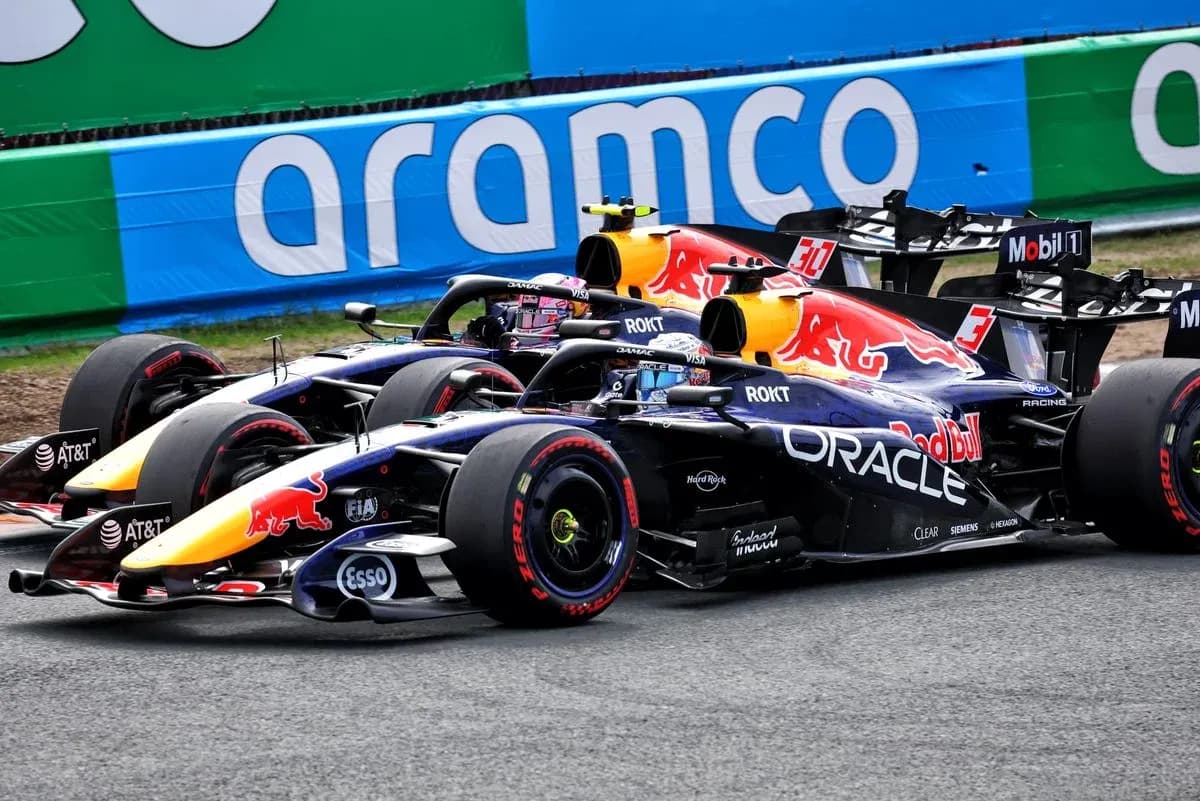
The upside-down rotating rear wing has travelled too. Red Bull has adopted its own version; McLaren has trialled a take on the theme. McLaren’s technical director Neil Houldey admitted they were late to the party.
“We were disappointed not to pick that up as quickly as Ferrari did and then Red Bull,” he said. “As soon as we saw it, we realised there was an opportunity there.”
For Vasseur, that sight – rival cars rolling out with Ferrari‑inspired solutions – lands in Maranello like a trophy.
“I’m not there to have compliments. I’m there because I want to win. The best compliment for me is to go on the podium,” he told Motorsport.com. “But yes, it’s true that for the guys in the team, to see Red Bull coming with the wing, and I think probably Red Bull started before seeing our wings, but the others starting to copy [it], or even the device on the exhaust, for the guys in the team who had the idea it’s a good reward.”
A sharp chassis in spite of a blunt weapon
Ferrari’s power unit has been a known weakness in this rules cycle. That has only sharpened the focus on the SF-26’s chassis – and the verdict in the paddock is clear: this is one of the most complete cars on the grid, arguably the reference.
Upgrades have underlined that point. Charles Leclerc turned the package into victory at Silverstone. Lewis Hamilton did the same in Barcelona. Those wins were not flukes born of chaos; they were the product of a car that works, a concept that scales with development, and a team that finally looks structurally aligned.
Ferrari sits second in the standings, and it has done so not by hiding its weaknesses but by maximising its strengths. When the engine cannot be the hammer, the chassis has to be the scalpel.
The long road to the SF-26
This SF-26 is also the first true child of Loic Serra’s tenure. The technical director was signed in 2023, but contractual realities meant he only walked through the Maranello doors at the end of 2024 after an extended gardening leave from Mercedes. His first full canvas was the 2026 car.
Vasseur points to that saga as a perfect illustration of the time lag that haunts Formula 1 rebuilds.
“The frustration that you can have sometimes in F1 is that on the technical side the process is mega long, because you have a lot of inertia,” he said.
The timeline tells the story. Talks with Serra began in mid‑2023. He joined late 2024. His focus went straight to the 2026 machine, all while he continued to recruit key staff around him. By the time their fingerprints show up on a car, years have passed. Yet the outside world demands results by next week.
That tension is constant in F1. Ferrari, for once, looks comfortable living inside it.
Risk as a philosophy
Vasseur has pushed Ferrari’s engineers to think bolder, accept more risk, and break away from the conservative instincts that had crept into the team over the past decade. The SF-26’s exotic details are not accidents; they are proof that the message landed.
“I’m very, very pleased with the choices that we made, with the set-up that we have, and the collaboration that we have in the team,” he said. “The team is strong. The collaboration is mega strong.”
Those are not empty words. They show up in the willingness to hang an experimental exhaust wing on a new car, to commit to a rotating rear wing concept, to build the rear end around an idea that might have failed. They show up in how quickly Ferrari has been able to bolt on effective upgrades while others are still trying to decode what they saw in Bahrain.
The FIA may have shut the door on one of Maranello’s most eye‑catching toys for 2027, but the real story is not a single device. It is the culture that produced it – a culture that now sees rivals reacting to Ferrari, not the other way around.
If this is what Ferrari’s first wave of risk‑taking looks like, the real question for the rest of the grid is simple: how much more radical will Maranello dare to be when the next car rolls out?