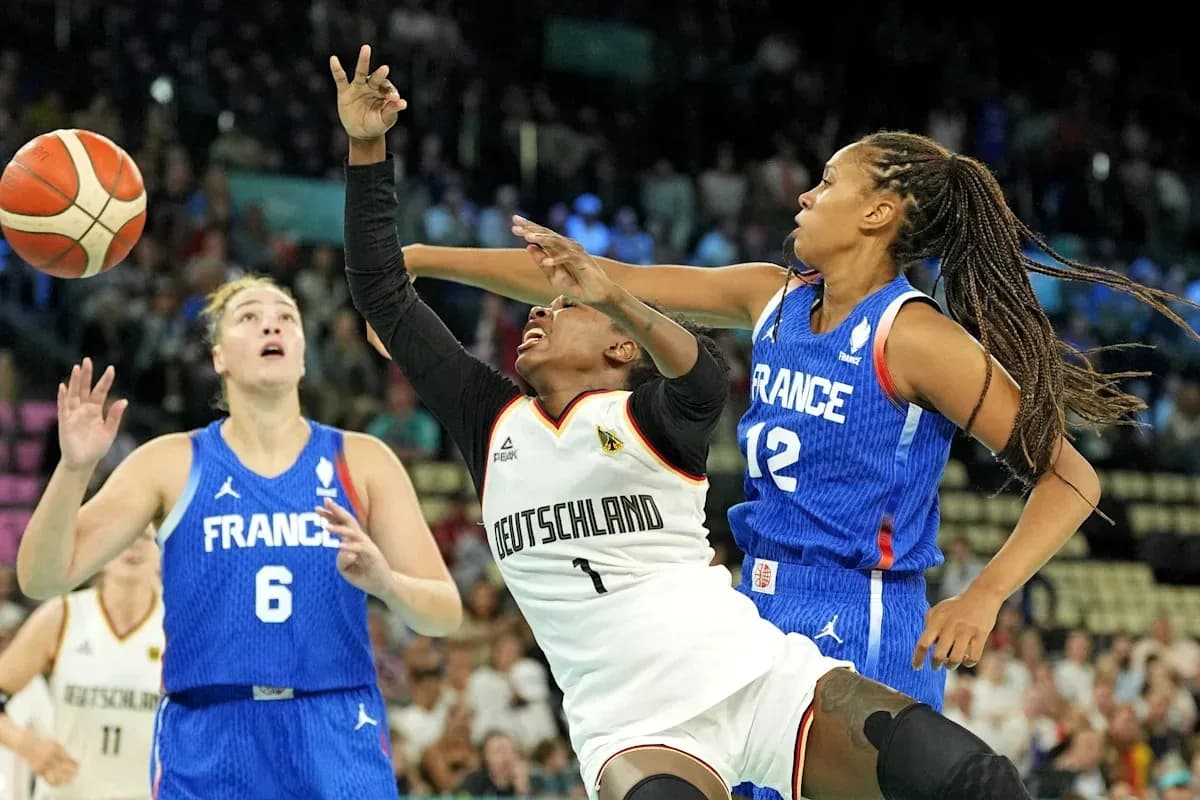
FIBA Women's World Cup Semifinals Preview: France vs Germany, Spain vs USA
The World Cup has reached the sharp end. Four heavyweights, two tickets to the final, and almost no margin for error.
In Berlin, the 2026 FIBA Women's World Cup semifinals bring a clash of styles, storylines, and scars that haven’t quite healed since Paris 2024.
France vs Germany – depth against the roar of Berlin
France have not just been winning. They’ve been overwhelming people.
They’ve shattered the single-game three-point record, blown teams off the floor, and carried themselves like a group that knows it owes itself a title run after the heartbreak of the 2024 Paris Olympics. Every game has felt like a statement that the mission is unfinished.
The numbers back it up. The shooting has been ruthless, the margins emphatic. Yet this is their sternest examination so far: Germany, at home, in Berlin, with a crowd ready to turn every French miss into a surge of noise.
France’s edge starts with something every contender craves in a tournament: real depth. Not just warm bodies, but game-changers off the bench.
Marine Johannès has embodied that. She isn’t even starting, and she’s still eighth in the tournament in scoring at 16.5 points per game. She leads the entire field in made threes with 16. Every time she checks in, the floor opens up. Defenses stretch, rotations panic, and suddenly France find another gear.
Then there’s Gabby Williams. A starter, a tone-setter, and right now one of the form players of this World Cup. She’s strung together some of her best basketball on this stage, and when she’s aggressive on both ends, France look like the most complete team in the field.
Germany, though, are not here by accident, and the building belongs to them.
The World Cup in Berlin has given them a platform and they’ve seized it, led by Marie Gülich. She’s averaging 11.8 points in the tournament and has been the emotional and tactical spark that’s driven this run to the semifinals. When Germany need a steady possession or a strong finish inside, it’s often Gülich who delivers.
But the real leap has come from Leonie Fiebich and Nyara Sabally as the stakes have risen. Against Belgium in the quarters, Fiebich dropped a team-high 17 points and pulled down 10 rebounds for a double-double. Sabally matched that intensity with 16 points and 12 rebounds of her own. Two frontcourt players, both dominating the glass, both dictating the physical battle.
If those two maintain that level, Germany can drag this into the kind of game France don’t want: a scrap, a grind, possession by possession with every rebound contested like it’s the last.
Germany’s bench has answered the call in moments, but this is where the gap appears. They don’t have France’s wave after wave of impact players. That makes their defensive performance absolutely critical. They cannot afford a repeat of the 2024 Olympic quarterfinal, when France rolled to an 84–71 win. If they allow France to get comfortable from deep again, the night could unravel quickly.
So it comes down to this: can Germany’s defense, fueled by a home crowd desperate for an upset, disrupt France’s rhythm and chase those shooters off the line? If the energy in the arena translates into sharper closeouts and more physical contests on the perimeter, Germany can drag this into a nervy finish.
Prediction: France win.
They look locked in, still driven by that “devastating” loss to the USA in Paris, and they’ve kept the pressure high all tournament. Germany will have to reach a defensive level they haven’t yet sustained to flip this. If the threes start falling for France early, the upset window closes fast.
Spain vs United States – a free-flowing offense meets a juggernaut
Spain arrive in the semifinals playing confident, controlled basketball.
They topped Group A, earned a bye, then dismantled Australia 89–66 in the quarterfinals. No drama, no doubt. Just a professional, dominant performance.
Megan DiLeo (née Gustafson) led that win with 16 points on 7-of-11 shooting, a display of efficiency that mirrored her growth with the Portland Fire in the WNBA. Her confidence has clearly carried over into this tournament. When she gets touches in her spots, Spain’s offense hums.
Alongside her, Iyana Martín has emerged as one of the standout scorers of the World Cup. She’s averaging 16.5 points per game, seventh among all players, and she’s done it with a composure that belies the stage. Give her a seam and she punishes it.
Spain’s attack reflects that balance. They’re putting up 81.0 points per game, moving the ball, spacing the floor, and forcing defenses to guard multiple threats. On most nights, that’s enough to control the tempo and dictate terms.
The problem? The United States are not “most nights.”
After a brief scare in the group stage against Italy, the U.S. have snapped back into their familiar, ruthless mode. Their quarterfinal against Hungary turned into a demolition: 108–56, a statement as much as a scoreline.
Napheesa Collier led the way with 19 points, another polished, all-around performance from the former WNBA Defensive Player of the Year. She’s been a model of consistency throughout the tournament, anchoring both ends with the kind of quiet authority that wins championships.
Rhyne Howard added 15 points and drilled 3-of-5 from beyond the arc, another reminder that this American team can hurt you from anywhere. You take away one option, another one steps forward.
And then, there’s the bench. Most teams would build a starting lineup around Caitlin Clark, Paige Bueckers, or Angel Reese. The U.S. bring all three off the bench. That’s not depth; that’s an avalanche.
Each has delivered when called upon. Clark’s playmaking and range, Bueckers’ poise and shot-making, Reese’s relentlessness on the glass – they’ve all swung stretches of games. Opponents don’t get a breather. The pressure never dips.
Defensively, the numbers are just as unforgiving. The United States have allowed only 58.3 points per game across their four opponents so far. They’ve controlled the defensive glass too, averaging 31.5 defensive rebounds per game to Spain’s 26.3. That gap matters. It strips Spain of second chances and fuels the American transition game, where they’re at their most devastating.
Spain know they cannot turn this into a shootout. Their 81.0 points per game look impressive until they’re set against the U.S. average of 90.5. To stay in touch, Spain must tighten the screws defensively, slow the pace, and make every U.S. possession work. One or two bad defensive stretches, and the game can be gone in a blur.
Prediction: USA win.
Spain have earned their place here and have the offensive firepower to ask questions. But the United States bring experience in big moments, balance across every area of the floor, and a level of depth that no one else in this field can match. With their scoring, rebounding, and defense all firing, they stand as clear favorites.
So the stage is set: France and Germany under the Berlin lights, Spain and the United States in a clash of styles and pedigree. The only real question now is who will handle the weight of the moment better when the semifinal tension finally gives way to tip-off.