The world’s club game is getting its heavyweight showdown back.
In 2026, the FIFA Intercontinental Cup returns for a third edition, once again dragging together the champions of all six continental confederations and asking a simple question: who is the undisputed club king of the planet?
Paris Saint-Germain are already waiting at the top of the mountain. Toluca, Mamelodi Sundowns, Al-Ahli and Auckland FC are scrambling up different sides. South America’s standard-bearer will arrive late, but with the swagger that always follows the Copa Libertadores winner.
The cast is almost set. The stakes are obvious.
A global bracket with a sharp edge
This isn’t a bloated, month-long festival. The Intercontinental Cup is lean and ruthless: four stages, five matches, one champion.
It starts far from Europe’s glare. The African-Asian-Pacific Cup opens the tournament, a two-game mini-knockout that throws together the AFC and CAF champions with the Oceania representative. Hosting duties bounce between Asia and Africa year by year, a deliberate move to keep the early spotlight away from the traditional power centres.
From there, the storyline jumps across the world.
The Derby of the Americas delivers a single, high-wire clash between the CONCACAF Champions Cup winner and the eventual Copa Libertadores champion. One game, one continent left celebrating, the other wondering what slipped away.
The winners of those two paths collide in the FIFA Challenger Cup, staged on neutral ground. That’s the last hurdle before the final – and the right to look across and see Europe’s champion waiting, fresh, rested, and under pressure to justify the shortcut.
Because the UEFA Champions League winner doesn’t touch a ball until the last night. Straight into the final. No warm-up. No second chance.
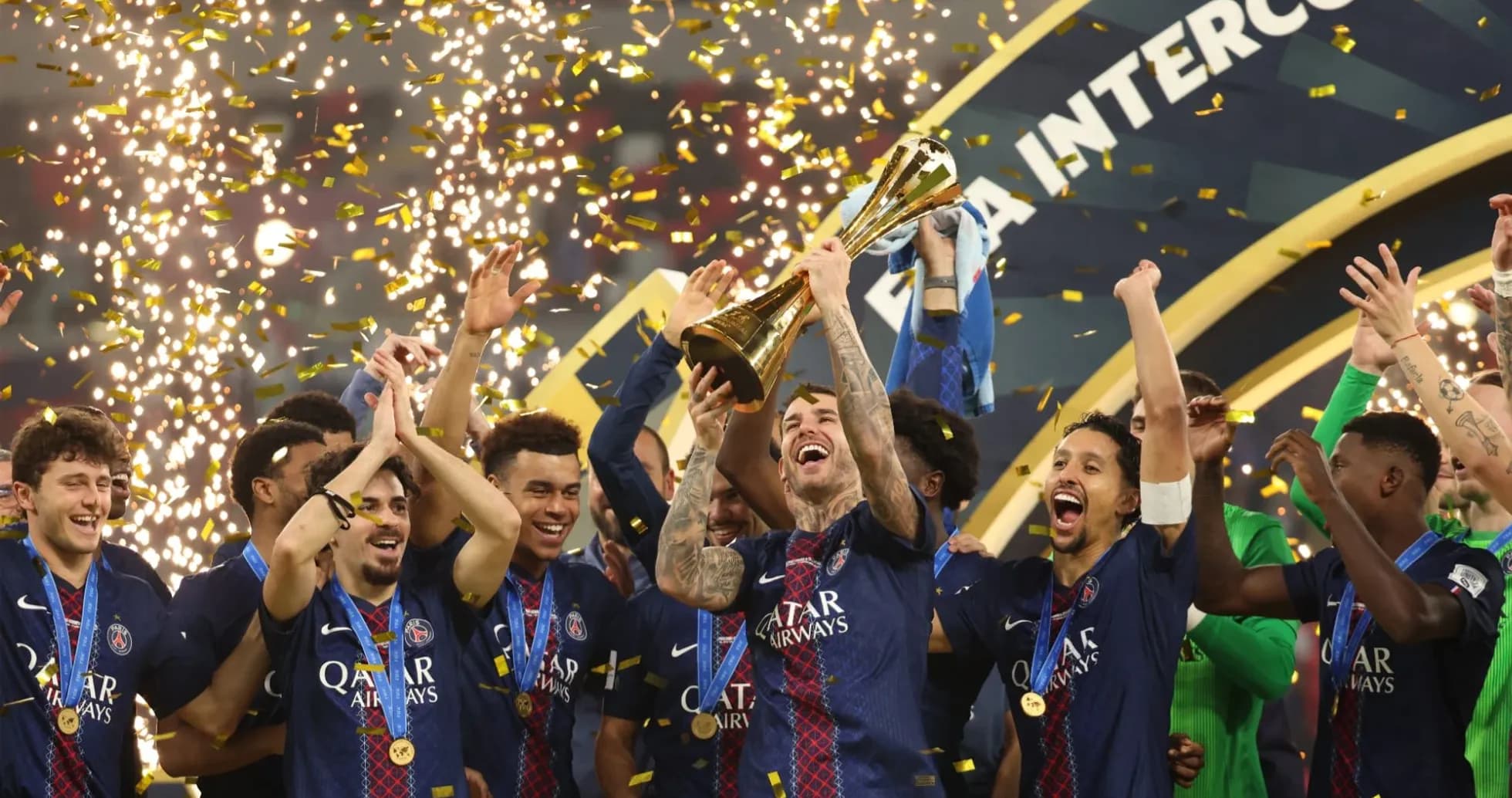
In 2026, that privilege belongs to Paris Saint-Germain.
PSG on the throne – for now
PSG arrive as European champions and defending Intercontinental Cup holders. They booked their ticket the hard way, retaining the Champions League with a penalty shootout victory over Arsenal in Budapest.
That win didn’t just secure another star for their own story. It guaranteed them a direct line to the Intercontinental Cup final, skipping every earlier round while the rest of the world fights for the right to meet them.
They know the format. They know the pressure. And they know that every other champion in the draw has them circled.
The challengers line up
Five of the six spots for 2026 are already locked in.
Al-Ahli carry Asia’s hopes after winning the AFC Champions League Elite, beating Machida Zelvia in Jeddah to claim their ticket. They step into a tournament that increasingly treats the opening African-Asian-Pacific Cup as a launchpad for serious contenders rather than just a curtain-raiser.
From North and Central America, Toluca arrive with the nerve of a team that has already walked the tightrope. Their CONCACAF place was sealed in a penalty shootout win over Tigres, the kind of high-stress finish that hardens a squad for knockout football on neutral ground.
Africa’s flag belongs to Mamelodi Sundowns. Their victory over AS FAR in the CAF Champions League final was more than a regional triumph; it was a statement that the South African powerhouse intends to carry its expansive, front-foot football onto a global stage.
Oceania’s path has changed shape, but the destination is the same. Auckland FC claimed the region’s berth by winning the inaugural OFC Professional League, earning their shot in a competition where the margins are brutal and the spotlight rarely forgiving.
The final piece of the puzzle will come from South America. The 2026 Copa Libertadores champion, still to be decided later in the year, will walk into the Derby of the Americas with the weight of a continent and the memory of decades of Intercontinental tradition behind them.
Tickets, prices and the scramble to get in
The football world will be watching. A lucky fraction will be inside the stadiums.
Exact ticket prices for the 2026 edition are not yet on the table, but recent history offers a clear hint of what fans can expect. In Qatar in 2025, FIFA’s own general sale started as low as QAR 20 – about 5 US dollars – for the early rounds. Once the secondary market woke up and demand spiked, prices spread quickly.
The final has always been a different beast. Seats for that showpiece have typically ranged from around 82 US dollars for the cheapest options to an average of roughly 217 US dollars for a mid-range view, reflecting both the spectacle and the scarcity.
For those looking for a more affordable way in, the African-Asian-Pacific Cup and the Derby of the Americas usually offer the softest landing on the wallet. The Challenger Cup and the final carry a clear premium, the cost rising with the stakes.
On platforms like Ticombo, prices move with real-time supply and demand. That means speed matters. Once fixtures, venues and dates are confirmed and listings go live, the race to secure the best value seats begins in earnest. Early buyers stand the best chance of landing cheaper tickets and choosing precisely where in the stadium they want to live the experience – behind the goal with the noise, or higher up with the tactical picture.
A young tournament, a big question
The Intercontinental Cup is still in its infancy in this new FIFA guise, only three editions old by 2026, yet it already carries a sharp identity: no group stages, no safety net, just champions colliding.
PSG are already there, installed in the final and waiting. Al-Ahli, Toluca, Mamelodi Sundowns and Auckland FC know their routes and their obstacles. South America will send a giant, whoever survives the Libertadores gauntlet.
One match at a time, five games in total, and the answer to a question that never really goes away: when every champion on earth shows up, who dares call themselves the best?