GENEVA — The battle for control of world football’s future has moved into open conflict, and the weapon of choice is money.
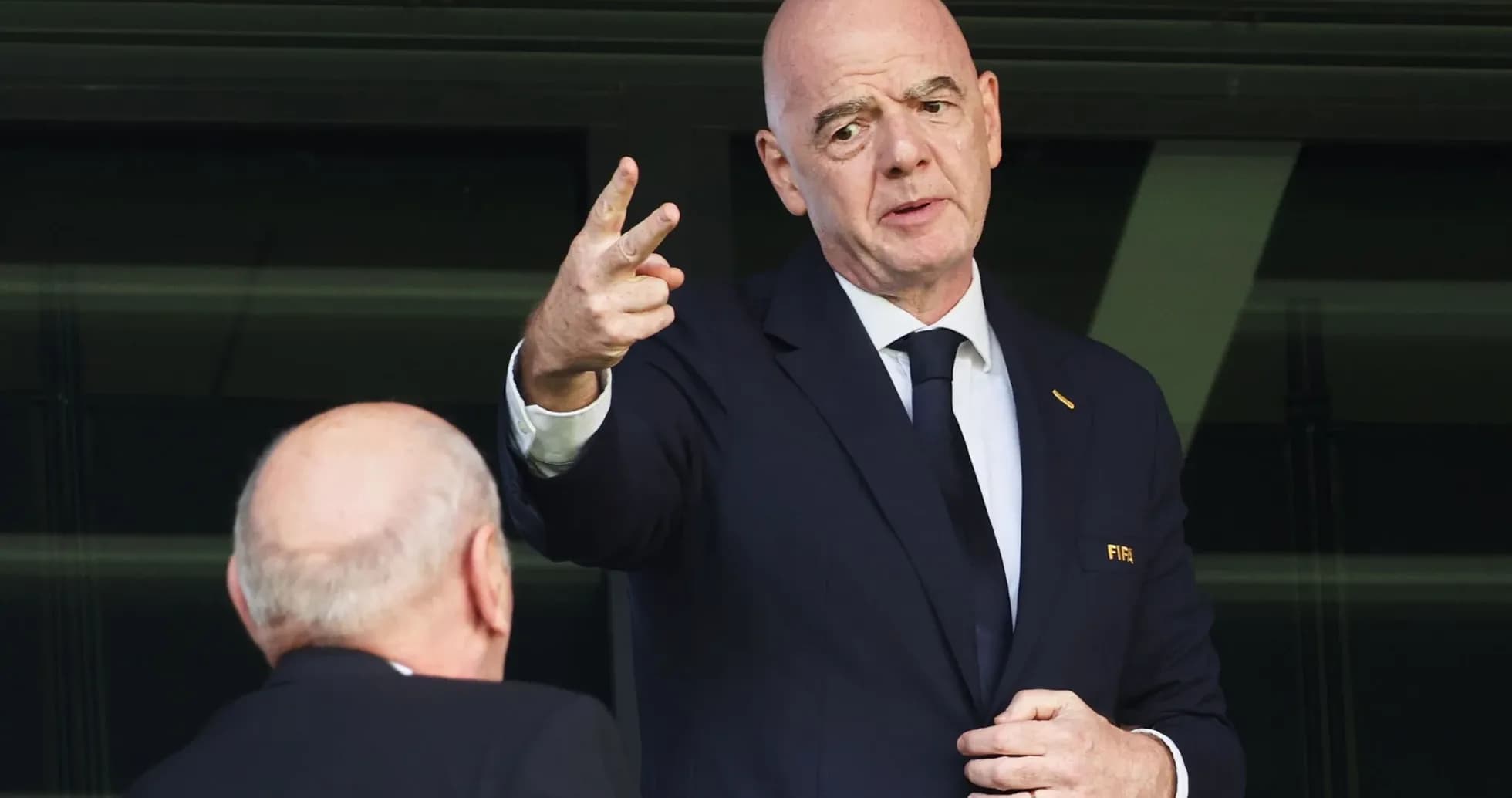
In a blunt letter to FIFA president Gianni Infantino, seen by The Associated Press, UEFA chief Aleksander Ceferin and CONCACAF president Victor Montagliani have called for each of FIFA’s 211 member federations to receive an extra $10 million from the organization’s booming reserves after a lucrative World Cup in North America.
That is not a minor proposal. It is a direct challenge.
Cash, power and a presidency on the line
FIFA’s coffers, the letter states, should stand at around $6 billion after the World Cup staged in the U.S., Canada and Mexico. From that, Ceferin and Montagliani argue, a “one-off release” totaling $2.1 billion could be safely distributed to national associations.
Those same associations will vote on FIFA’s next president.
Infantino, in office since 2016, had previously dangled his own financial carrot: a promise of $20 million per federation tied to a controversial plan to sell stakes in World Cup and commercial rights to a private equity vehicle led by investor Joshua Kushner. That project, known as FIFA Forward Enterprise (FFE), has since collapsed under fierce resistance from within the game.
The new offer from UEFA and CONCACAF is calibrated. It tells member federations they can still expect more money, and crucially, that they do not need Infantino’s private equity scheme to get it.
The letter also reassures them that existing commitments — $20 million per federation through 2030 — “would continue in full as already committed.”
FIFA declined to comment when approached.
A presidency no longer secure
For months, Infantino looked untouchable. A profitable World Cup in North America, strong backing from several confederations and no declared rival had him seemingly cruising toward re-election for a fourth and final term through 2031.
Then the private investment storm hit.
UEFA and CONCACAF now want Infantino removed — either before or at the presidential election scheduled for March in Rabat, Morocco, a key Infantino ally and 2030 World Cup co-host alongside Spain and Portugal.
The timing is tight. FIFA has set a November 18 deadline for candidates to enter the race, with the vote four months later. As yet, no clear challenger has emerged.
Names circulate. They always do. Montagliani himself is often mentioned. So is Nasser al-Khelaifi, the Qatari president of Paris Saint-Germain, a member of the Qatari government and of UEFA’s executive committee. Both carry political weight. Neither has said publicly they intend to run. Infantino, meanwhile, retains the backing of the Qatar football federation and support from South America and Africa.
The map is split. The stakes are not.
Demands for transparency
Ceferin and Montagliani are not just asking for cash to be released. They want a full and independent analysis of FIFA’s finances before an October 15 meeting in Zurich. That review, they argue, should determine how much can be responsibly handed to member federations.
That Zurich gathering will be the first meeting of the FIFA Council — chaired by Infantino — since reports in late July exposed the secrecy around the private equity plan. It is there, in a boardroom rather than a stadium, that the next phase of this power struggle will unfold.
“Lastly, please note we will be informing the other four confederation presidents to support this motion,” the pair wrote, signaling an attempt to build a broad coalition against the president from within his own governance structure.
Asia has already turned up the heat. The Asian Football Confederation has been critical of Infantino in recent weeks. South America and Africa, by contrast, have stayed firmly in his corner. In the Caribbean, Infantino even went on a tour to reinforce support among CONCACAF members, despite Montagliani asking him not to visit.
The lines are hardening.
UEFA turns to U.S. courts
UEFA is not limiting the fight to FIFA’s internal chambers.
The European body has gone to courts in Manhattan and Florida, seeking authorization to obtain evidence from Kushner’s investment firm in New York and from FIFA itself around the proposed $20 billion FFE project.
It wants documents and communications that could underpin a potential criminal complaint against Infantino in Switzerland, FIFA’s home country, for possible financial mismanagement.
If that complaint materializes, the battle over the presidency will no longer be just political. It will move into the legal arena, with consequences far beyond a single election.
For now, the game is being played on several fronts: in court filings in the United States, in backroom conversations before the FIFA Council meets, and in the quiet offices of national federations weighing a simple question.
Ten million now, twenty million promised, and a president under siege — which vision of FIFA’s future do they trust?