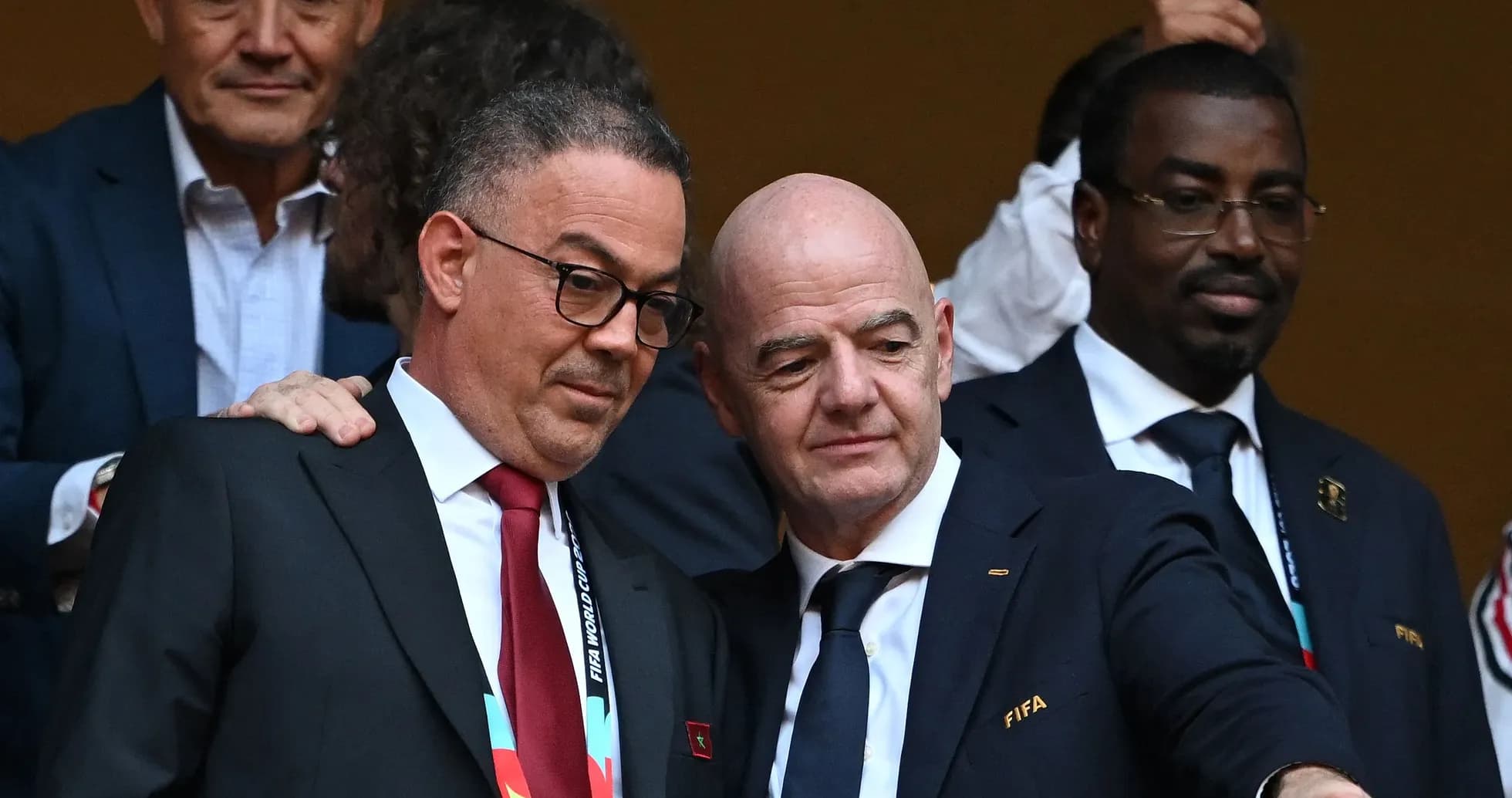
Fouzi Lekjaa is not backing down.
With the Court of Arbitration for Sport set to sit on 8 October, the president of the Royal Moroccan Football Federation has doubled down on Morocco’s stance over the controversial 2025 Africa Cup of Nations final against Senegal, framing it as a fight for the integrity of the game rather than a political tug-of-war.
In a wide-ranging interview with “Jeune Afrique”, relayed by “Al-Shorouk”, Lekjaa laid out Morocco’s position with unusual bluntness. For him, this is not about emotion or diplomacy. It is about the rulebook.
Standing firm over the AFCON final
Lekjaa insists Morocco’s complaint over the final rests squarely on the competition’s regulations and the principle of fair play. He argues that the Senegalese players and coaching staff breached those rules when they left the pitch during the decisive match, an act he views as incompatible with how international competitions should be run.
In his reading, what happened that day goes beyond a single incident. It touches the core of how African and global football handle discipline and responsibility on the biggest stages.
He underlined that FIFA has since moved to tighten its own laws in similar cases, increasing the severity of sanctions in situations involving teams walking off or disrupting play. For Lekjaa, that evolution in the global rulebook only strengthens Morocco’s case and underlines why, in his view, the regulations must be applied without compromise.
Confident in the legal route chosen, he made clear that Morocco will keep taking its arguments to the “competent bodies” whenever necessary. The message is simple: the federation believes it is within its rights, and it will use every legal channel available to make sure those rights are upheld.
CAS hearing: just one stop on a long road
The looming 8 October hearing at CAS has been painted in some quarters as judgment day. Lekjaa pushed back against that narrative.
He described the session as one step in what could be a lengthy legal process, not a final showdown. The case file, he noted, may require several hearings and detailed examination before any definitive ruling emerges.
That prospect does not seem to worry him. Morocco, he stressed, will keep standing by its legal position and wait for a decision it hopes will reinforce respect for the rules governing both continental and international competitions. For Lekjaa, the destination matters, but so does the precedent set along the way.
Eyes on 2030: Morocco’s World Cup ambition
From the courtroom to the grandest stage of all, Lekjaa then turned to another battlefront: the race to host the 2030 World Cup final.
Morocco, alongside Spain and Portugal, will stage the tournament. Within that joint project, the question of who hosts the final remains one of the most coveted prizes. Lekjaa made it clear that Morocco intends to be in that conversation until the end.
He underlined that the country is strictly following every FIFA requirement: inspection visits, technical criteria, and the formal processes that will determine which cities and stadiums get the biggest matches. No shortcuts, no side deals.
At the same time, he insisted Morocco has every right to defend its chances of staging the final as the African representative in the bid. Ambition, he argued, does not clash with respect for the rules. It must work within them.
Backing Infantino, pushing for better governance
Lekjaa also addressed his relationship with FIFA president Gianni Infantino, a subject that often draws scrutiny in African football politics.
He framed his support for Infantino as rooted in a belief that football can bridge divides and bring peoples closer together. His alignment with the FIFA president, he suggested, is driven by that broader vision of the sport’s unifying power.
That does not mean turning a blind eye to how football is run. Lekjaa stressed that world football still needs stronger governance, more balance, and deeper transparency in its decision-making structures. His focus, he said, is less on personalities and more on principles and institutions.
He wants a system robust enough to manage competing interests across continents, one that can enforce rules on the pitch and accountability off it.
Morocco’s federation chief now stands at the intersection of two defining battles: a legal war over an AFCON final that could reshape disciplinary standards, and a high-stakes push to bring a World Cup final to African soil. How those fights play out will say plenty about where the power, and the principles, of the global game truly lie.