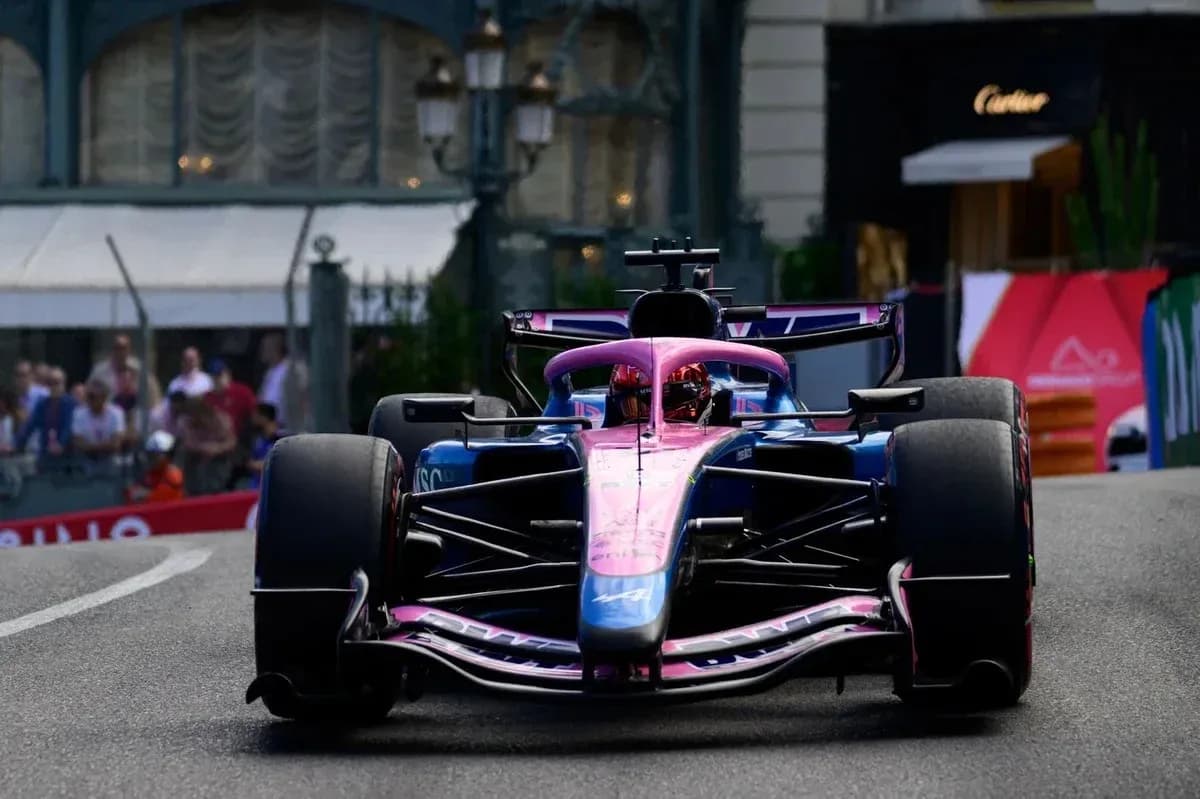
Pierre Gasly’s Monaco fairytale has been ripped up for a second time. The Alpine driver has lost his hard‑won podium in the principality after the FIA’s International Court of Appeal ruled that his pitlane speeding penalties must stand.
The decision drops Gasly from third to seventh and hands the final spot on the podium to fellow Frenchman Isack Hadjar, who had celebrated third place on the day only to see the classification reshuffled in the weeks that followed.
A 77-centimetre controversy
It all began with 77 centimetres.
During the Monaco Grand Prix, several drivers were flagged for pitlane speeding. Later, it emerged that the first two timing loops in the pitlane were misaligned, with a 77cm discrepancy between them. In a sport that lives in thousandths of a second, that error triggered an unusually high number of penalties and a storm that has taken months to clear.
Oscar Piastri and George Russell were among those punished during the race. Piastri served his penalty in the normal way. Russell’s situation was messier: Mercedes served his sanction incorrectly, and the Briton was hit with an additional drive-through that wrecked his afternoon.
Gasly’s case was different. His two five‑second penalties were not served in the pits but added to his race time after the chequered flag. That timing opened a door. Alpine requested a right of review, arguing that the faulty pitlane measurement had unfairly condemned their driver.
On 12 June, the FIA stewards agreed. They overturned Gasly’s penalties and reinstated him to third place, putting him back on the Monaco podium.
For those who had taken their medicine mid-race, there was no such reprieve.
Teams fight back
The reversal infuriated rivals who felt they had been punished twice: once by the original penalties, then again by seeing Gasly’s wiped out.
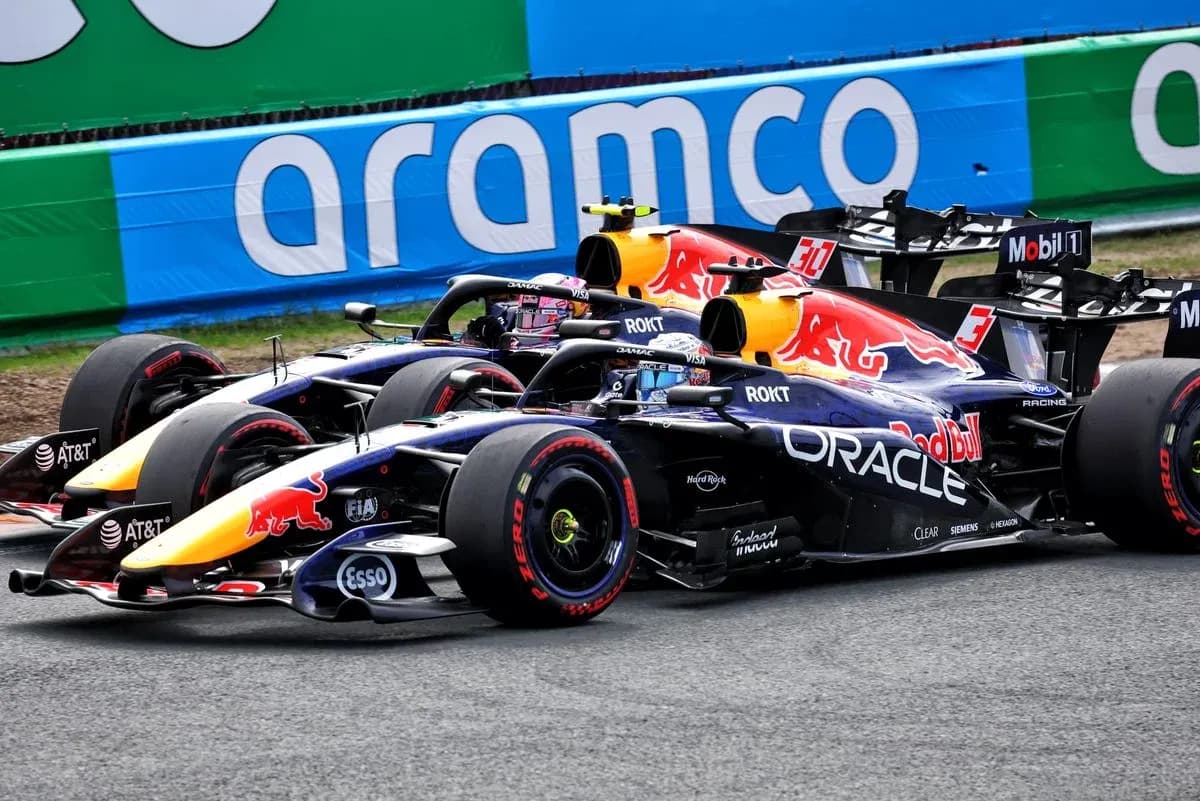
Red Bull, on behalf of Hadjar, and McLaren, for Piastri, lodged appeals with the International Court of Appeal. Both drivers had slipped down the order as a direct result of serving their penalties in real time, Hadjar from third to fourth and Piastri from fourth to fifth. Racing Bulls joined the challenge, with both of its drivers also losing positions, and Motorsport UK backed the move.
Their argument was simple: if the pitlane timing was flawed, it was flawed for everyone. If Gasly’s penalties were erased, why should those who had already served theirs be left to carry the damage?
The case went to Paris. On Friday, the ICA delivered its verdict.
The penalties stand.
Gasly is pushed back to seventh. Hadjar regains the third place he originally celebrated. Piastri and the others keep the scars from Monaco.
Court questions Alpine’s proof
The ICA’s reasoning cut to the heart of Alpine’s defence.
The team insisted Gasly had not exceeded the pitlane speed limit at any point. But the Court found Alpine could not prove “with full certainty” that Gasly had actually travelled a longer distance between the two timing loops than the system had recorded.
His shorter time through the measured segment, the Court said, could be down to “a shorter path, greater speed, or a combination of both.” In other words, there was no definitive evidence that the timing anomaly alone explained the data. Without that certainty, the Court refused to wipe away the sanctions.
At the same time, the ICA made one key clarification on sporting fairness. It ruled that the fact other drivers had already served their penalties “cannot be an obstacle to the cancellation of an illegitimate sanction, because those penalties were served at the discretion and choice of the team.”
Teams chose when to pit. They chose when to serve the penalties. That element of strategy, the Court argued, could not be used to block the cancellation of a punishment deemed illegitimate. To do so, it said, would itself “be inconsistent with sporting fairness.”
In the end, though, it was Alpine’s lack of watertight proof that decided Gasly’s fate.
Alpine furious but defiant
Alpine did not hide its anger.
In a strongly worded statement, the team said it “expresses its disappointment and frustration with the outcome reached by the FIA International Court of Appeal relating to the result of the 2026 Monaco Grand Prix.”
The team doubled down on its belief that Gasly was innocent.
“While we disagree with the decision, and still fully maintain that Car #10 did not exceed the Pit Lane speed limit at any point during the race, the team acknowledges the decision of the judging panel from the recent hearing in Paris,” the statement read.
Alpine described the outcome as unjust, saying it “feels that we have been unjustly punished,” but insisted the focus now lies on the track, not the courtroom. The team underlined that it remains locked in “a close and very competitive Championship fight” and vowed that “this outcome will not deter the team’s efforts and motivation in achieving its objectives by the end of the season.”
Gasly loses a podium. Alpine loses a symbolic victory in a difficult campaign. The sense of grievance, though, clearly stays.
FIA promises a timing and judicial review
The FIA, for its part, moved to defend its stewards while accepting that the system around them needs work.
In its own statement, the federation noted that the ICA decision “upholds the appeals of McLaren F1 Team and Red Bull Racing against the decisions of the stewards contained in document 99 of the Monaco Grand Prix, effectively overturning those decisions.”
The governing body stressed that stewards operate in a very different environment to that of the Court. The ICA can call on extensive legal counsel, deeper argument, and more evidence than is available to officials making rapid-fire decisions during a live race weekend.
Even so, the FIA has committed to a broader review.
It is “reviewing the methodology and operation of the current Formula 1 timing system and the related regulatory matters.” It is also looking again at its judicial framework, including “the right of review and the appeal processes.”
The federation stood firmly behind its officials, describing the stewarding panels as independent, objective, and “an integral part of global motorsport.” It highlighted the fact that stewards constantly reassess their procedures and take part in “extensive professional development,” and that every ICA ruling is fed back into that process.
The message is clear: the system will be examined, but the people running it retain the FIA’s backing.
For Gasly and Alpine, that will be thin comfort. A Monaco podium is gone. A 77-centimetre quirk in the pitlane has left a permanent mark on the record books, and on a season where every point, and every place, feels like it might matter.