
The Negreira case, a shadow hanging over FC Barcelona for nearly four years, has taken a fresh twist. This time, the support for the club’s version of events has come from inside its own house.
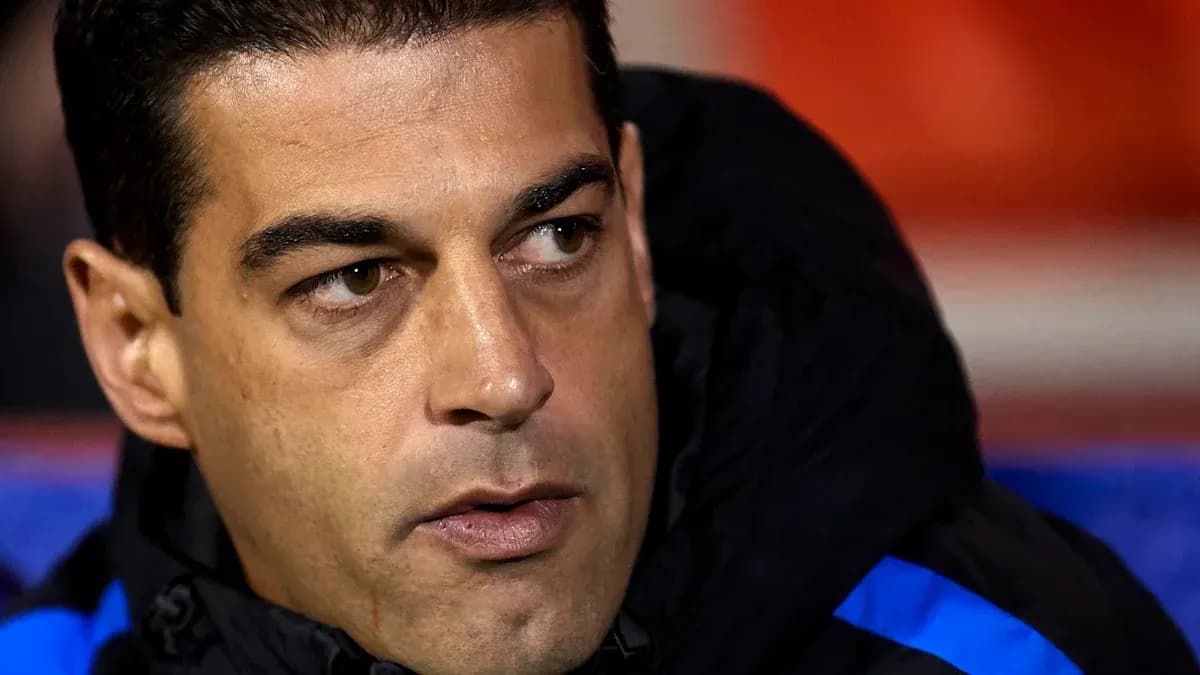
Gerard López, current coach of the Catalan national team and former Barcelona B manager, has testified in line with Barça’s long-held defence: the payments to José María Enríquez Negreira were, he says, for referee reports, not for influence.
López told investigators that during his spell in charge of the B team – now known as Barcelona Atlètic – he read reports compiled by Negreira, the former vice president of the Technical Committee of Referees. These documents, according to his account, were part of the technical preparation available to him as a coach.
He is not alone. Former reserve-team delegate Toni Alonso has backed him up, confirming the existence and use of those reports at that level of the club.
Their testimony lands at a crucial moment.
A Long, Expensive Relationship Under the Microscope
At the heart of the case lies around €8.4 million paid by Barcelona to Negreira over 17 years. Negreira was no longer an active referee, but he occupied a powerful seat within the refereeing hierarchy.
Prosecutors argue that this money was not simply for consultancy. Their theory: Barça sought favorable refereeing appointments and treatment through those payments. So far, that remains an accusation, not a proven fact. No court has yet established that any specific match, decision, or appointment was altered as a result.
Barcelona’s line has been unwavering. The club insists the payments were for scouting and analysis: written and possibly video reports on referees, their tendencies, their thresholds for fouls and cards, and how they handled pressure. López and Alonso now give that defence something it previously lacked at coaching level – direct, corroborated testimony that such reports were indeed used.
A Contrast With the First Team
The new statements stand in stark contrast to what came before from the club’s former first-team bosses. Luis Enrique and Ernesto Valverde, both ex-coaches of the senior side, told investigators they never saw any referee reports from Negreira.
That gap had left Barcelona exposed. If the club was paying millions for a service that its most important coaches said they never used, the logic of the official explanation looked fragile.
López and Alonso help plug that hole, at least partially. They reportedly stressed that before the introduction of VAR, understanding a referee’s style mattered even more, especially in the lower divisions where Barcelona B compete. In those leagues, referees are less familiar, less scrutinised, and their quirks less widely known. Any extra information, they argued, could be decisive in preparation.
It is a very different context from the global spotlight of the first team in LaLiga and the Champions League, where every official is dissected weekly on television and radio. At B-team level, the margins are thinner, the information scarcer, and the need for inside knowledge greater.
Power, Proof, and a Narrowed Case
One of the central unanswered questions still hangs in the air: just how much power did Negreira really wield over referee appointments?
He held a senior role within the Technical Committee of Referees, but influence is difficult to quantify and even harder to prove in court. The prosecution has yet to show a direct line from the payments to any manipulated appointment or decision. There is suspicion, a pattern of money, and a swirl of politics, but not yet a smoking gun.
A Spanish court has already removed one of the most explosive elements from the case by dropping bribery charges against the club. Even so, the legal battle is far from over.
Prosecutors continue to pursue a charge of “sports corruption” against Barcelona. Around that core allegation sits a web of additional accusations: breach of trust, false business documentation, and money laundering, directed at Barça executives, Negreira himself, and their associates.
The stakes remain enormous, both reputationally and legally, for one of the world’s most scrutinised clubs.
Heading for the Courtroom
After almost four years of leaks, counter-briefings, and legal manoeuvres, the investigation phase is finally over. The case is now expected to move into open court, with oral arguments to come.
When that happens, testimonies like those of Gerard López and Toni Alonso will be tested under full public glare, set against the accounts of Luis Enrique, Ernesto Valverde, and the prosecution’s narrative of illicit influence.
On one side, a club insisting it paid for information in a football culture obsessed with marginal gains. On the other, prosecutors determined to prove those millions bought something far more serious.
Soon, it will no longer be about who controls the story. It will be about who convinces the judge.





