Germany Secures Quarter-Final Spot with Dominant Win Over Mali
The bassline hit first. Then the chorus of “Durch den Monsun” rolled around the Uber Arena, and Germany’s players bounced onto the Berlin court like a team that had already decided how the night would go.
By the final buzzer, they had turned a knife‑edge group into a launchpad.
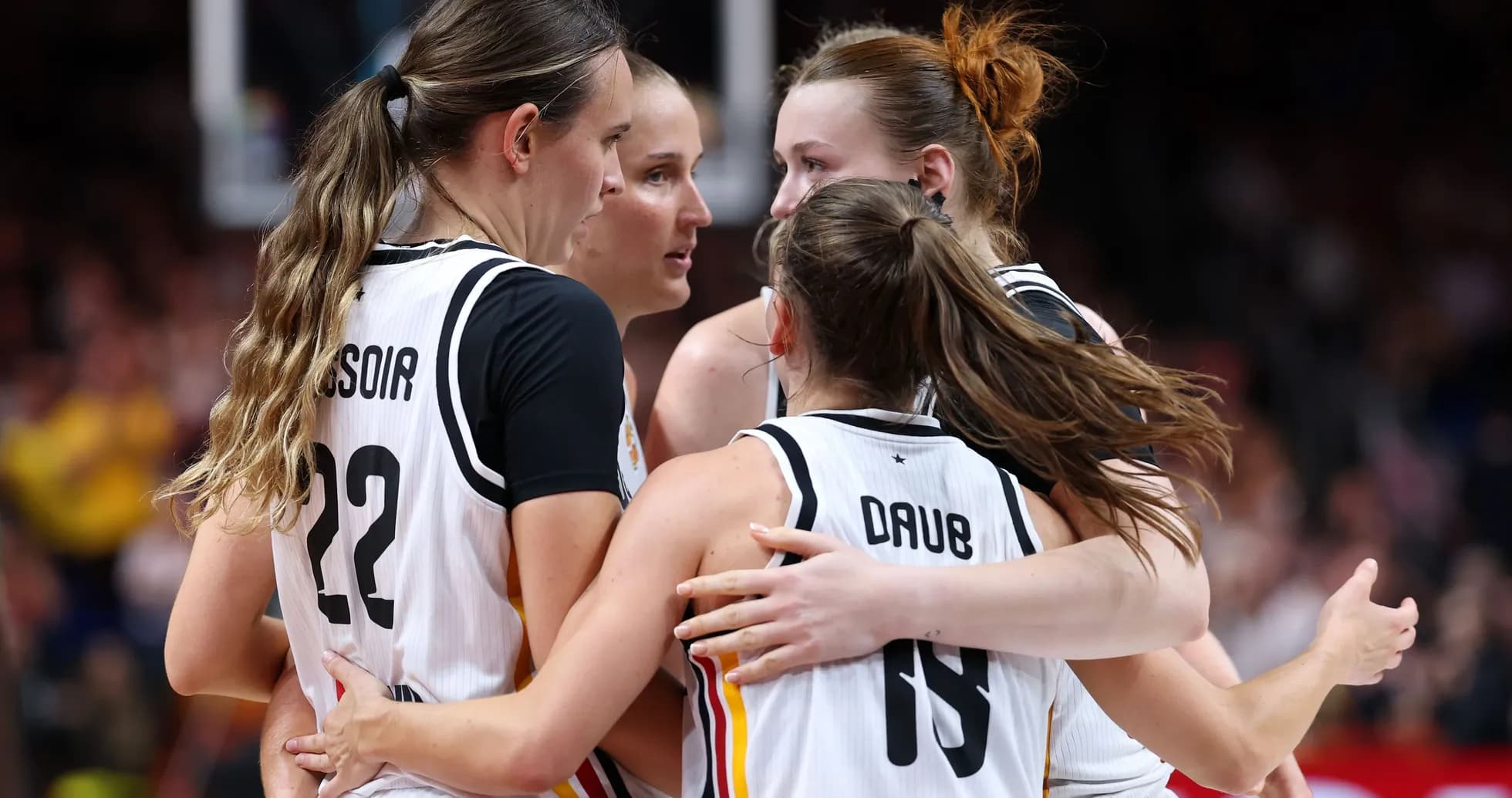
Germany dismantled Mali 83:58 (49:32), a statement win that locked up second place in Group A behind Spain and delivered exactly what this young side needed: a clear runway into the qualification round and a surge of belief.
Next stop: South Korea on Tuesday night, with a quarter-final ticket on the line.
From chaos to control
The scenario before tip-off was brutal in its simplicity. Four teams, all on three points. One win, one defeat each. Germany could finish anywhere from first to fourth.
The first blow came from elsewhere. Spain’s 79:59 victory over Japan killed off any lingering dream of top spot, but it also settled the equation. Germany’s mission shrank to something sharper: win, and climb as high as possible. Lose, and risk dropping to the bottom.
“We have to be the aggressor from the start,” Frieda Bühner had said, fresh from leading the scoring against Japan.
They listened.
With world champion and national team captain Dennis Schröder courtside, soaking in the atmosphere as a star spectator, Germany came out snarling on defence. Mali, the team that had shocked Spain 82:73 only days earlier, suddenly looked ordinary. Leonie Fiebich drilled an early three, the hosts swarmed passing lanes, and by the sixth minute the scoreboard read 15:7.
Then came the wobble.
A flurry of sloppy possessions crept in, the ball slipping away too easily. Alexis Peterson, back in the lineup after missing the second half against Japan because of an infection, coughed up two quick turnovers. The crisp execution that had opened the game gave way to rushed decisions and loose handling.
The arena noise dipped for the first time.
Bühner ignites, Geiselsöder arrives
What followed turned the night.
Luisa Geiselsöder, quiet and searching for rhythm through the early stages of the tournament, suddenly found everything. Touch around the rim. Confidence on the perimeter. Composure in traffic. She did not miss in the first half.
Bühner picked up right where she left off against Japan. Confident, fearless, and ruthless from deep. Her second consecutive three-pointer pushed Germany into their first double-digit lead at 40:29 in the 16th minute. The tension that had wrapped itself around the group table began to loosen.
From that moment, Germany played like a team that knew exactly who they were.
Alexandra Wilke and Marie Gülich stepped out and joined the three-point barrage. The spacing stretched, Mali’s defence sagged and scrambled, and Bühner kept punishing them. She finished as Germany’s top scorer again, racking up 21 points and setting the tone for a side that suddenly looked like it had multiple ways to hurt you.
“You want to get better in every game, and they are doing that,” Schröder said at half-time on MagentaTV, nodding towards a team feeding off the “awesome atmosphere” created by 12,550 fans.
The numbers on the scoreboard agreed with him.
No second-half nerves this time
Germany had been here before with Mali. Their only previous meeting dated back to an international in Saarlouis in 2007. There was no sense of history on court this time, only a host nation determined not to let the door swing back open.
Mali tried to respond after the break, but every run met a wall of German energy. The defensive rotations stayed sharp, the rebounding remained committed, and the ball kept finding the hot hands.
Geiselsöder made sure there would be no late drama. Her three-pointer in the 25th minute stretched the lead to 56:37 and effectively ended the contest. The WNBA player later called it “really good basketball,” and she was right. It was clean, confident, and ruthless enough to squeeze the belief out of a dangerous opponent.
From there, Germany managed the game with maturity that had been missing in their heavy 53:83 opening defeat to Spain. That loss had stung. The response — a 74:58 win over Japan, followed by this 83:58 dismantling of Mali — has reshaped the mood around the team entirely.
They are no longer just hosts. They are contenders in their own building.
Korea next, Belgium waiting
The path is clear now.
Beat South Korea — third in Group B — in Tuesday’s qualification game, and Germany step into the quarter-finals. Waiting there would be Belgium, the European champions of 2023 and 2025, who cruised through Group C without a single defeat.
Olaf Lange knows what’s coming. “Now we have to reorganise again. South Korea are a good team,” he warned, even as the celebrations still echoed around the sold-out arena.
He is right to be cautious. The stakes jump again from here. One bad night, and all this momentum disappears.
But as the players left the court to the last echoes of Tokio Hotel and the roar of 12,550 voices, one thing was obvious: this German team has finally stepped through the storm and into the spotlight.
Now the question is simple: how far can they ride this surge?