
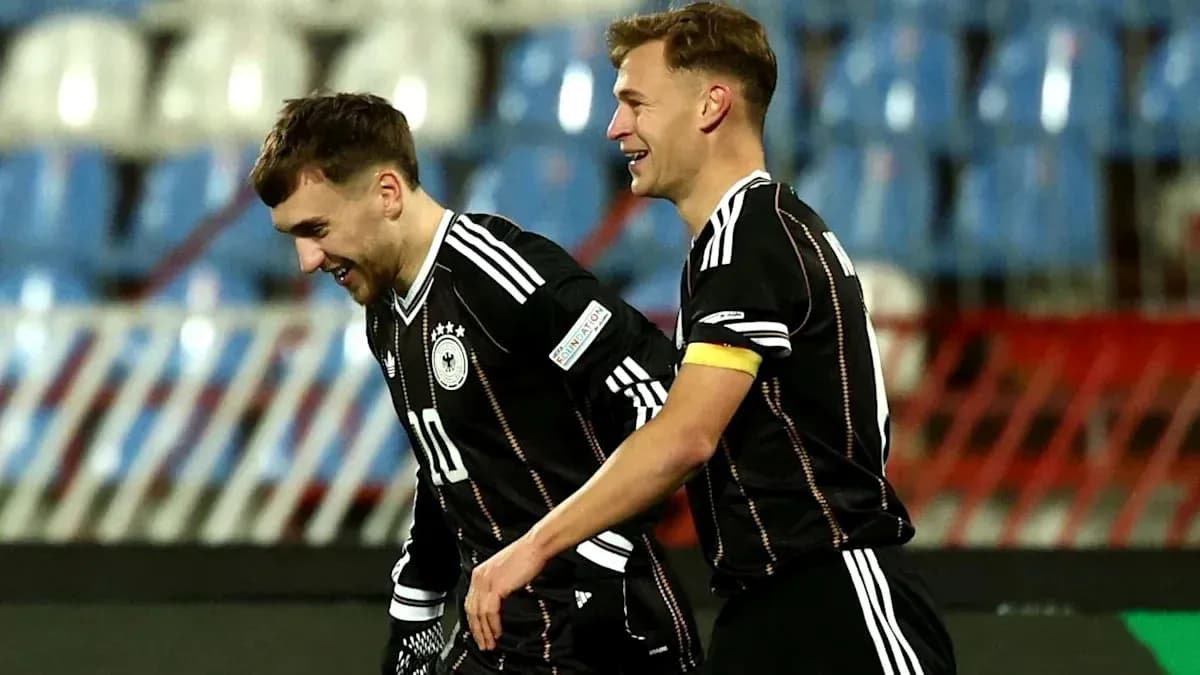
Germany’s new era under Jürgen Klopp took another confident step forward in Belgrade, wrapped in the oddly hollow echo of a half-empty Rajko Mitic Stadium and a 3-1 win that never really felt in doubt.
Germany strike early, Serbia stunned
The game had barely settled when Germany were handed a gift. In the third minute, Srđan Babić turned the ball into his own net, a scrambled, awkward moment that immediately tilted the night Germany’s way. Serbia, flat and disjointed early on, suddenly looked like a side chasing shadows.
Germany smelled weakness and went for the throat.
Florian Wirtz, increasingly the face of this refreshed national team, doubled the lead in the 14th minute. Arriving in the right place at the right time, he tapped in from close range after Vanja Milinković-Savić had managed only to get a hand to an initial chip. The goalkeeper’s touch merely delayed the inevitable; Wirtz did the rest from point-blank range.
For much of the first half, it was a training exercise in German control. They moved the ball with purpose, pressed with clarity, and pinned Serbia back. Only in the closing stages before the interval did the hosts finally rouse themselves, stringing together a few attacks that hinted at resistance rather than revival.
Gruda’s solo stunner, Klopp’s grin
Any Serbian hope of a comeback evaporated five minutes after the restart.
Brajan Gruda picked up the ball deep, put his head down, and drove. Forty yards later, having sliced through the heart of Serbia’s shape with the ball glued to his feet, he finished a brilliant solo move to make it 3-0. It was the kind of goal that jolts even a quiet stadium to life, if only in disbelief.
The cameras cut to the German dugout. Klopp, still in the early chapters of his reign, wore a broad, unmistakable smile. This was his second win in charge, but more importantly, it was a goal that carried his fingerprints: aggression, bravery on the ball, and a young player taking responsibility.
Gruda’s strike effectively sealed the contest. Serbia did respond on the scoreboard when Babić at least repaired some of the damage to his night with a consolation goal in the 56th minute, but the match never truly swung back into balance. Germany had already done the hard work.
Nations League table tightens
The 3-1 victory keeps Germany in third place in Nations League group B, but the table is tight and the stakes are rising. Next up is the Netherlands in Berlin on Monday night, and that feels like something far more serious than a routine group fixture.
The Dutch will arrive in the capital riding a wave. Xavi Hernández’s side demolished Greece 7-0 in Amsterdam, a statement win that suggests he has quickly imposed his ideas on the national team. Confidence, goals, momentum – the Netherlands will bring all of it to Berlin.
Germany know exactly what is on the line.
After the win in Belgrade, Joshua Kimmich was asked whether the meeting with the Dutch would be approached with a cup-final mentality. His answer was blunt and telling: “Yes, absolutely. I think we actually have to win, given the current situation in the group. So we're really looking forward to the game.”
He’s right to frame it that way. Germany and Greece sit level on eight points, with Germany holding the superior goal difference. Beating the Netherlands, though, still wouldn’t automatically guarantee second place. They will also need Serbia to deny Greece victory in Volos.
So the equation is simple but unforgiving: Germany must take care of their own business against a Dutch side in full flow, then hope events in Greece tilt in their favour.
Klopp’s team left Belgrade with three goals, three points, and another glimpse of what this new Germany might become. Now comes the real examination in Berlin, under full lights, against a resurgent rival with just as much to prove.





