There are fast cars, beautiful cars, technically perfect cars. Then there are the ones that hit you in the chest.
For Lewis Hamilton, that car has always been the Ferrari F40.
Long before seven world titles, before the move that finally took him to Maranello, the F40 was the shape and sound of the dream. The poster on the wall. The scarlet wedge that, to a young Hamilton, distilled everything Ferrari claimed to be: noise, danger, theatre.
Years later, the car he would call his own turned out to have a story almost as improbable as his.
The time-capsule F40
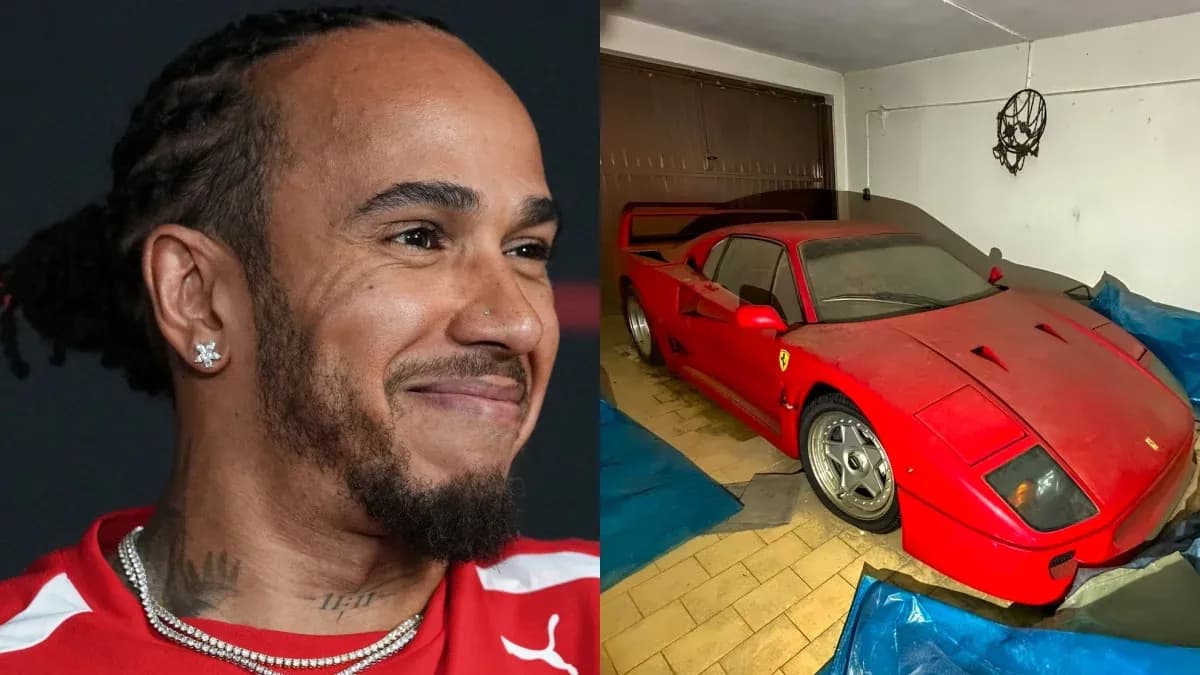
The F40 in question is a 1991 example, tracked down by Azimut Automobile Heritage Enhancement, an investment fund that specialises in unearthing automotive rarities. They found it in late 2025, hidden in plain sight.
The story borders on the surreal. Delivered new, then pushed into a private garage just days later. And left there.
For roughly 35 years.
When Azimut AHE opened the door, they weren’t looking at a tired supercar or a half-finished project. They were staring at a time capsule. Delivery mileage still on the odometer. No restorations, no modifications, no tweaks. Reportedly, not a single screw had ever been turned in anger.
Dust, dirt and the remains of long-forgotten insects clung to the bodywork and grille, but the conditions had been unusually kind. Beneath the grime, the original Rosso paint and the F40’s raw, purposeful stance had survived intact, as if frozen in 1991.
Azimut AHE acquired it. Eventually, it became Hamilton’s.
The one car he couldn’t let go
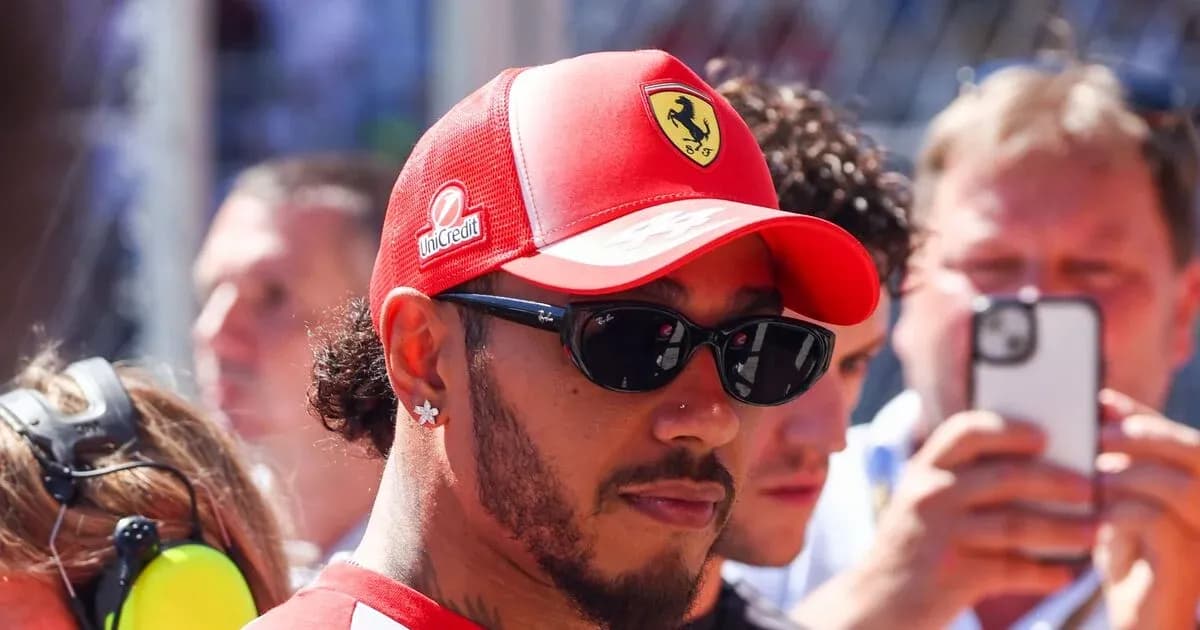
When Hamilton arrived at Maranello for his first official day as a Ferrari driver in January 2025, he made a deliberate choice. Beside him, for the photograph that would announce a new era, stood not a modern hypercar, not the latest hybrid weapon, but an F40.
It was a statement as much as a prop. The new Ferrari driver aligning himself with the last road car approved during Enzo Ferrari’s lifetime, a machine introduced in 1987 to mark the company’s 40th anniversary and still revered as the purest expression of the badge.
Months later, Hamilton surprised many by revealing he had sold off his entire multimillion-dollar car collection. His interests, he said, had shifted toward art.
But there was one exception. The F40 stayed.
He regarded it as more than a car. To him, it was a work of art in its own right.
Back to Maranello, back to life
Owning an F40 that had barely turned a wheel in three and a half decades is one thing. Driving it safely is another.
Hamilton sent the car back to its birthplace in Maranello, entrusting it to Ferrari’s own engineers and mechanics. Their task was delicate: wake the car up without erasing what made it unique.
They removed major components, including the 2.9‑liter twin‑turbocharged V8, and spent weeks going through the car. This was not a strip-and-restore job. It was surgery with white gloves on. Every move had to preserve originality – the very reason this F40 stood apart from almost any other.
Piece by piece, they brought it back to running condition, keeping the car’s untouched character intact while making sure it could be used, not just admired from behind a velvet rope.
Hamilton, the F40, and the streets of Maranello
The payoff has now appeared on the streets around the factory.
Hamilton has been seen at the wheel of the revived F40, easing the low, red car along a narrow two-way road in Maranello. No race suit, no grid, no telemetry. Just a driver, a clutch pedal and one of the most iconic silhouettes in motoring.
As he threads through local traffic, a motorcyclist pulls alongside, offers a quick greeting. Hamilton answers, then rolls on, the F40’s presence doing the rest of the talking.
People start to notice. Heads turn, phones come out, pedestrians slow to a stop. The F40 doesn’t need to be driven flat-out to dominate its surroundings. Its stance, its noise, the way it sits hunkered over its wheels – all of it demands attention.
On those cramped roads, Hamilton can’t begin to explore the car’s headline figures: 478 horsepower from that twin‑turbo V8, channelled through a five‑speed manual gearbox, and a claimed top speed of 201 mph. The numbers that once made it a monster now sit largely theoretical in city traffic.
But the sound, that hard-edged turbo bark, and the unmistakable, winged profile are enough. The car that lived in darkness for decades now glows under Italian daylight, with the driver who once dreamed of it as a child guiding it past the gates of the team he finally calls his own.
For Hamilton, the F40 is no longer just a poster or a fantasy. It’s a living, breathing reminder of why he fell in love with Ferrari in the first place – and of how far that love has taken him.