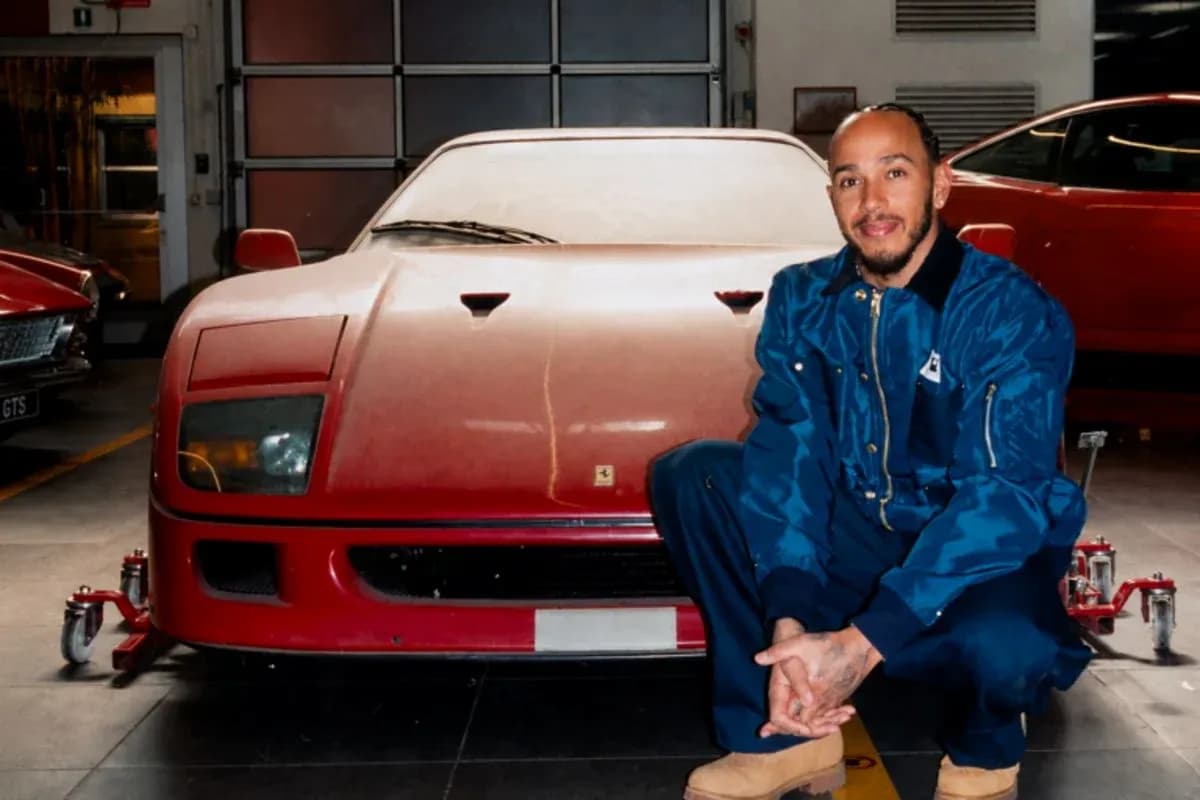
Lewis Hamilton has won just about everything there is to win in Formula 1. Yet the project currently lighting him up isn’t a title chase or a new car concept for the grid. It’s a dusty, timeworn Ferrari F40 he has hauled into the heart of Maranello to be reborn.
Not just any F40. His F40. The one he calls “the car of my dreams.”
Only 1,311 examples of the F40 were built between 1987 and 1993, a number that has only deepened its myth. Conceived by engineer Nicola Materazzi and sculpted by Pininfarina, the mid‑engined, rear‑wheel‑drive icon became the definitive poster car for a generation. The race‑bred variant ran from 1994 to 1996, but it’s the road car that still sits on the throne in the minds of purists.
Hamilton is one of them.
The seven‑time world champion has never hidden his affection for the F40. Even as modern hypercars crowd paddock car parks and collectors’ garages, the raw, stripped‑back Ferrari still tugs hardest at his heart. He doesn’t spend much time cruising around in road cars these days, unlike some of his rivals, but the F40 is different. It’s the one that cuts through the noise.
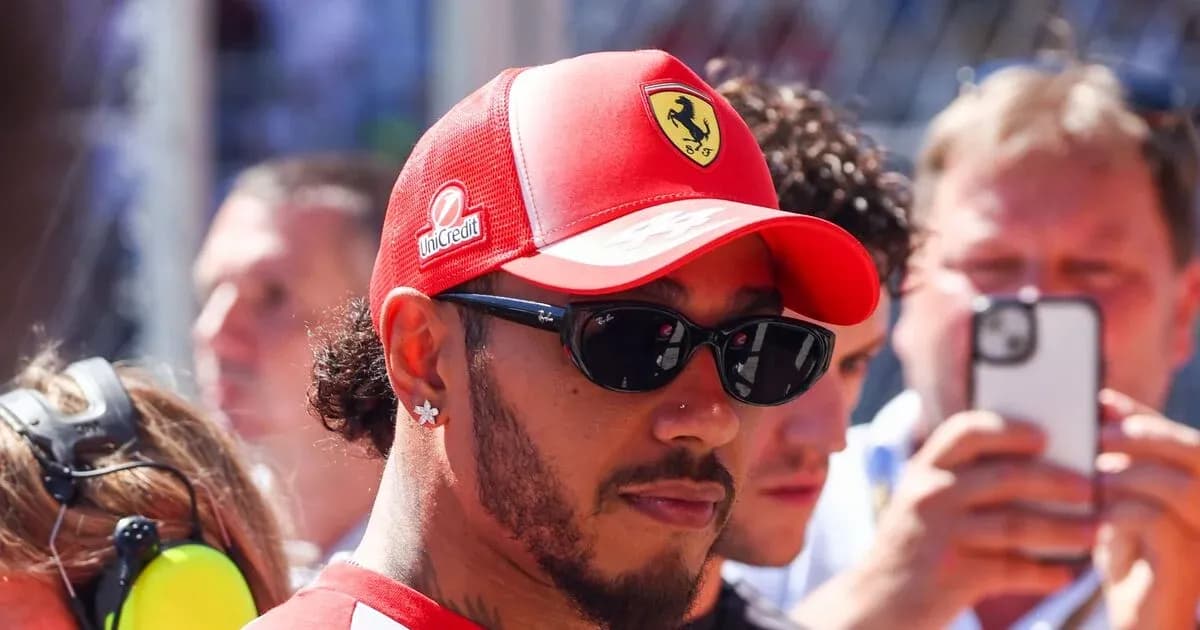
When he arrived at Scuderia Ferrari for the 2025 Formula 1 season, cameras caught him alongside an F40 at Maranello, a symbolic pairing of a modern great with a timeless one. Earlier this year, he was seen driving an F40 through the streets of Japan during the Japanese Grand Prix weekend, the red wedge slicing through city traffic like it had slipped out of a bygone era.
Now the relationship has deepened.
Hamilton has taken an F40 into his personal care and delivered it to Ferrari’s own engineers at Maranello for a full restoration. The car, he revealed, had been sitting in a garage for more than three decades, buried under dust, its legend intact but its bodywork and mechanicals begging for attention.
“My very own F40,” he wrote as he showed the world the car in its neglected state. A childhood dream, finally parked in his own orbit.
He described it as the car he had longed for “as long as I can remember,” the machine he made sure was with him on his first day at Maranello after joining Ferrari. That detail says everything about the emotional weight it carries for him. Before lap times, before simulations, before briefings, there was the F40.
The story of this particular car reads like a rescue mission. Hidden away for over thirty years, covered in dust, it could easily have remained a sleeping relic. Hamilton chose another path. He brought it “home” to Maranello, to the factory where Ferrari’s master engineers and mechanics set about reviving it over weeks of meticulous work.
The F40 has always been described as a work of art as much as a performance weapon, and Hamilton leaned into that idea. These cars, he noted, are incredibly rare, the kind of machines collectors whisper about. Finding one in such a forgotten state, then entrusting it to the people who understand it best, turns a simple purchase into a restoration saga.
The project is now very much alive, and so is Hamilton’s enthusiasm for it. He has already thanked everyone involved at the factory, calling the experience “a dream come true,” and made it clear this is only the beginning of what he wants to show.
For once, the seven‑time champion isn’t talking about the next upgrade or the next race. He’s talking about an old Ferrari, brought back from the shadows, and a boyhood dream finally sitting on its wheels again in Maranello.
The F40 is back in his hands. The rest of the story, he promises, is still to come.