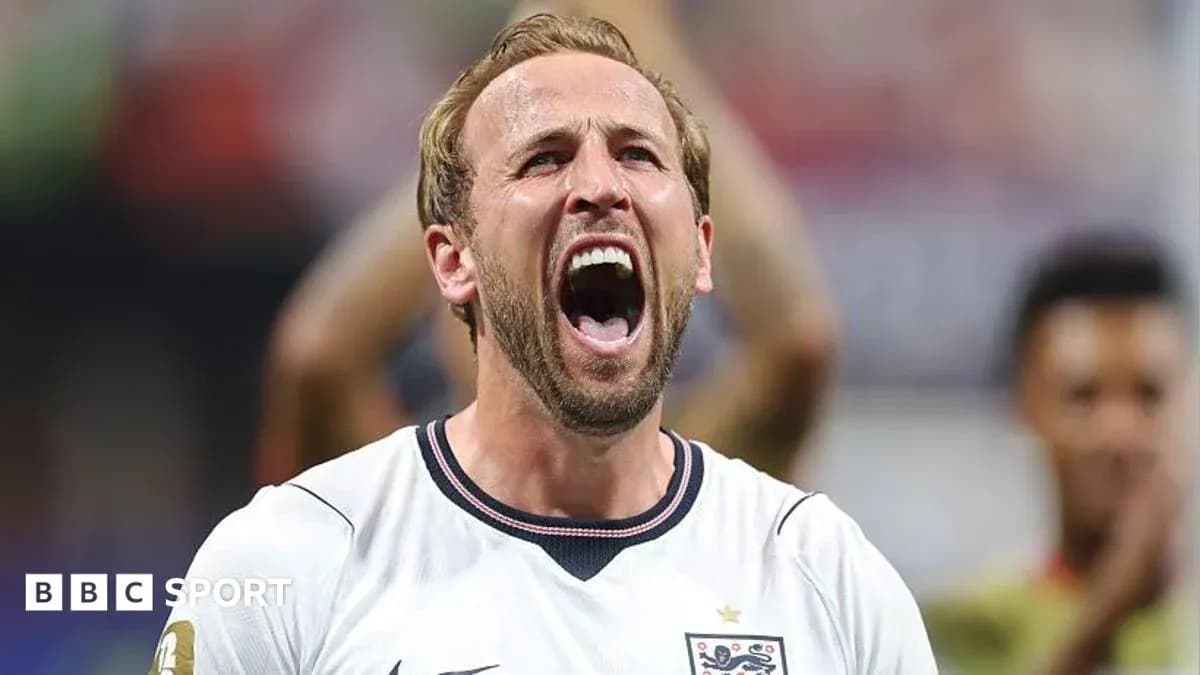
Harry Kane stands on the brink of the greatest individual honour in football, the bookmakers’ clear favourite as the Ballon d’Or shortlist lands on Tuesday. Goals have dragged him here – an avalanche of them for club and country in a season that has redefined his numbers.
History, though, whispers a warning. This award has never really been about goals alone.
The weight of the World Cup
Since 1956, when France Football’s Gabriel Hanot dreamt up the Ballon d’Or and Sir Stanley Matthews became its first recipient, one theme has shaped the voting more than any other: what you do on the biggest stages.
World Cup years, in particular, have drawn a hard line. The pattern is so strong it borders on a rule.
Raymond Kopa was the first to marry a World Cup year with the prize, his 1958 run to the semi-finals with France enough to sway the jury. Decades later, France Football revisited those early editions, lifting the old restriction that limited eligibility to European players and asking a simple question: who would have won if everyone had been allowed?
The answers were emphatic. Pele, 17 years old and irresistible as Brazil won their first World Cup in 1958. Garrincha, the genius who carried Brazil to back-to-back titles in 1962. Pele again in 1970, orchestrating what many still consider the greatest team of all time as Brazil claimed their third crown.
Overlay those retroactive verdicts on the official list and the pattern sharpens. Bobby Charlton in 1966, Paolo Rossi in 1982, Lothar Matthaus in 1990, Zinedine Zidane in 1998, Ronaldo in 2002, Fabio Cannavaro in 2006 – all Ballon d’Or winners, all freshly crowned world champions.
Even when the winner did not lift the trophy, the World Cup still loomed large. Johan Cruyff in 1974, Luka Modric in 2018: both lost the final, both were the heartbeat of teams that went all the way to it.
France Football’s retrospective review drew a stark conclusion. Had the Ballon d’Or always been open to every nationality, every South American World Cup-winning side between 1958 and 1994 would have supplied the winner. That is the scale of the World Cup’s pull.
When trophies trump brilliance
There have been outliers, but they only underline how hard it is to break the pattern.
Kevin Keegan took the 1978 Ballon d’Or despite England not even qualifying for that year’s World Cup. Yet when France Football revisited the award, it argued that Mario Kempes – top scorer and champion with Argentina on home soil – would have been the rightful winner.
The same retrospective judgement fell in favour of Diego Maradona in 1986 and Romario in 1994, both World Cup winners at a time when they were ineligible for the official prize.
Move into the modern era and the criteria have tightened. Across the last 19 editions, only four winners have failed to lift either the Champions League, World Cup, European Championship or Copa America in the year they were crowned.
To escape that gravity, you have to be Messi or Ronaldo at full tilt.
Lionel Messi did it in 2010, 2012 and 2019, years in which Argentina did not deliver a major international trophy and Barcelona did not always sweep Europe. Cristiano Ronaldo did it in 2013, when Portugal did not make it past the World Cup play-offs, but his season with Real Madrid still bent the vote his way.
Set against those rare exceptions are the nearly-men of the Ballon d’Or story. Wesley Sneijder’s treble with Inter Milan and run to the 2010 World Cup final. Franck Ribery, integral to Bayern Munich’s 2013 treble. Mohamed Salah, rewriting Premier League records in 2017-18. All had the numbers, all had the trophies or the deep tournament runs, yet the narrative – and the voters – went elsewhere.
That is the backdrop Kane walks into.
Kane’s case versus the World Cup winners
On pure output, few can touch him this year. His first season in the Bundesliga has been a showcase of ruthless finishing and consistency, backed up by his work with England. It is the sort of campaign that, in isolation, screams Ballon d’Or.
But the award is not judged in isolation.
Rodri stands as perhaps his most serious obstacle. The midfielder has just completed the kind of year that tends to sway juries: dominant at club level, then central to Spain’s march to a second World Cup title, crowned with the Golden Ball as the tournament’s best player. Voters have long shown a soft spot for the man who dictates the biggest games, not just the one who finishes them.
Lamine Yamal has his own compelling story. Still a teenager, already a World Cup winner, already a key figure in Barcelona’s reclaiming of La Liga. Pau Cubarsi, another Barcelona prodigy, walked away with Fifa’s Young Player Award after a series of standout displays, but Yamal’s medal shines just as brightly in this conversation.
Then come the familiar giants of the era. Kylian Mbappe, top scorer at the World Cup with 10 goals, also claimed the Champions League Golden Boot and finished as La Liga’s leading scorer, even as France fell short of the final and Real Madrid ended the season without a major trophy. Messi, at 39, dragged Argentina to a second successive World Cup final and still found eight goals on the way.
Against that backdrop, Kane’s lack of a defining international or continental trophy this year looms large. History suggests that gap matters.
Chasing history from the Bundesliga
If he does win it, Kane will rip through several layers of precedent at once.
He would be only the fifth Englishman to lift the Ballon d’Or, following Matthews, Charlton, Keegan and Michael Owen. The wait for another English winner has stretched more than two decades; Kane’s name on the trophy would end that drought.
He would also become the first player representing a Bundesliga club to take the prize since Matthias Sammer in 1996. In an era where the award has been dominated by La Liga and, more recently, the Premier League’s financial might, that would be a statement for German football as well as for the player himself.
And yet the numbers still sit on one side of the scales, the medals on the other.
The jury – one specialist journalist from each of the men’s top 100 nations – now has to decide what it values most. Is one of the most prolific goalscoring seasons of the modern era enough to bend a tradition built on World Cups and major finals?
Or does Harry Kane discover, like so many before him, that in the race for the Ballon d’Or, even a year of goals like his can be outmuscled by the weight of a single trophy?