
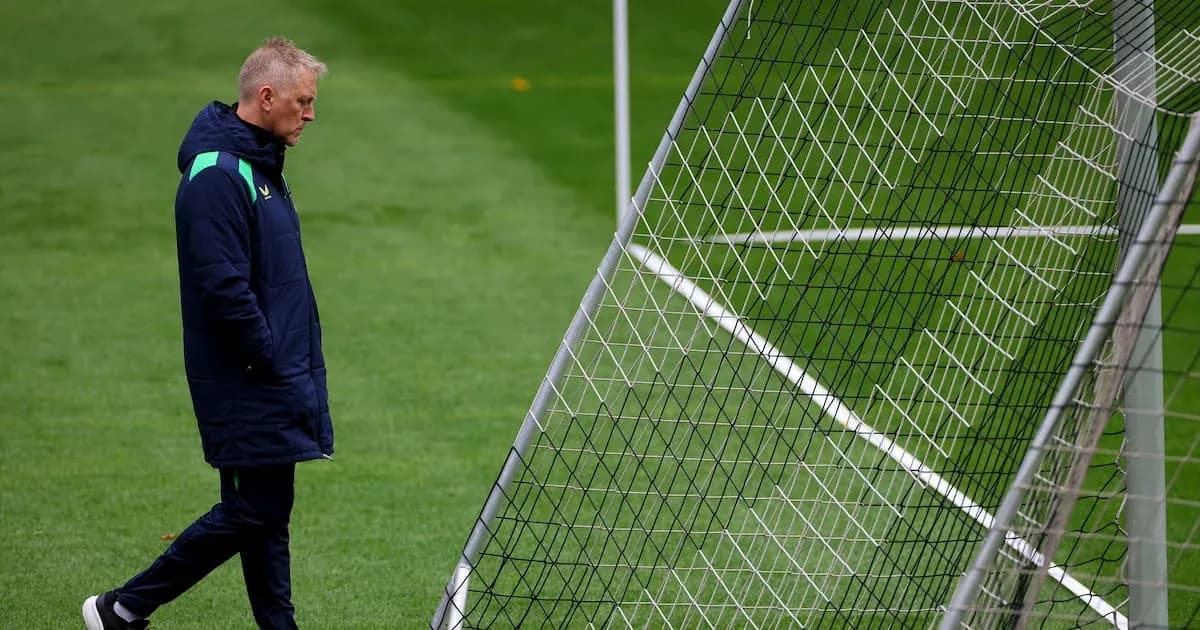
Heimir Hallgrímsson has always looked like the calmest man in the stadium. The question hanging over his Ireland reign from the start was simple enough: what happens when that cool, forensic mind collides with the chaos and neurosis that trail this team around Europe?
The answer has been stress‑tested to the limit over the last month. The Israel saga dragged Ireland through an emotional mangle that would have broken lesser managers or, at the very least, twisted their outlook. Hallgrímsson, though, walked into Linz this week sounding much the same as he did on day one – rational, unsentimental, and still quietly convinced that progress is something you build, not something that happens to you.
Resetting the camp
On Friday he outlined the changes he has pushed through for this camp. None of them are seismic in isolation. Together, they mark a deliberate attempt to drag the squad out of its old grooves.
The players reported a day later than usual. The meeting schedule has been ripped up and reassembled. A new coach, Pete Shuttleworth, has been added to the staff. Even the branding around the team hotel has been moved, as if to signal that nothing is quite where it used to be.
The shake-up stretches to the media, too. Engagements have been cut back, and the long‑standing content embargoes – those sacred texts of the football press pack – have been scrapped. The gods of The Embargo, so devoutly worshipped by journalists, have been quietly retired.
“We want to challenge everybody in the camp to think, ‘growth mindset’,” Hallgrímsson said. “We should always challenge ourselves to improve our working environment. These guys deserve that their environment is improving. That is how everyone should be: players, staff, coaches ... media.”
That last word landed with a little extra weight. Previous Ireland managers have raged at the press; Hallgrímsson sounds more like a disappointed teacher than a furious headmaster. The sting from last month is still there, sitting in the mixture like grit in a cup of tea, but he refuses to let it dictate the future.
From fatalism to “win or learn”
What sets Hallgrímsson apart from many of his predecessors is how openly he leans into the language of the “growth mindset”, the theory popularised by American psychologist Carol Dweck in the 1970s. Her central idea was blunt: intelligence and ability are not fixed, they can be developed through effort, experience and, crucially, the willingness to learn from failure.
In the US, Dweck’s work chimed neatly with the country’s faith in social mobility and self‑improvement. Over time it seeped into schools, sport and business, until even Samuel Beckett’s bleak joke – “Try again. Fail again. Fail better.” – was hijacked by self‑help gurus and rebadged as a motivational slogan.
Irish rugby bought into this way of thinking long before Irish football ever flirted with it. That is no coincidence. Many of Ireland’s leading rugby players came through fee‑paying schools where Dweck’s ideas filtered into the broader educational culture. Rugby’s vocabulary reflects it: “work-ons”, “learnings”, clunky phrases forged to make failure sound like raw material.
Football, by contrast, has long preferred a darker soundtrack. The fatalism is familiar and oddly comforting: Ireland are destined to draw 1-1; the team can never be more than hard to beat; “we just don’t have the players”. Some former managers have clung to those lines like a shield.
Hallgrímsson’s worldview offers a different script. It smuggles hope into the room. Every setback becomes data, not destiny. He has latched onto a line he attributes to Dara O’Shea – that Ireland’s motto can be boiled down to “win or learn” – and it fits neatly with everything he is trying to build.
Evidence of change – and the old habits
This isn’t just theory. Since the 5-0 hammering by England at Wembley, there has been visible hardening in this Ireland side. They now step into games believing they can compete, not just hang on. The defensive shape is tighter, the space left for counter-attacks has shrunk, and a worrying soft spot at set pieces looked to have been addressed last month.
The problem is what happens across the full 90 minutes.
Ireland’s tendency to drift, to let standards sag mid-game, remains the great unresolved flaw. Two‑goal leads have been squandered with maddening regularity – against Austria in Dublin and, more painfully, away to the Czech Republic. The Israel double-header told a similar story: sharper, braver in the first halves; looser and less convincing after the interval. The second half in Kosovo only looked good because the first was so poor.
Those patterns cannot follow them into Linz.
Austria, the press, and a three‑year wall
Ireland know precisely how badly things can go wrong against this Austria side. The collapse in Dublin began with Liam Kitching hesitating on the ball, Patrick Wimmer pouncing, and the first Austrian goal tumbling out of that moment. It was a single lapse that opened the door and invited the comeback in.
That is the kind of mistake Hallgrímsson cannot legislate for with slogans. It needs sharper minds, quicker decisions, more ruthless habits when the press comes. Austria will hunt high again. Ireland must be ready this time.
There is encouragement to be found in the circumstances. Austria are depleted by injuries, even as they guard a three‑year unbeaten home record. That statistic looks imposing, but it should not cow this Ireland squad. If they can stitch together the best versions of themselves – the first-half intensity from Israel, the defensive control since Wembley – across a full match, they have every right to believe they can win here.
And if they don’t? If the same old lapses return, if another lead evaporates, if another performance splits in two?
That is where the growth mindset bites back. It insists you are not a victim of fate but an accomplice in your own recurring failures. It strips away the comfort of the old Irish fatalism, the idea that the ceiling is low and the talent pool shallow and that nothing, really, is your fault.
The alternative is the fixed mindset, the familiar refuge of learned helplessness, where the story is always written in advance and responsibility drifts elsewhere.
Linz will offer a stark choice: cling to that old shelter, or finally play like a team that truly believes it can learn its way out of the past.





