Honda has moved swiftly to shake up the leadership of its Formula 1 engine programme after a flat and deeply underwhelming start to its new chapter with Aston Martin.
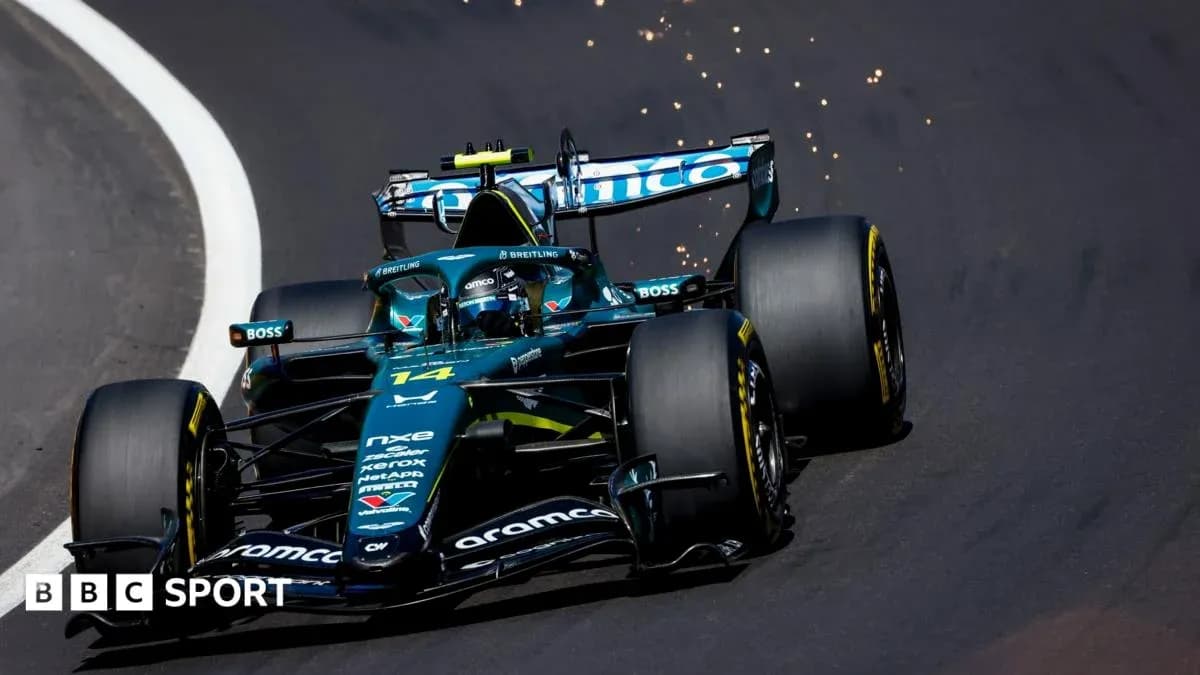
This is the company that powered Red Bull and Max Verstappen to four consecutive world titles between 2021 and 2024. Now it finds itself supplying an Aston Martin works team languishing 10th of 11 in the constructors’ standings, with a solitary ninth place for Fernando Alonso at the Dutch Grand Prix the meagre highlight of the campaign so far.
That is nowhere near the level either partner expected.
On Monday, Honda confirmed a change at the top of its F1 power-unit project. Yoichiro Fukao, previously the deputy leader of the programme, steps up as Large Project Leader, replacing Tetsushi Kakuda, who has overseen power-unit development this season.
Honda framed the move as part of a longer-term handover rather than a panicked reaction. “This organisational change is a planned transition designed to ensure the reliable transfer of technical expertise to the next generation of engineers,” a statement said.
The message was clear: with the 2026 regulations looming and more tweaks anticipated from 2027, Honda wants its house in order early. The company spoke of building “a robust development framework” and delivering “a highly competitive PU by transitioning to the new structure at an early stage.”
The timing is no coincidence. Honda rolled out its first engine upgrade of the year at the Dutch Grand Prix, hoping to jolt the project into life. Trackside general manager Shintaro Orihara reported that the manufacturer had “observed (a) step forward in terms of performance on our metrics.”
On paper, that sounds encouraging. On the stopwatch, it has not been enough.
The gain is understood to have been modest, and crucially, smaller than Aston Martin had been banking on. Inside the paddock, the Honda power unit is being talked about as a major drag on the green cars’ potential, with the deficit said to be worth at least a second per lap when the shortfall from the internal combustion engine and the electrical systems is combined.
In modern F1, that is a chasm.
The pain is amplified by the direction of travel for the rules. From 2026, engines will lean heavily on electrical power, with an almost 50-50 split between the combustion engine and the hybrid system. Energy recovery and deployment will define the pecking order. Batteries will be discharging and recharging multiple times every lap, and any inefficiency will be ruthlessly exposed.
Right now, Honda and Aston Martin are on the wrong side of that equation.
The scale of the task was laid bare again at the Spanish Grand Prix. Alonso, a driver who built his reputation on dragging cars far beyond their natural place on the grid, was dumped out in Q1, 2.2 seconds off the fastest time of the session.
For a team with factory backing from a global giant and a driver of Alonso’s calibre, that is a brutal reality check.
Honda insists this is a controlled evolution, a carefully staged transition to a new technical leadership. The results on track say something else: the margin for error is shrinking fast, and the countdown to 2026 has already started.