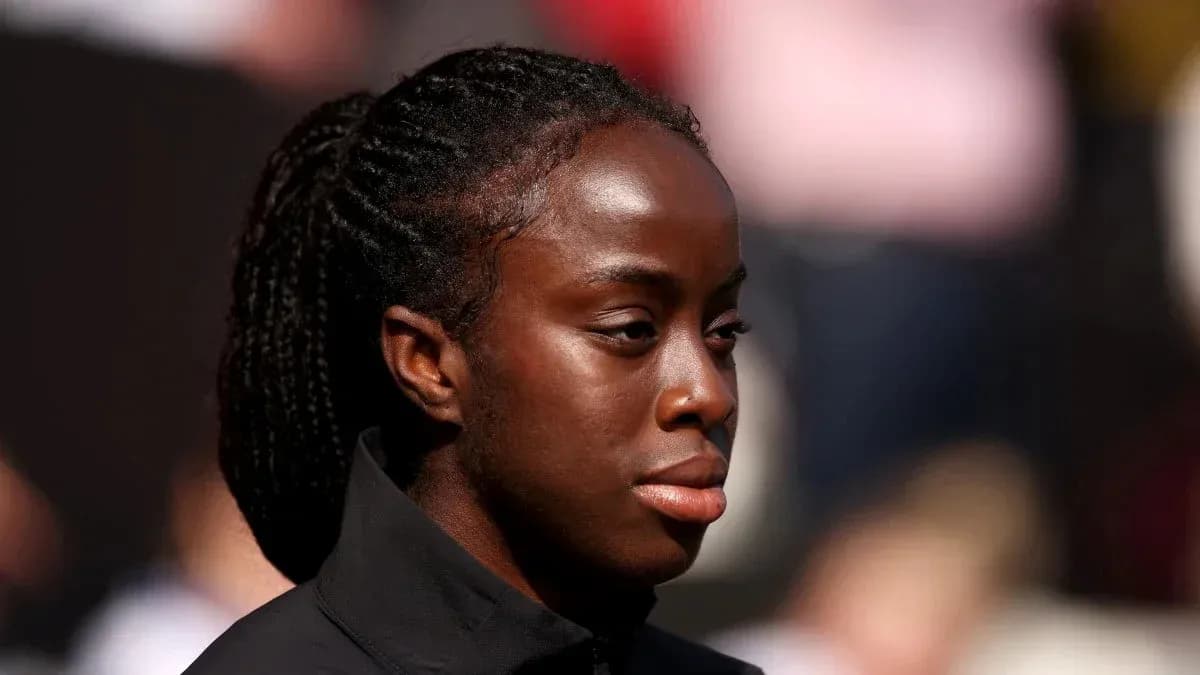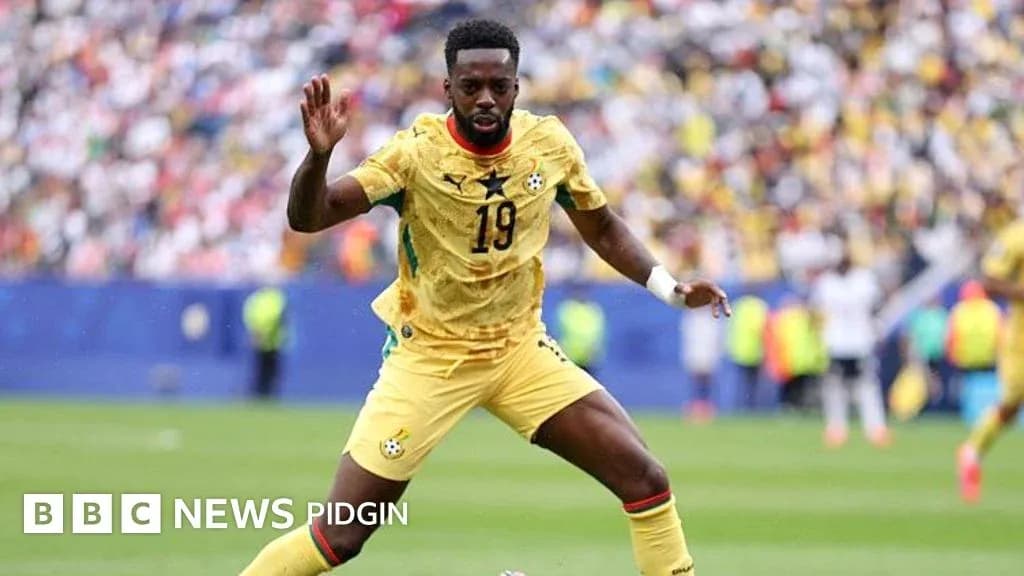
Inaki Williams has drawn a firm line under his international career with Ghana, announcing his retirement from the Black Stars after four years in which he chased a World Cup dream and reconnected with his roots.
The Athletic Bilbao forward made the announcement on his X account on Friday, 11 September 2026, stating that he walks away “happy, proud and with peace of mind,” convinced he has given everything each time he pulled on the Ghana shirt.
“I feel the time has come to bring my journey with the Ghana national team to an end. I leave happy, proud and with the peace of mind of knowing that I gave everything every time I wore this shirt,” he wrote.
A World Cup farewell
His decision comes on the back of Ghana’s disappointing exit from the 2026 Fifa World Cup, where the Black Stars went out after a 1-0 defeat to Colombia. Ghana entered that knockout clash riding a wave of belief, having kept two clean sheets and impressed against Panama and England in the group stage. The optimism did not survive the Colombian test.
For Williams, that tournament closed a chapter that began in 2022, when he switched allegiance to the country of his parents and committed to representing Ghana ahead of the 2022 Fifa World Cup. He had previously hoped to break through with Spain, progressing through their youth ranks, but a senior competitive cap never arrived.
Ghana instead became his international stage. It also became something deeper.
“Ghana has given me so much more than football,” he reflected in his statement, explaining that the decision to play for the Black Stars allowed him to return “home,” feel closer to his roots and experience the pride of carrying the flag on his chest.
He has now stepped away from the national team, but made it clear he will continue to support Ghana football and the Black Stars from afar.
From Sahara crossings to La Liga mainstay
Williams’ story has always carried a weight that goes beyond goals and appearances. Born in Spain to Ghanaian parents who reached Europe by crossing the Sahara desert on foot and scaling the Melilla border fence, he grew up with a vivid understanding of sacrifice and opportunity.
Football became his route forward. Athletic Bilbao spotted him at 18 and brought him into their youth system. By 2014 he had made his La Liga debut for the first team, scoring his first league goal the following February.
He did not look back. Williams established himself as a key figure for Athletic, delivering big moments on big stages, including a spectacular long-range strike against Barcelona in the Spanish Super Cup final that underlined his status as one of the club’s modern symbols.
In 2019, the club underlined that faith with a remarkable nine-year contract, one of the longest deals ever handed to a player in the modern game, eclipsed only by rare cases such as the 10-year agreement Real Betis gave Denilson in 1998.
Spain’s nearly man, Ghana’s late addition
On the international stage, Williams first appeared destined for Spain. He earned a call-up to the Spain under-21 side in March 2015 and featured for the junior national team, yet never made a major competitive appearance for the senior La Roja.
Even in 2021, when asked about the possibility of choosing Ghana, he pointed to his upbringing in Spain and said his culture was rooted there, despite his parents coming from Accra. The pull of his birthplace seemed stronger.
Then came the turning point. On 5 July 2022 he announced his decision to represent Ghana, embracing the Black Stars and opening the door to World Cup football in Qatar later that year. The move resonated far beyond the pitch: a player born in Europe, returning to the country his parents left under extraordinary hardship, now wearing its colours on the world stage.
That journey has now reached its conclusion. The shirt goes back on the hanger for good, but the bond between Williams, his heritage and the Black Stars will linger long after the final whistle of his international career.