The ink on Pio Esposito’s new deal is barely dry, but Inter are already bracing for the next, far more complex phase of their season: tying down the core of a title-winning squad before any cracks appear.
With Esposito secured until 2031, the focus in the corridors of power at San Siro moves straight to a looming wave of renewals. Once the summer transfer window shuts, the board will dive back into a different kind of market — one fought across meeting rooms and spreadsheets rather than touchlines.
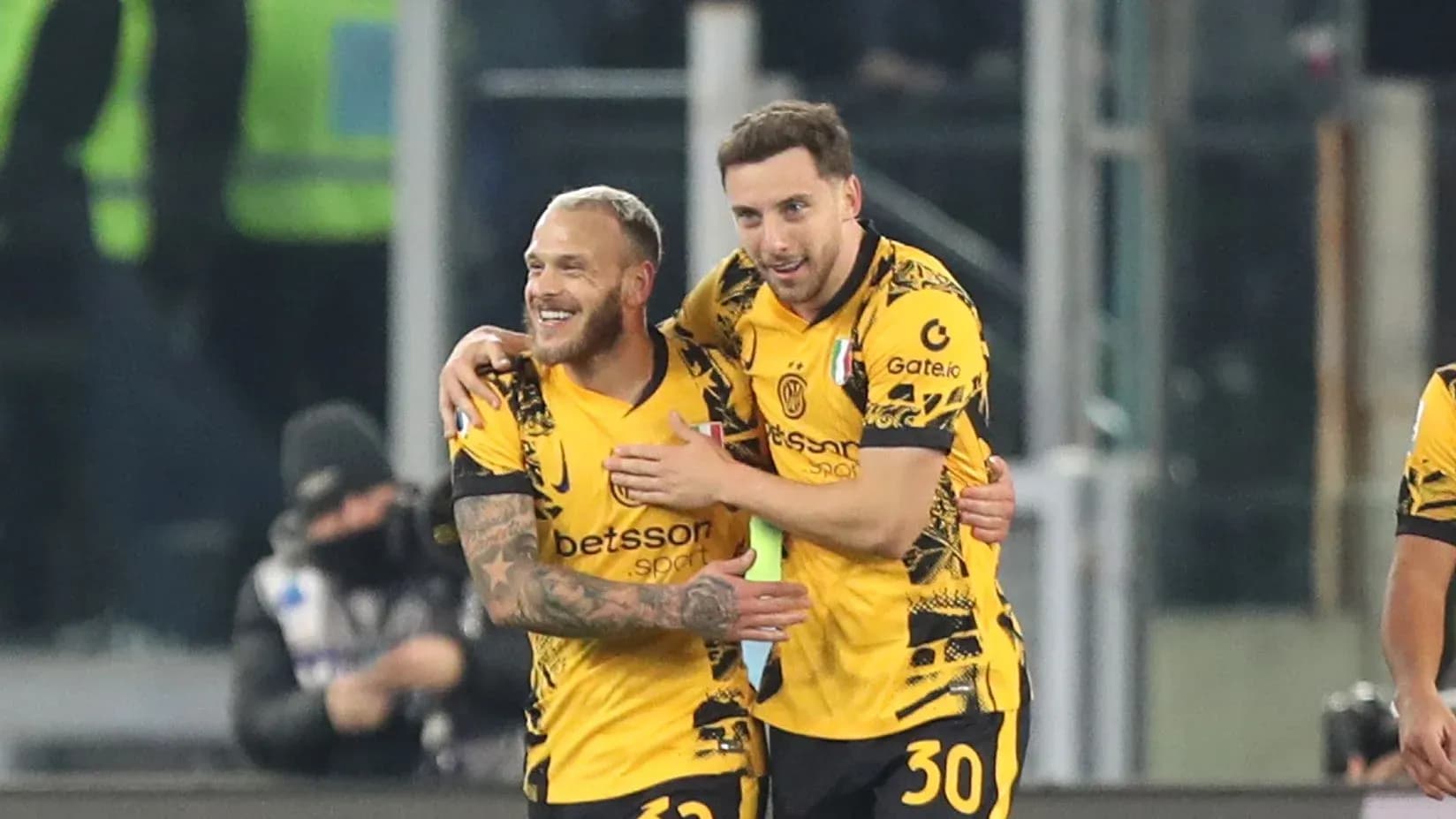
Dimarco, the MVP who wants his status reflected
At the top of the pile sits Federico Dimarco. The left-back, a symbol of the Nerazzurri’s resurgence and reigning Scudetto MVP, is under contract until 2027, with a club option that stretches his deal by another year. On paper, Inter are covered. In reality, they know exactly how important he has become.
Dimarco is not agitating. He is not pushing for the exit. What he does want is recognition in line with his influence. The figures are clear: his camp is looking to lift his salary from 4 million euros to 5 million. A raise to match the weight of his contribution to Inter’s 21st Scudetto and his status in the dressing room.
The club, for their part, see an opportunity rather than a problem. Extending the length of the deal while rewarding his performances would lock in a player who has grown into one of the most decisive full-backs in Europe. All the while, Dimarco’s stance remains professional — negotiations off the pitch, total focus on it.
Carlos Augusto at a crossroads
If Dimarco’s case is about status, Carlos Augusto’s is about role. Talks with the Brazilian have been running for months, with Inter putting around 3 million euros a year on the table.
The money is one thing. The minutes are another.
Augusto’s versatility has real value for coach Cristian Chivu, but the path to a guaranteed starting spot is crowded. Alessandro Bastoni and Dimarco dominate the left side of Inter’s structure, and that hierarchy naturally shapes the Brazilian’s thinking. Any agreement will not just be about a pay bump; it will be about how often he hears his name when the team sheet goes up.
Calhanoglu enters a decisive year
In midfield, the clock is ticking louder. Hakan Calhanoglu has officially stepped into the final year of his contract, a scenario that no elite club can treat lightly.
President Beppe Marotta has already made his feelings public, underlining Calhanoglu’s importance to what he calls a “historical project” at Inter. The message is simple: this is not a player the club are prepared to lose lightly, or cheaply.
That public backing usually precedes serious work behind closed doors. Inter know that allowing a player of Calhanoglu’s calibre to drift towards free agency would invite a queue of suitors and needless turbulence. The aim is to shut that door before it even opens.
A long horizon of decisions
Beyond the immediate fires to put out, a broader, more delicate puzzle stretches toward 2028. Inter’s sporting project rests on several pillars whose contracts will demand attention over the coming seasons: Alessandro Bastoni, Marcus Thuram, Manuel Akanji, Piotr Zielinski.
Each case carries its own variables — age, physical load, market value, dressing-room weight. Inter’s directors must juggle all of that while staying within a financial framework that has grown tighter across European football.
This is not the frantic noise of deadline day, but it may be even more decisive. In the modern game, titles are often protected not just in May, but in October and November, in those quiet offices where contracts are re-drawn and futures are fixed.
At Inter, that season has already started. The question now is simple: can the Nerazzurri turn this cycle of renewals into the foundation of their next Scudetto run?