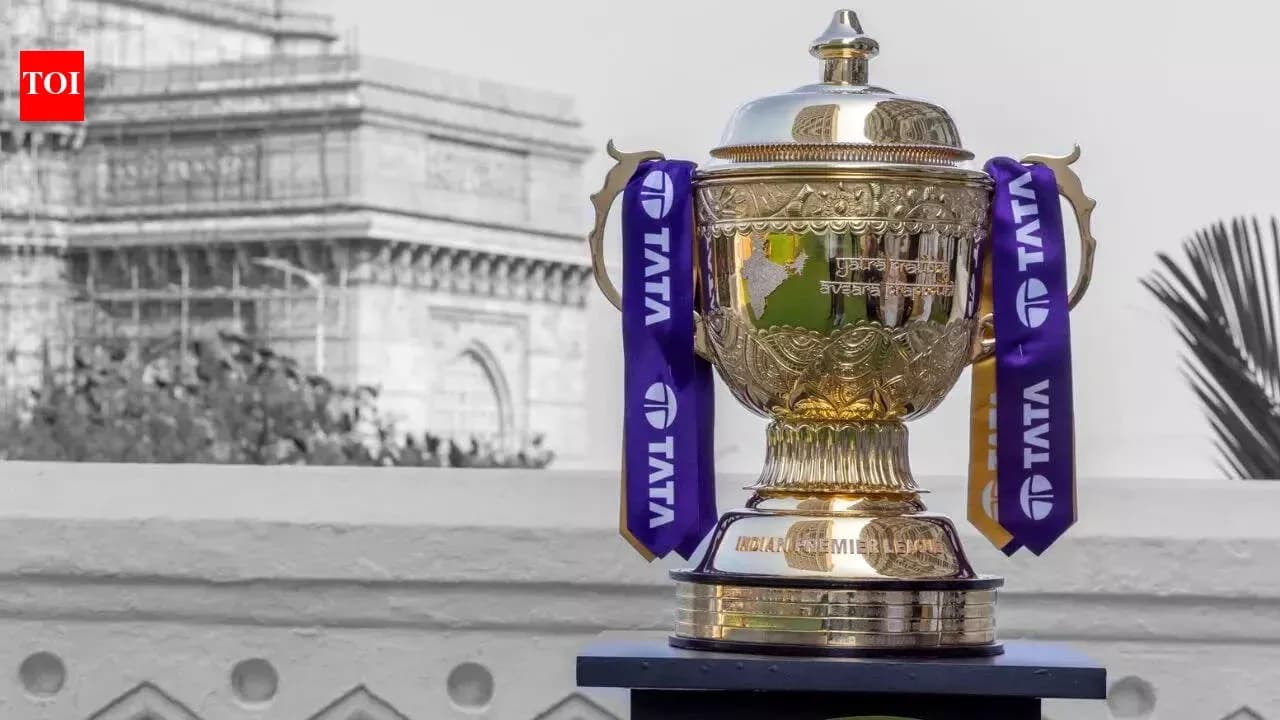
The IPL trophy will be lifted again in six months. What nobody in the industry can say with any confidence is whether Indian cricket’s most valuable asset will be sold for what it is truly worth.
Behind the scenes, anxiety is building. The final IPL season of the 2023–27 media rights cycle is coming into view, and yet the next tender – for both IPL and India’s home bilateral cricket – is drifting towards a one-horse race. With JioStar looming as the only serious bidder in sight, broadcasters, investors and rights experts are asking the same question: how do you discover the real price of a property when there is no real contest?
That worry is not coming from critics on the outside. It is coming from the inside.
At the ET World Leaders Forum, Uday Shankar – the media heavyweight who now serves as vice-chairman of JioStar and once helped push sports rights into the financial stratosphere – laid bare the problem.
“Ten years ago, you would have multiple and serious media companies (around four) competing for major sports rights. You'd have four or more companies genuinely fighting for properties. Today, increasingly, it feels as if we are the only ones standing. And that's not healthy,” he said, capturing a mood that has quietly spread across the business.
Shankar did not stop there. He pointed to the core imbalance that now stalks every big auction. Rights fees have exploded. The ability to monetise them has not kept pace. “The fundamental issue is that the cost of the rights has risen dramatically. But the ability to monetise those rights hasn't necessarily risen at the same rate. The value of sports is enormous, but the rights holder, broadcaster and platform all need to participate in a sustainable ecosystem,” he added.
Strip away the jargon and the message is blunt: if only one player can afford to turn up, the ecosystem is broken.
For Indian cricket, the most troubling part is the lack of a visible fallback. JioStar’s commitment to the IPL is not in doubt; its subscription and advertising play is built around cricket consumption. It will bid. It will bid aggressively. That is Plan A.
What nobody can quite see is Plan B.
Why, in a global market where sport is the last great live content, has the BCCI failed to pull more big names to the table? This is a board that controls arguably the most powerful domestic sports league outside North America. Yet the tender process, as it stands, feels inward-looking, almost parochial, at a time when the rest of the world is widening its gaze.
Look at where the action is. In the West, technology giants have moved from flirting with live sport to reshaping it. YouTube has become a case study. Its push into rights aggregation and bundling has turned it into more than a video platform; it is now a quasi-pay-TV operator, with sport as the spine.
The seven-year deal for exclusive US distribution of NFL Sunday Ticket – reportedly worth around $2 billion a season – is not just a trophy asset. It is a strategic anchor. It locks in YouTube TV subscribers and doubles as a standalone product on YouTube channels. Sport, for YouTube, is no longer a collection of random rights. It is the centrepiece of a broader subscription machine.
India is a very different financial landscape. Average revenue per user in the West is on another planet compared to the subcontinent. That gap shatters the lazy assumption that sheer volume of viewers can solve every equation.
Yet this is exactly why Indian cricket should be irresistible as a testing ground. In this part of the world, there is no other sports property that offers the combination of scale, cultural pull and appointment viewing that the IPL does. If YouTube wants to experiment with how far live sport can stretch a digital ecosystem outside the US and Europe, there is only one obvious laboratory.
Netflix, too, has started to circle the space. Co-CEO Ted Sarandos told The Economic Times that the streaming giant is interested in live sport, including cricket, but has no appetite for becoming a “conventional full-season sports broadcaster”. That line, on the surface, might sound like a disqualification.
Look closer and it reads like an invitation.
A compact, high-intensity tournament like the IPL, loaded with storylines and personalities, sits exactly in Netflix’s wheelhouse. It is India-first, but not India-only. It speaks to more than a billion domestic viewers, a vast global diaspora and to regions where cricket quietly carries India’s soft power. The league is not just a competition; it is a rolling narrative, a content factory that runs on drama, data and emotion.
This is the pitch the BCCI has not yet made loudly enough.
Shankar’s reminder cuts to the heart of it: “At some point, the economics have to make sense.” They will not make sense on their own. The federation that owns the product has to sell it – not just auction it – to the world’s biggest media and technology platforms. It has to explain the India story, the IPL story, in rooms where decisions are made on long-term strategy, not just short-term ratings.
Assuming that executives several time zones away are already fully tuned into that story, without hearing it first-hand, is wishful thinking. The IPL may be India’s most coveted prime-time asset, but it still needs a global roadshow, a coherent marketing push, a serious attempt to widen the pool of bidders.
Right now, JioStar is the BCCI’s Plan A. The market knows that. JioStar knows that. The board knows that.
The real test, as the tender approaches, is whether Indian cricket can finally put a convincing Plan B – and even a Plan C – on the pitch.