Iraq arrive at the Arabian Gulf Cup with a clear message: no easing into this tournament, no time to grow into form. Gulf 27, for them, starts at full speed or not at all.
They open against Oman at Prince Abdullah Al-Faisal Stadium, a fixture that already feels like a test of nerve as much as talent. In a tight group and a short competition, a slow start can kill a campaign before it even breathes.
Arnold’s new Iraq, under pressure from day one
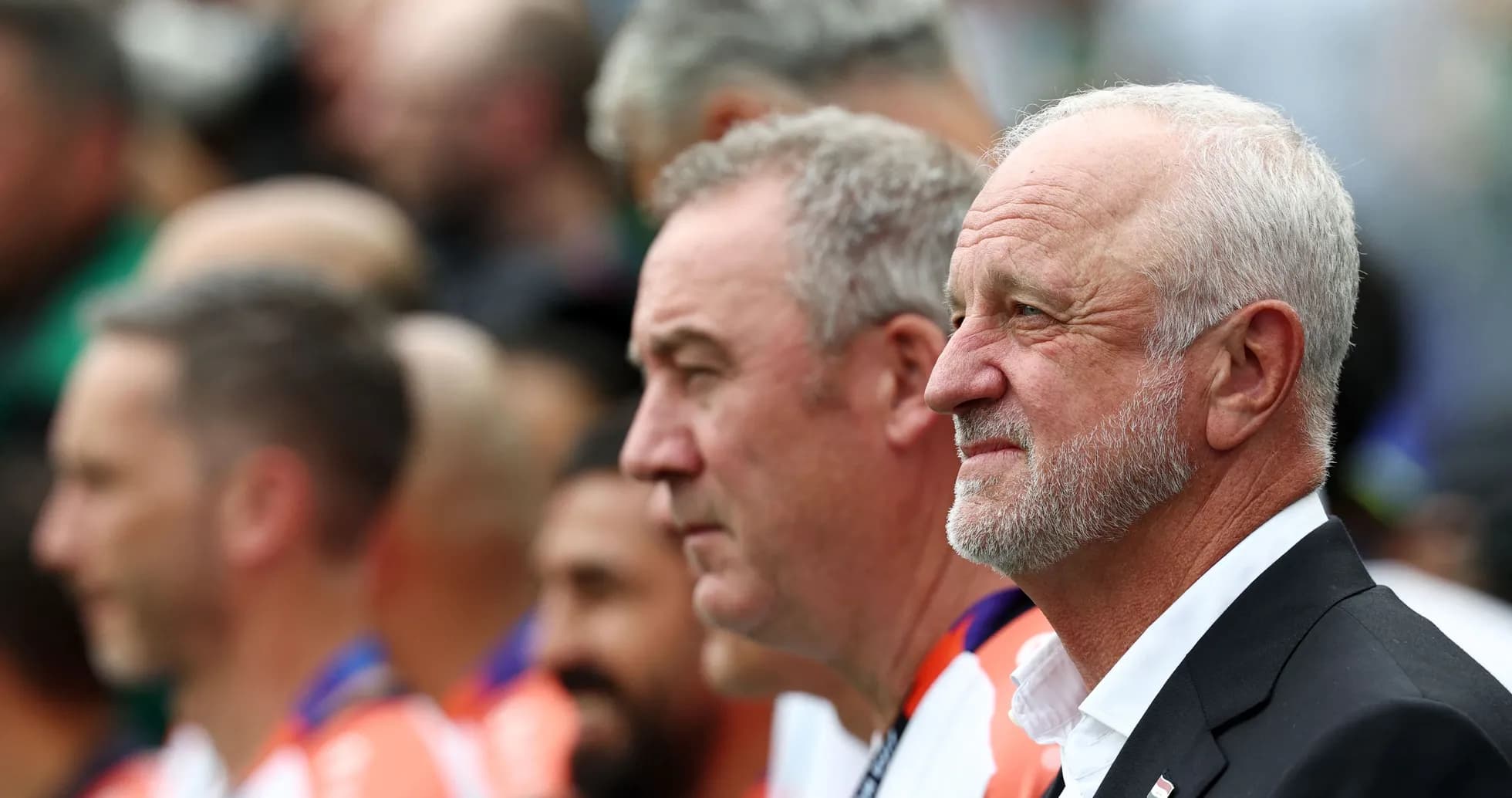
Australian head coach Graham Arnold cut a firm, assured figure on the eve of the match. The squad has changed, the staff has changed, but the expectation has not.
“We have a mix of experienced and young players, and this gives us an extra dimension to produce big performances,” he said in the pre-match press conference, underlining the deliberate shift in profile. Iraq have not come to Jeddah to experiment in public; they have come to win.
Arnold has overseen a series of tweaks behind the scenes, reshaping the technical staff and refreshing the playing group. The result is a side that looks different on paper, but one he believes is built to handle the demands of a tournament where every mistake is magnified.
He made no attempt to hide the logistical reality. Preparation has been short. “We had only two days to prepare in Jeddah, and it is important that we work on physical fitness and prepare well for the clash,” he admitted. Two days is barely enough to adjust to the conditions, never mind refine combinations, yet Arnold pushed the focus back onto performance and mentality.
“The players are capable of delivering a good performance, not only against Oman, but throughout the tournament as a whole,” he insisted. For him, this is not about surviving the opener; it is about setting a tone that carries through to October.
A tournament Iraq want to own
This is Iraq’s first appearance at the Gulf Cup in years, and that absence has sharpened their hunger. Arnold spoke openly about looking ahead rather than back, framing this edition as a launchpad.
“We are focused on the future, and we have the skills and abilities that help us compete and win the title, especially as the tournament holds great importance for Iraqi football,” he said.
That line matters. Gulf 27 is not just another date on the calendar. It is a stage where Iraq believe they should be among the dominant forces, a competition that still resonates deeply with their supporters and their football identity.
The format leaves no margin for drift. Iraq share Group A with Kuwait, Saudi Arabia and Oman. Four teams, two semi-final places. The top two advance, the rest go home. Finish first in Group A and you meet the runners-up from Group B. Finish second and you get the Group B winners. Either way, the path to the final on 6 October 2026 is short, brutal, and unforgiving.
All of which makes the opener against Oman feel bigger than a standard first step. Drop points now and the pressure spikes immediately, especially with hosts Saudi Arabia lurking in the same group.
“The Iraqi fans are our weapon”
If Arnold’s job is to shape the tactics, Ayman Hussein’s is to turn all that planning into goals — and to channel the emotion that follows Iraq wherever they play.
The striker spoke with the calm of a player who understands both the weight and the opportunity of the moment. He began by looking beyond the touchline.
“We welcome you and thank the Kingdom of Saudi Arabia for this hosting, and we also congratulate them on the occasion of the National Day,” he said, before turning to the stands that will matter most. “The Iraqi fans will support us strongly in Jeddah, where they are in their second country, and we expect great support from them.”
For Iraq, support is not a side note. It is part of the game plan. Their away matches rarely feel truly away, and Jeddah promises to be no different. In tight games, when legs tire and the clock runs down, that noise can tilt the pitch.
Hussein knows the squad is not the same one fans saw in previous editions. “The team is fully ready, we have made a number of changes, and there are players who will play their first international matches,” he said. New faces, new nerves, same standard.
He did not downplay the challenge. “We will face a respectable team, and we aim to deliver a match worthy of the Iraqi national team.” The bar is clear: performance first, reputation protected.
A group that leaves no hiding place
Group A offers no soft landings. Oman are disciplined and awkward, Kuwait remain dangerous in tournament football, and Saudi Arabia, on home soil, bring expectation and depth.
With only two places available in the semi-finals, every fixture carries a knockout edge. There is no room for experimental line-ups or calculated defeats. One bad night can drag a team into a spiral of must-win scenarios.
The bracket is simple. Top two in each group go through. Group A winners face Group B runners-up. Group B winners meet the Group A runners-up. The two semi-final winners walk out for the final on 6 October 2026, chasing the crown of the 27th Arabian Gulf Cup.
By then, the narratives will be clear: who handled the pressure, who cracked, who emerged from the shadows. For Iraq, the story starts now — with a new-look squad, a demanding coach, and a fanbase ready to turn Jeddah into something that sounds a lot like home.