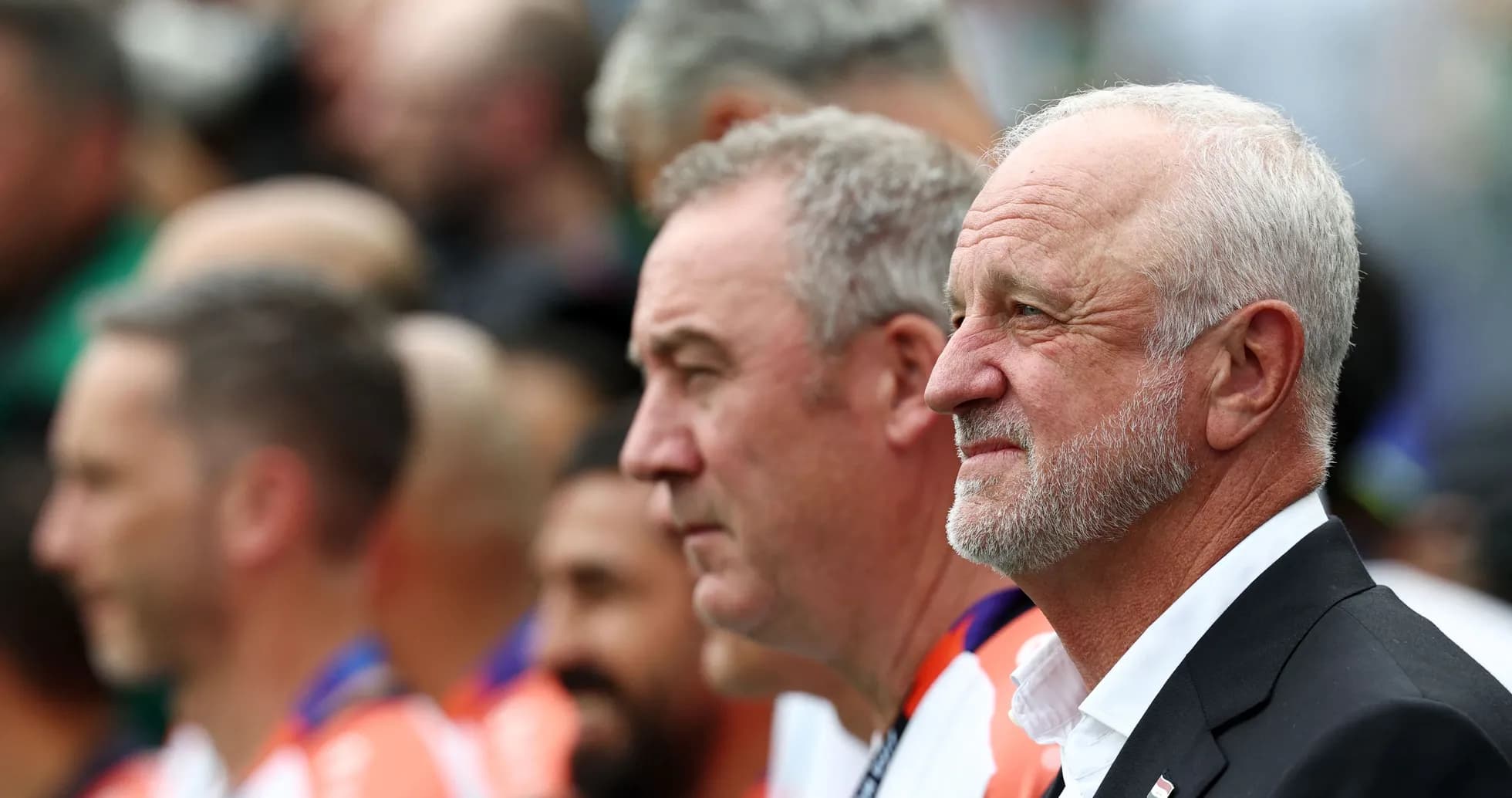
The naming of an Ireland squad has rarely carried this kind of weight.
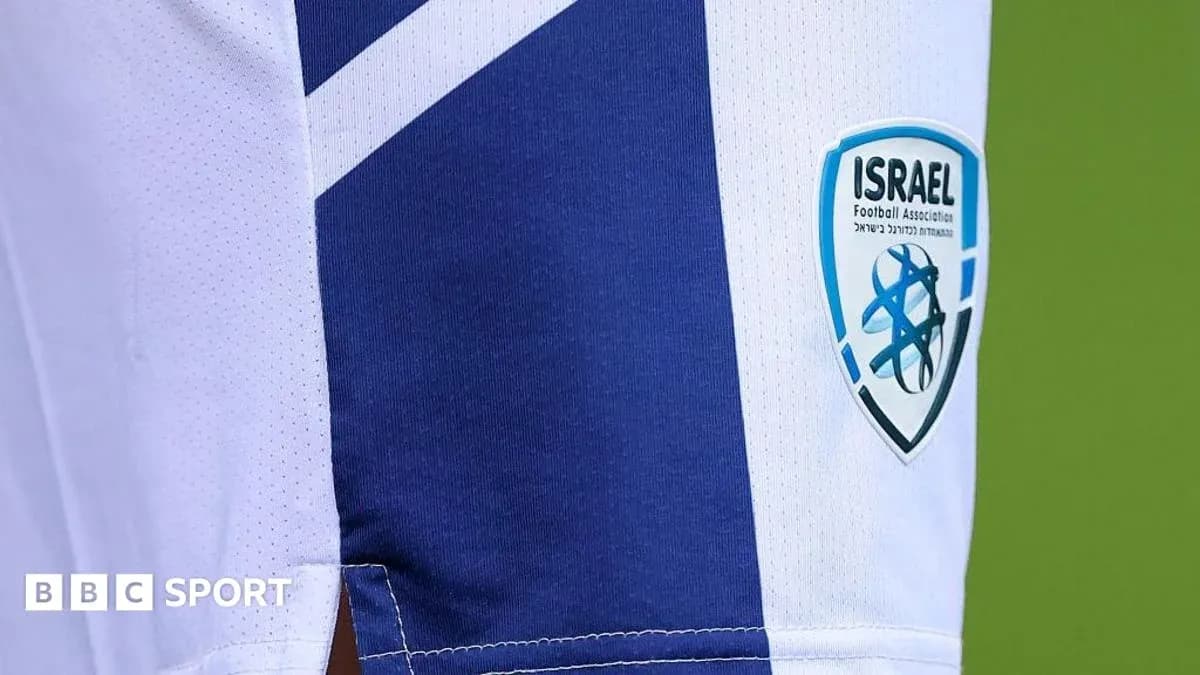
On Thursday, when Heimir Hallgrímsson reads out his list for the games against Israel, every inclusion will be scanned, but it is the absences – any not explained by injury – that will be forensically examined. Selection for your country is supposed to be the purest honour in the sport. This time, for some, it comes with a test that should never have been theirs to face.
Because the FAI board stepped back, the burden has slipped onto the players. Each individual must now decide whether to take the field against a nation accused of genocide. That is an impossible position to put any footballer in. It is not their job. It is not their responsibility. Yet here we are.
The old line that “politics has no place in sport” collapses under even basic scrutiny. Politics runs through every part of public life; stadiums and dressing rooms are not magically sealed off from it. Nor does history offer comfort to those who insist this is just another controversial fixture. The scale and nature of Israel’s onslaught on Palestine, backed by western powers, mark it out as something different in kind, not just in degree.
Some point to legal process, to the slow grind of international courts, and argue that the genocide charge is not yet proven. But legal judgments arrive years after the events that define them. The moral question does not enjoy that luxury. Decisions are being made now, in real time, with the evidence of a sustained campaign of terror already in plain sight.
When institutions face choices of this magnitude, the expectation is clear: those in charge inform themselves fully, then act on principle. Genocide is recognised as the gravest of international crimes. On that basis alone, refusing to engage with any state credibly accused of it should be the starting point. The very idea of playing football against Israel ought to feel unthinkable.
Last November, the FAI appeared to agree. The board formally asked Uefa to ban Israel. The message seemed unambiguous: no association, no team, no group of players should be asked to line out against Israel while State-backed brutality continued. The stance drew praise. Irish football, it seemed, had chosen conscience over convenience.
That resolve evaporated the moment Ireland were drawn to face Israel.
The decision to go ahead with the fixtures does not exist in a vacuum. It sits in a wider pattern of institutional retreat. The Government’s long delay over the Occupied Territories Bill set a bleak standard, signalling that even modest steps in defence of Palestinian rights could be parked indefinitely. Others took note.
In sport, the FAI is far from alone. The GAA has clung to its commercial ties with Allianz despite fierce criticism, a move that has stained its own claims to ethical leadership. Yet it is Irish football’s choice that offers Israel something it badly needs: normalisation, a sense that, whatever the accusations, life at elite level carries on.
The games will go ahead. That is now beyond doubt. The dates are set: September 27th and October 4th. The scorelines on those nights will be recorded, debated, archived. But in the only contest that truly matters here, there is a single outcome. Once the whistle blows, Israel emerges as the real winner, not Ireland.
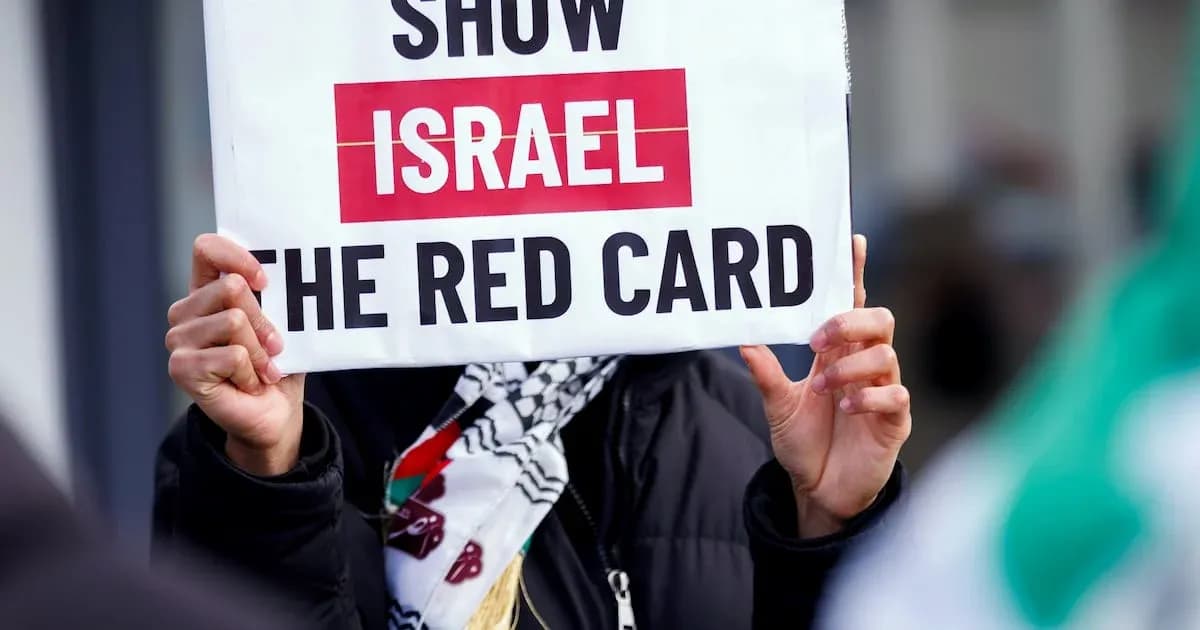
Protesters have pushed as hard as they can. They have marched, petitioned, argued. They have not shifted the board. The FAI has prevailed in the narrow argument over fixtures and obligations. Israel has gained something far more valuable: the image of business as usual.
The Government cannot claim clean hands either. Its failures since the start of this war have been many and varied, each one eroding the idea that human rights and justice sit above sporting or diplomatic convenience. That pattern of hesitation and half-measures has given cover to others. The FAI did not have to look far to find it.
When Taoiseach Micheál Martin publicly backed the games proceeding, he spoke not of law or morality but of form and promise. “There’s a rejuvenation, there’s a journey ahead for the Irish team,” he said in February. “They’ve been doing very well so far, and we wish them well.” On the surface, it sounded like routine encouragement. In context, it jarred badly – a footballing soundbite laid over a humanitarian catastrophe.
Now the countdown is almost done. In a few days, points and prize money from matches against Israel will be banked, weighed, and discussed. They will be set, implicitly, against the lives of tens of thousands of civilians, including more than 25,000 children.
The balance sheet is obscene. The conclusion is stark.
In Irish sport and politics alike, principle has rarely come so cheap.